

"Did you find them?" the owner asked as I dragged myself back into the courtyard, sweaty, frustrated and ready for a cold one after an afternoon of fruitless waiting in the Rajasthan heat at the waterhole he had sent me to.
I shrugged. "I only saw one. There was only one by the talaab."
"One piece? Only one piece?" He said it the way a waiter might count cubes of paneer at a thali counter. "There are always hundreds of them. Even thousands at this time in the afternoon. Don't worry… tomorrow you will see many at the chugga ghar. Guaranteed."
With the grand air of a junior civil servant unveiling a new project, he swept an arm toward the barren scrub beyond the gates. "Every morning we hear them shouting in the dark. So many of them. You have come quite far for them. You will definitely see many tomorrow."
I had come far, thousands of kilometres. So had the demoiselle cranes.
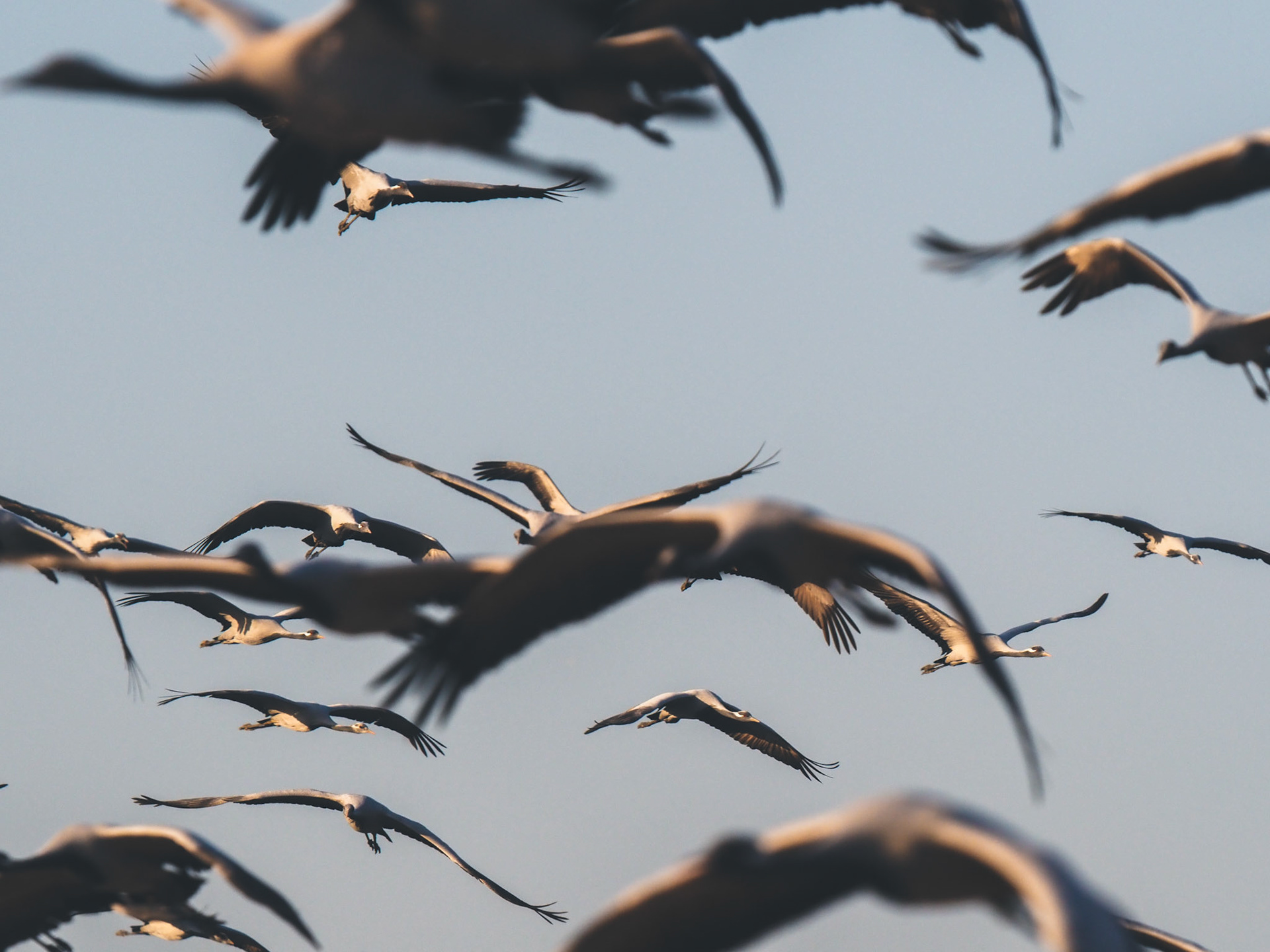
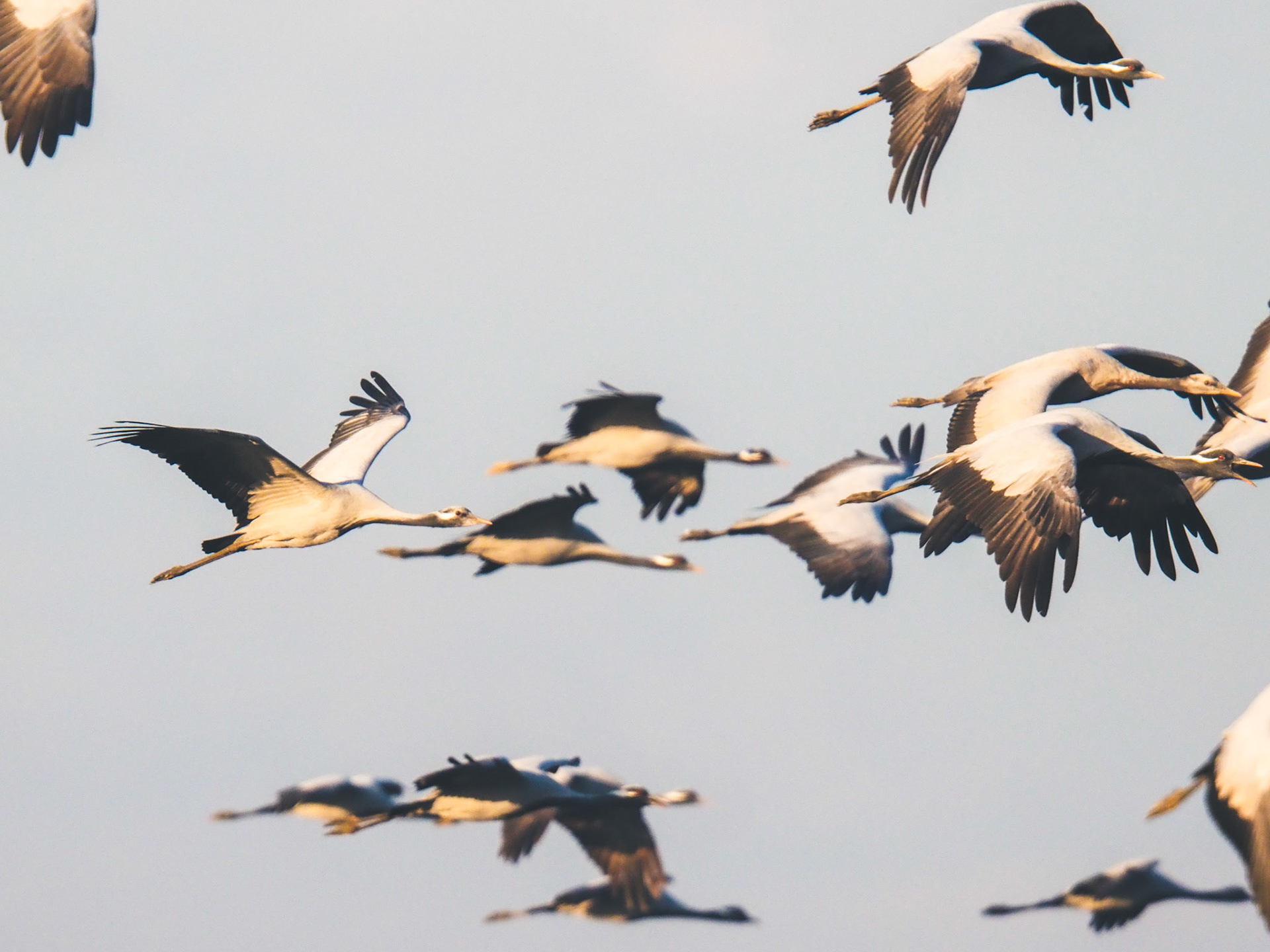
Every winter, tens of thousands of them fly down from Mongolia and southern Siberia to this tiny speck in the Thar desert of western India, clearing the Himalayas nearly six kilometres up to reach Khichan.
That night, on a weak trickle of internet, I played recordings of their calls on loop: a rolling, throaty krak-krak. I wanted to be sure I would recognise it in the morning, in case Merlin didn't work. (It didn't.)

At 5am the cold darkness in the desert was absolute, and I stood outside the gate trying to spot the cranes by ear. From somewhere out in the scrub came faint, rolling krak-kraks. Or maybe I only heard what I wanted to hear.
By first light I was on the road, walking faster than I needed to. The krak-kraks grew louder and more certain, and silhouettes of cranes appeared low against the brightening sky.
The last few metres to the chugga ghar were festive. Banners hung across the small alley. The dirt road had been cleaned, brushed and watered to keep the dust down, and unfamiliar politicians smiled and waved from cutouts. There was a stage with a matchbox podium and about fifteen plastic chairs, and a couple of organisers of something milling about, looking for things to do.
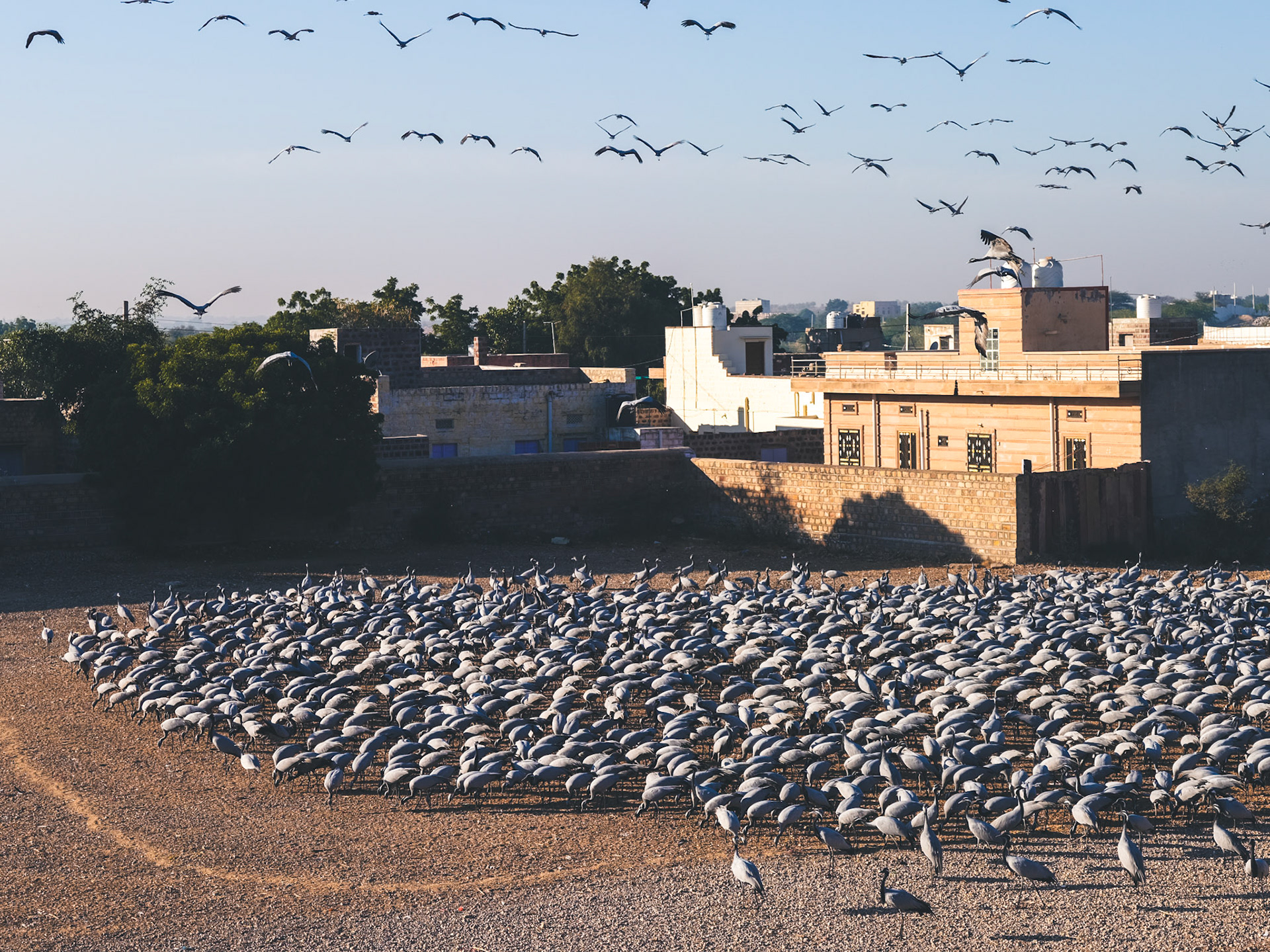
The chugga ghar, at last. It turned out to be a bare patch of ground smaller than a football field, boxed in by a fence and the backs of village homes. Grain lay scattered across it, almost invisible against the oatmeal-coloured sand.
"Welcome to our Kurja Mahotsav," one of the organisers greeted me. "Today is a special day. Our MLA is visiting to see the kurja feeding."
A grand gala for the demoiselle cranes, then, with a politician as guest of honour. If anything, it was reassuring. These people knew what they were doing. Nobody invites a politician to watch birds that might not turn up.
I nodded politely, sidestepped the loudspeakers and a tray of marigold garlands, and kept walking. I had photos to take and vantage points to scout. At the far western end of the fence, amid neglected scrub and the ever-present thorn bushes, I checked the light, picked my angle and settled in to wait for the birds to land.


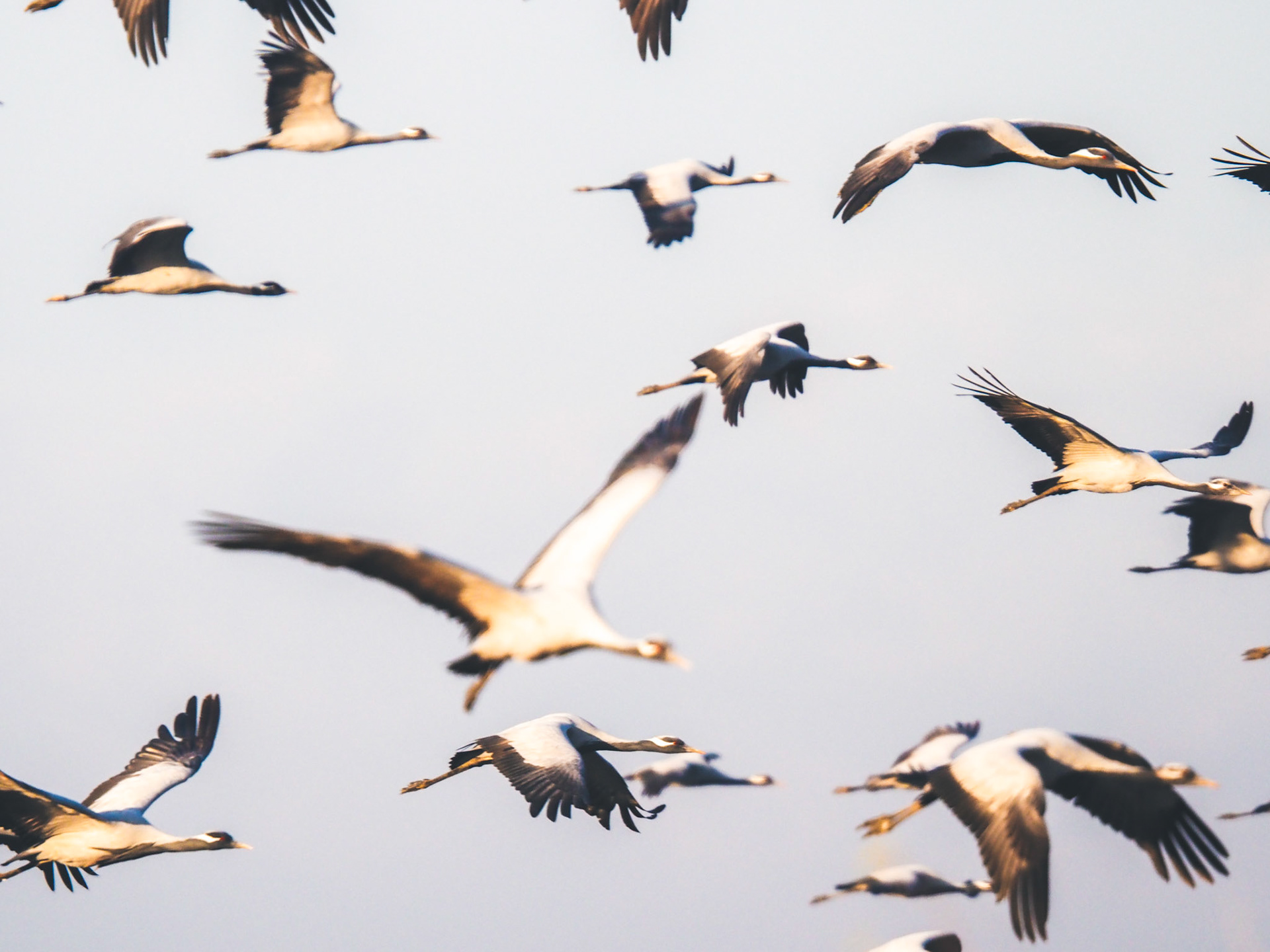

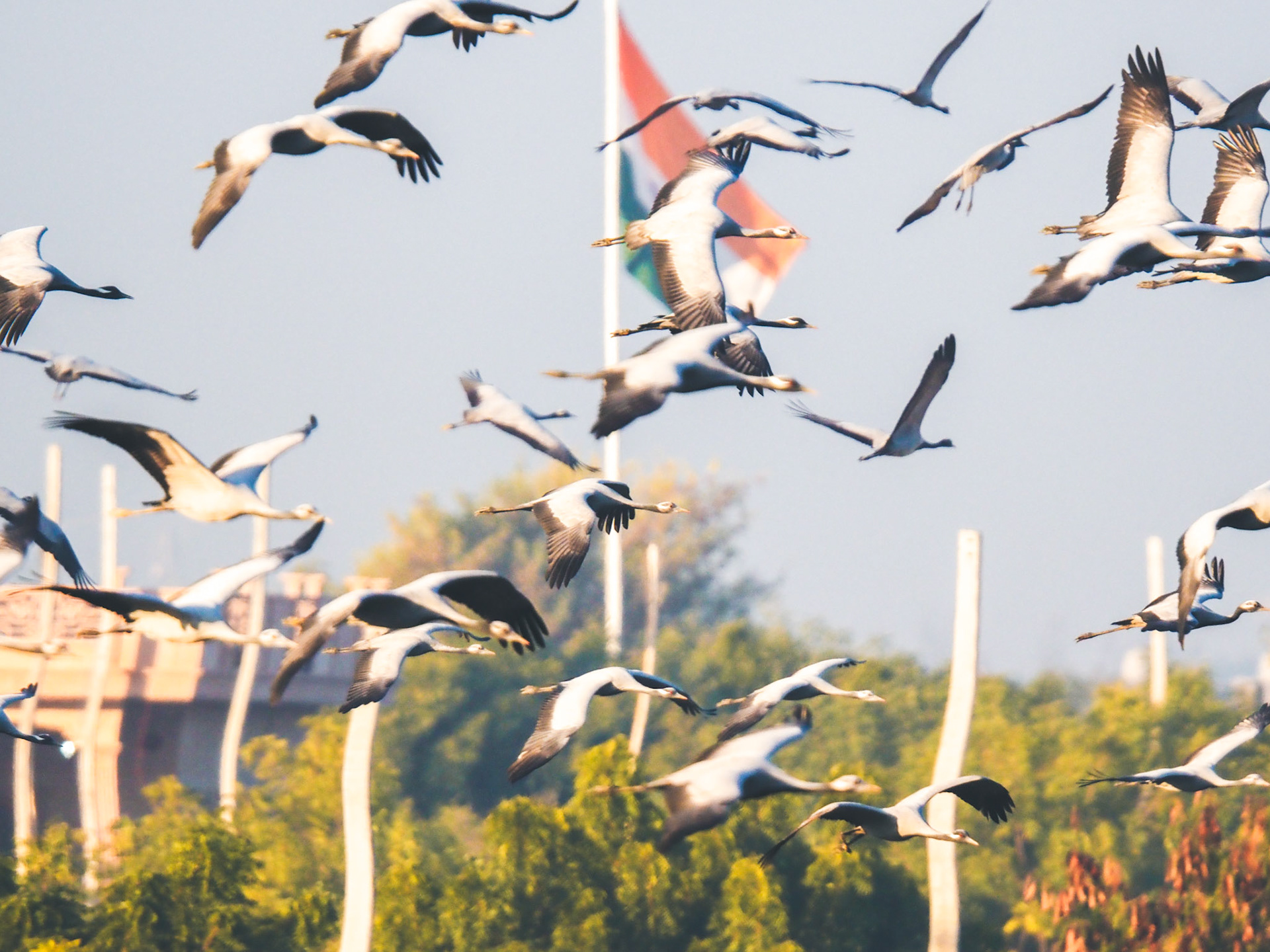
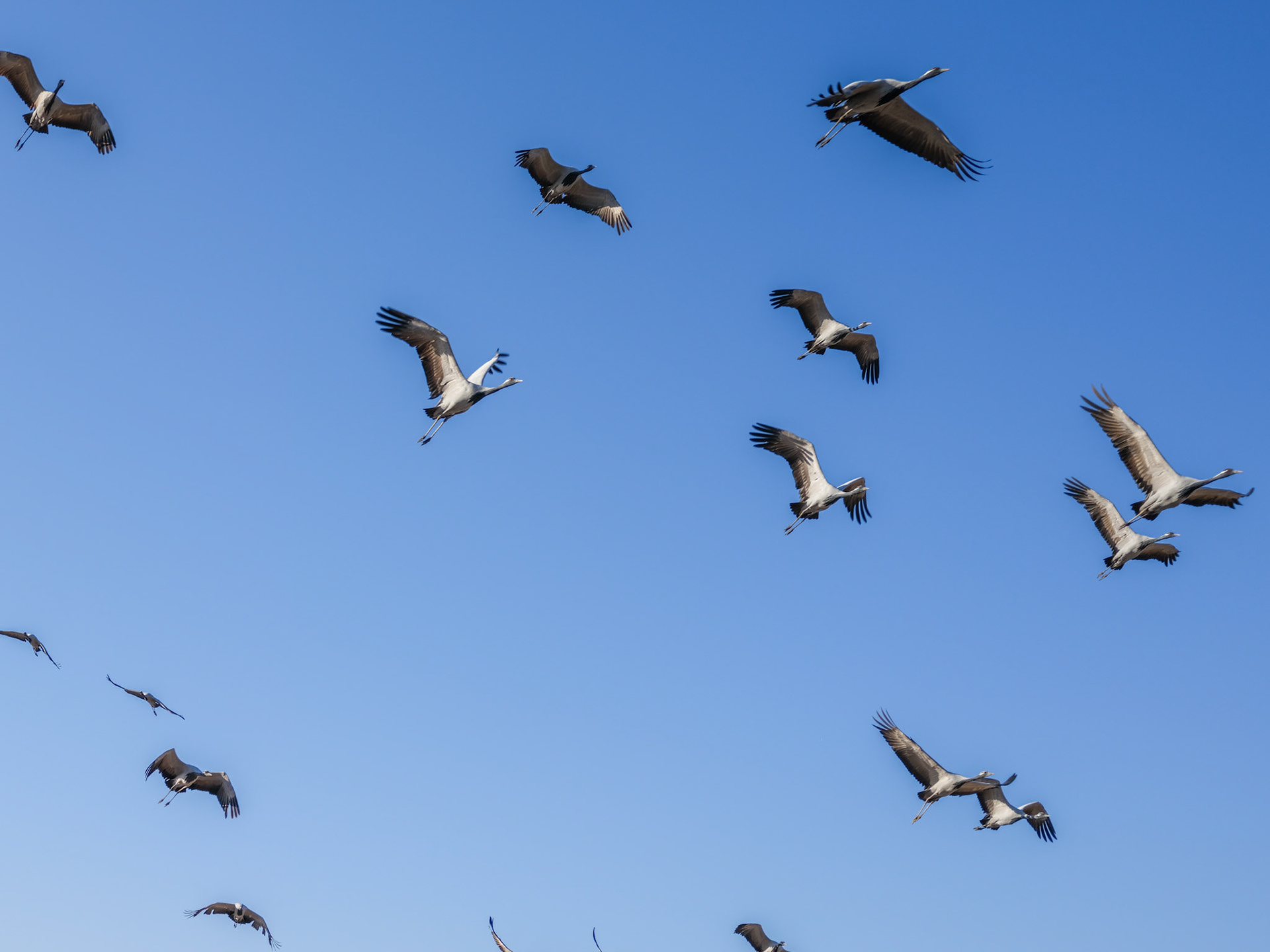
Soon enough a flock appeared, circling high overhead and swelling with every turn. Not one piece. Hundreds. I checked my shutter speed, then checked it again. At the other end, I was sure, the organisers were just as eager for their bigwig's landing.
Waiting, I had time to go over what I had read the night before. Demoiselles are the smallest of the cranes, barely three kilograms each, and yet they had come over the Himalayas to get here. A legend goes that Marie Antoinette gave them their name, charmed by their demure manners. They turned overhead, unhurried, never quite committing, as if waiting to be asked.
The flock turned over the village like a slow ceiling fan, going round and round without getting anywhere. Each pass brought it lower, close enough to pick out the black plumes on their necks. Then, instead of dropping into the enclosure, it peeled away and settled in the fields further out. Another flock arrived, circled and did the same. Then another.
I waited. I shifted my angle. I waited some more. The fields beyond filled with blue-grey bodies, while the chugga ghar stayed empty and the grain lay untouched.
Eventually I gave up and trudged back towards the stage, where the local dignitaries were still preparing their speeches in front of the fifteen plastic chairs. I had almost reached them when someone shouted from a rooftop terrace above the enclosure.
"Who allowed you to go there?"
I looked up. A man was leaning over the parapet, exasperated, pointing at me and then at the far end of the fence.
"It is because of you that they are not landing!"
I was stunned, then dismissive. Who was he, and what did he know? I had been standing quietly in the scrub, bothering no one. Surely I knew how to stand still.
Curious, I climbed the narrow stairs to the terrace. It was already crowded, cameras on the parapet and tea in hand. Somehow everyone else had known where to be.
From up there, the chugga ghar made sense. My carefully chosen vantage point at the far western end was the one open side of the box, where the scrub ran straight into the enclosure. It was the obvious way in for the birds, and I had parked myself right in the middle of it.
The cranes began to land almost at once. First a few, then dozens, then hundreds, all on the exact patch of scrub I had just left. From there they walked in towards the grain. They had been too polite to land while I was standing there.
I had come thousands of kilometres to block thirty thousand cranes.
The man on the rooftop, it turned out, was not yelling at tourists for sport. He was an award-winning volunteer who had looked after the cranes for years. He opened his terrace to visitors free of charge, with tea and coffee, so they could watch without getting in the way.
Over his tea, I apologised, a little stiffly.
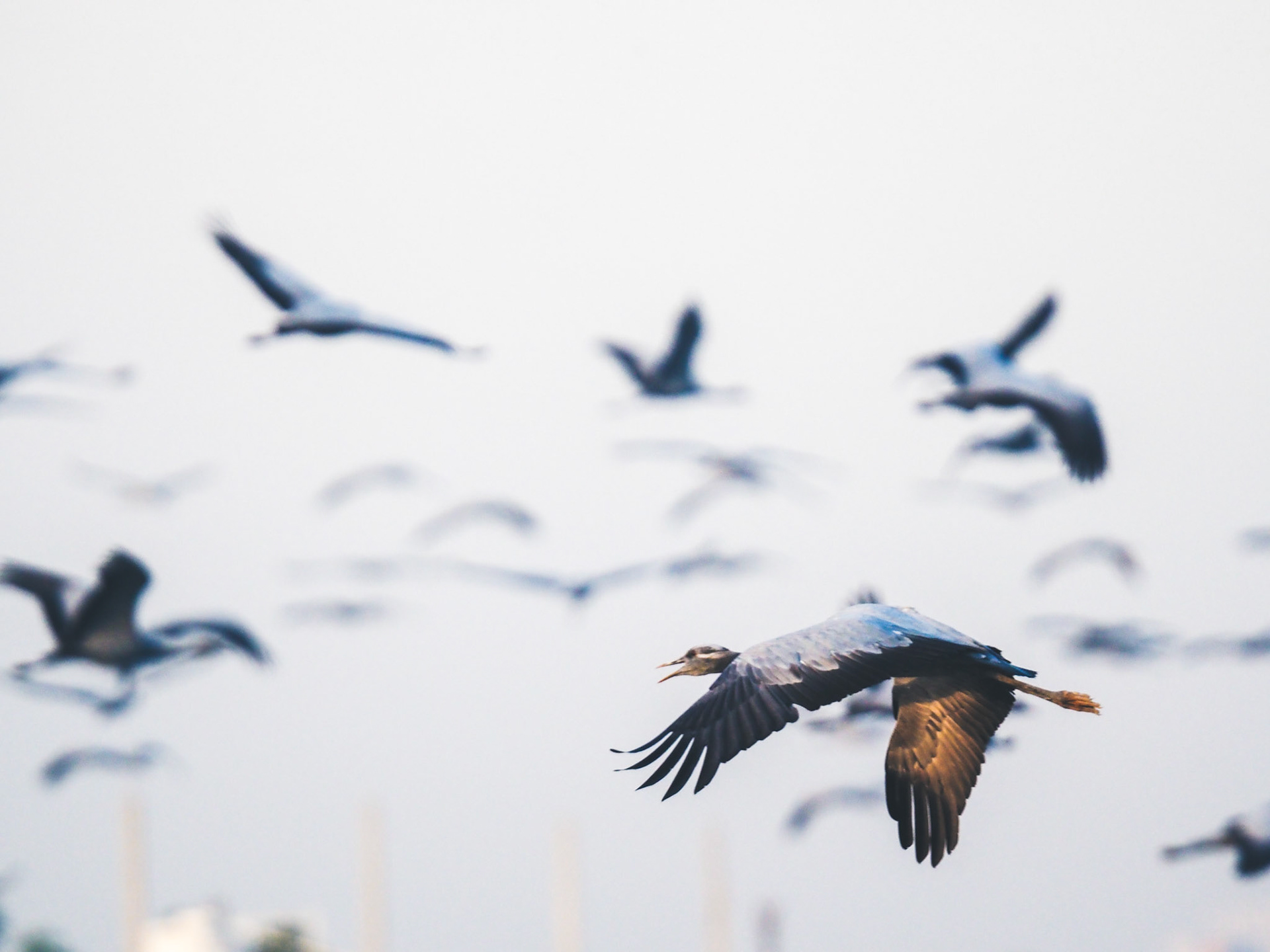
The cranes kept coming in waves. They came down like grey laundry dropped from a great height, each one unfolding into legs at the last moment, until there was no sand left to see. The krak-kraks rose into one continuous roar, thousands of voices piled on top of each other. This time there was no mistaking them.
I raised the camera, and the scene broke into too many choices. The last flocks streaking in against the sky. The blur of wings as they braked to land. The small white mandir in the background. Wide for the scale, or tight on a single bird?
Before I could decide, the chief guest arrived. The local big man had come up to the terrace with his entourage, including a reporter and a colleague filming on an iPhone. One of his attendants came over and politely asked me to move. They wanted him framed against the feeding cranes.
I moved one more time.