
It was December 2016. In Addis, the encampment of aid workers and diplomats was already thinning out, everyone retreating toward the safety of pre-booked sun and familiar air. Me? On a last-minute whim, I decided to head for Berbera in Somaliland, with no more than a backpack and a half-baked idea of what I was getting into. I told anyone who’d listen that I could make the round trip for less than $200, mostly to see if I could. This was a commitment to discomfort: a series of buses, shared taxis that left when full, and finally a rickety private taxi after crossing the border to arrive in Hargeisa.
From there, the road ran east to the coast. Berbera, on the Gulf of Aden, had some of the most striking, unexplored beaches. Ethiopia had none, of any kind. The destination was worth the austerity. That was enough.
The next morning I got on a public bus to Berbera on the coast. All foreigners were officially required to hire an armed escort and a private vehicle to travel in-country. The cost was prohibitive. My self-inflicted budget couldn’t absorb it, and more importantly, I didn’t want to. Others at the hostel had attempted to do the same the day before. One of them, a raw emerald dealer from Brazil who had been to 160 countries told me that they were caught at a checkpoint and removed from their bus. That evening they’d admitted defeat and decided they’d hire the escort and pay the fee the next day.
I slipped through somehow.
In Berbera, I found a hotel for $8. There was a $45 “deluxe option” on the beach. Guess which one my wallet allowed me? After dropping my bag off in a dimly lit room, I made my way to the beach. Beautiful and pristine as expected. Primary goal achieved.
The following morning, after breakfast at a shack downstairs of canned green peas fried with curry powder, a mini baguette and a glass of chai, I set out for Las Geel.
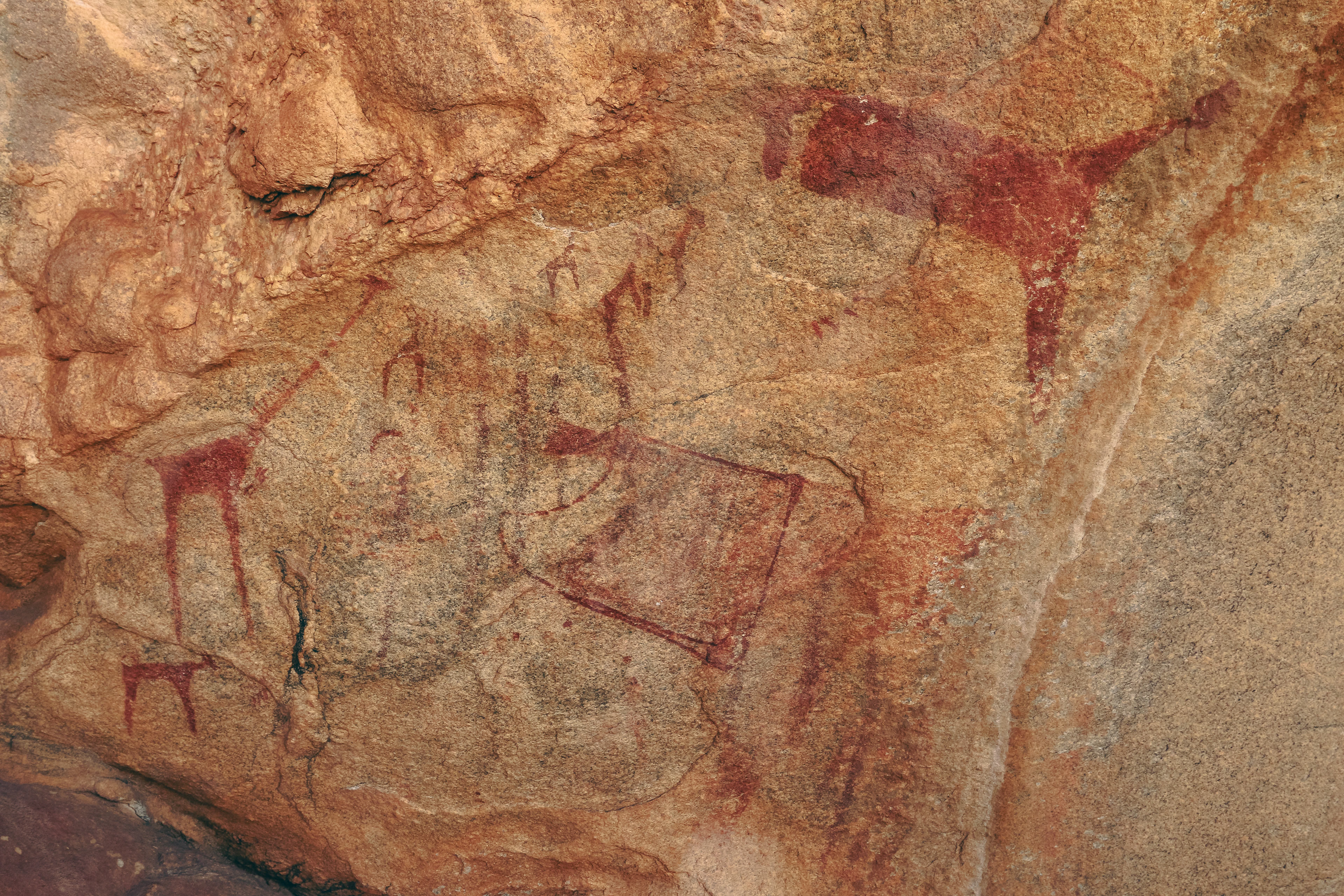
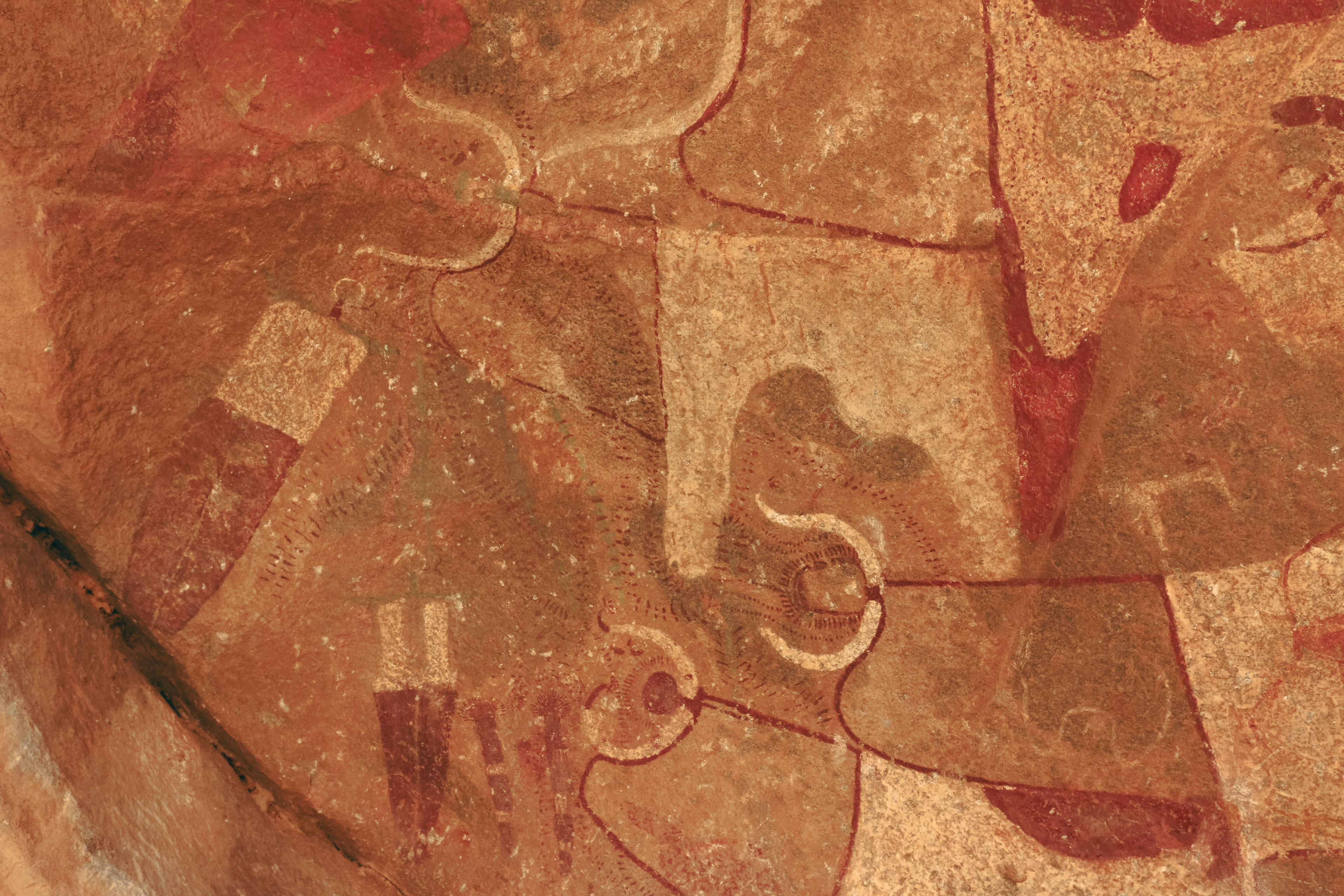
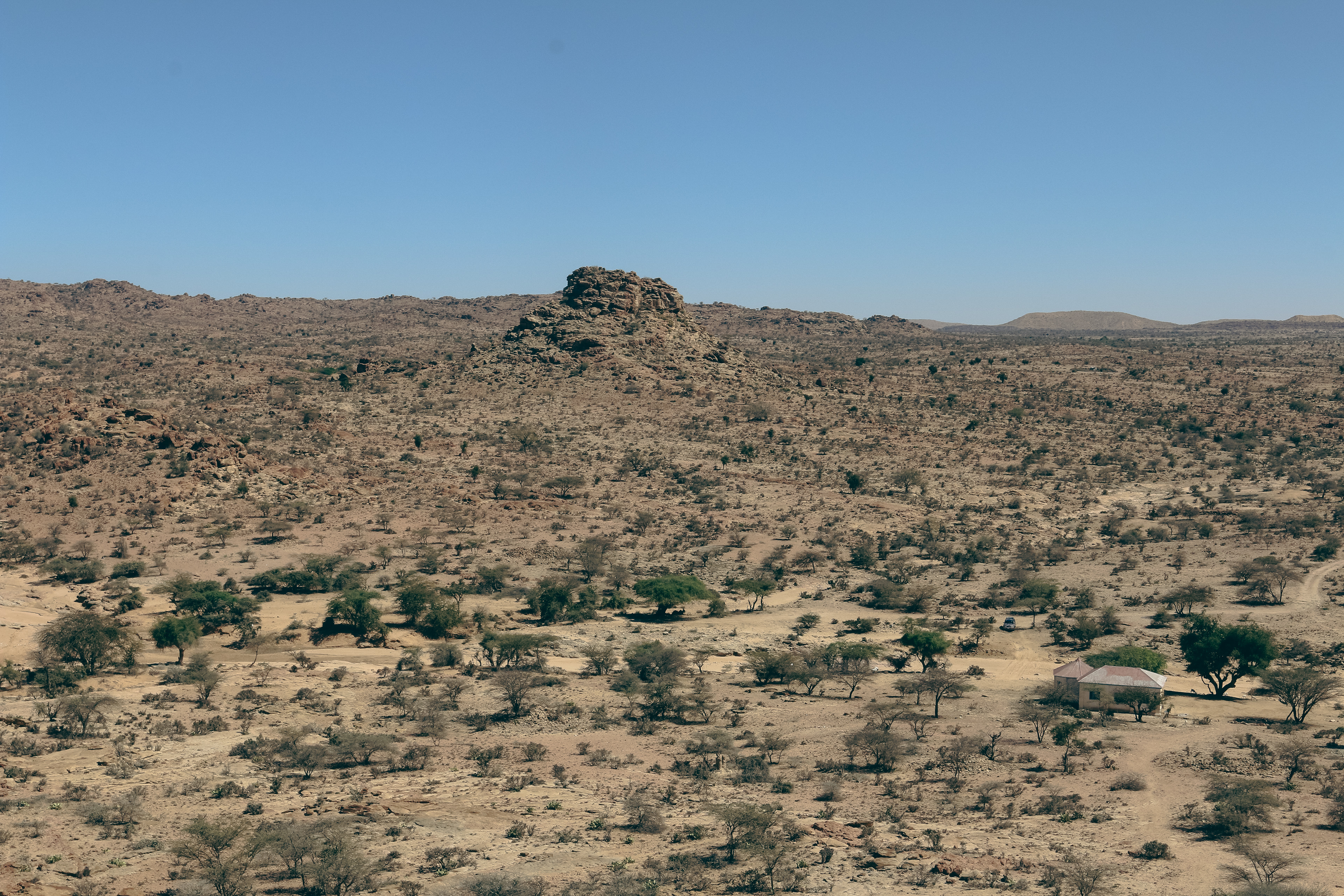
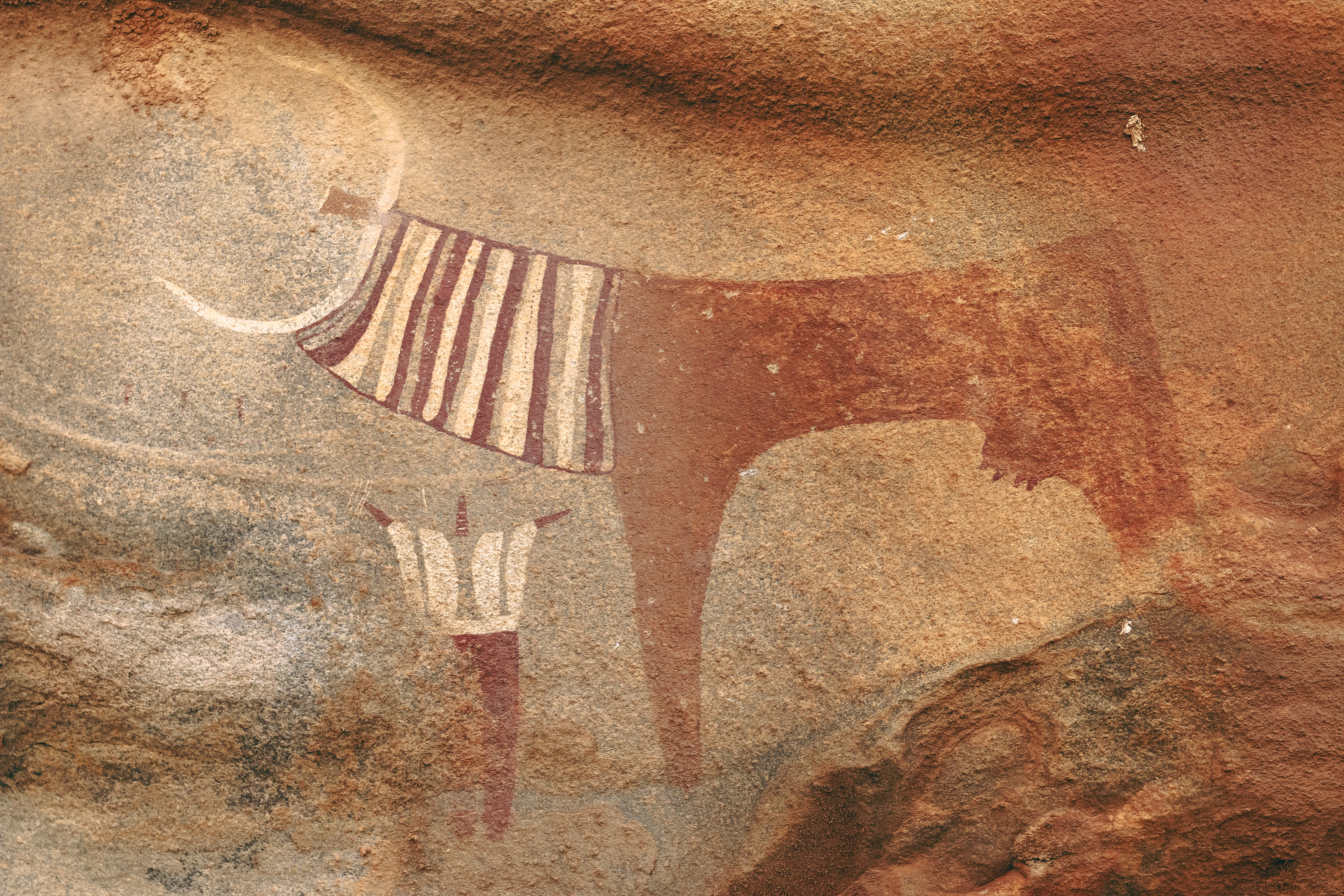
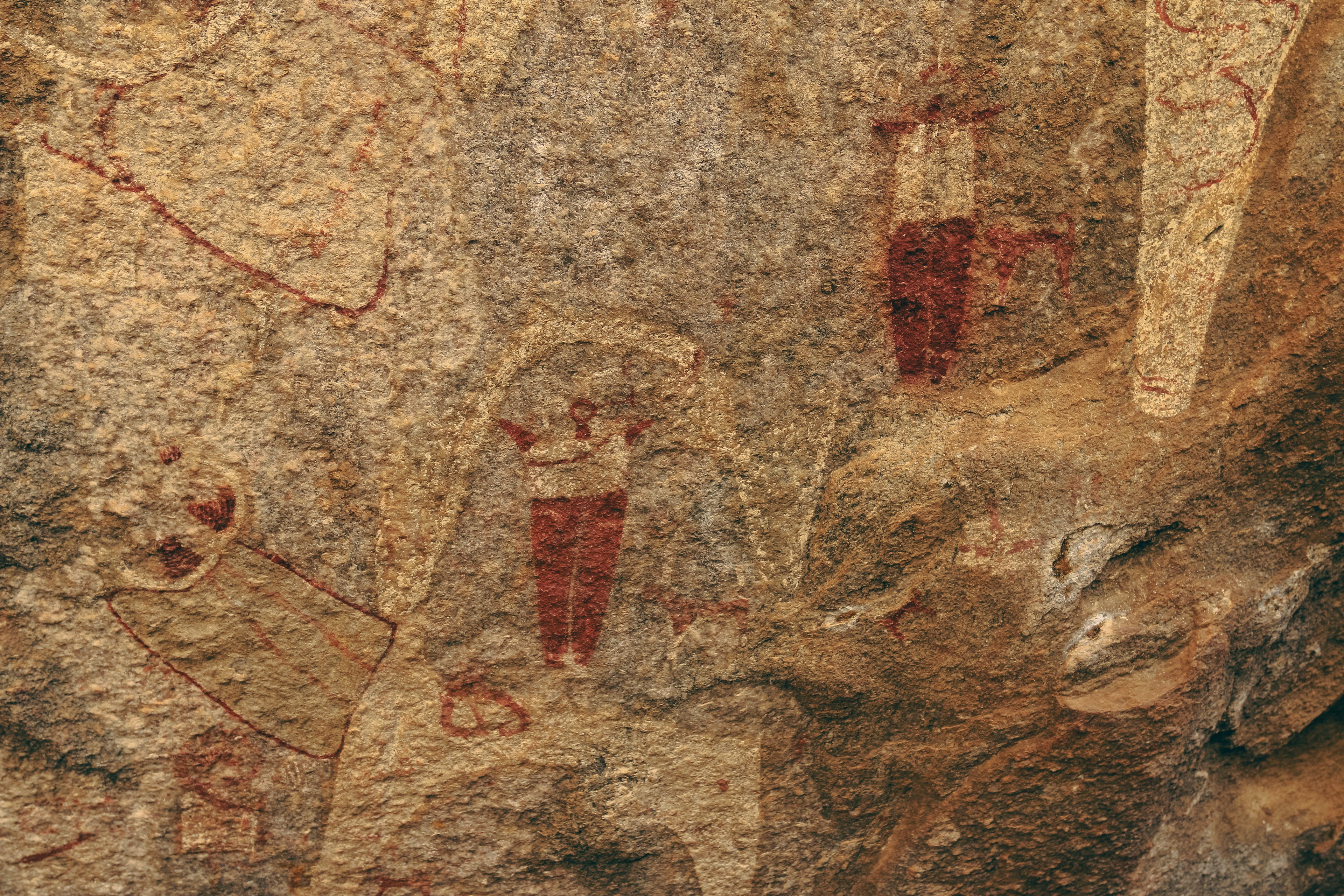
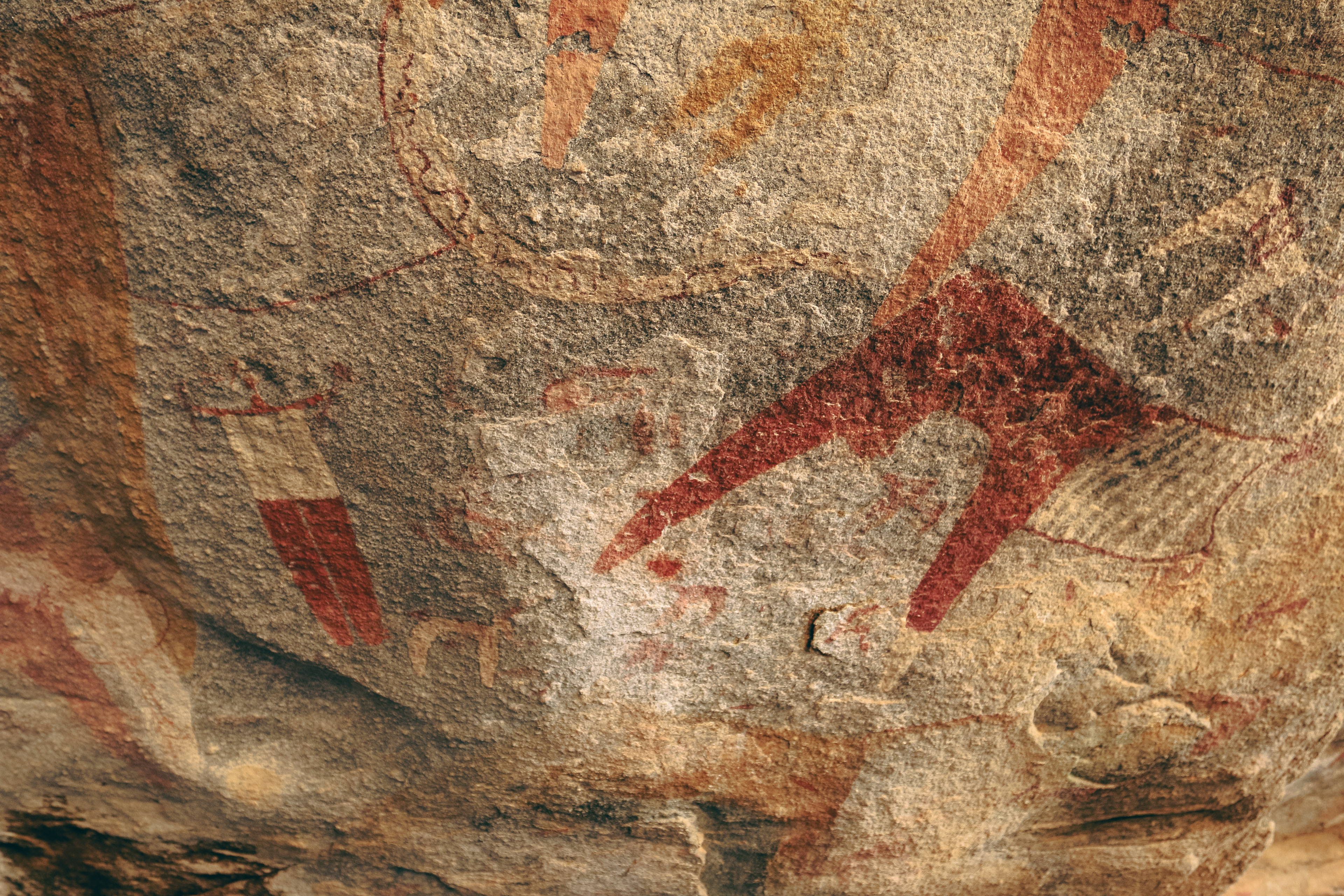
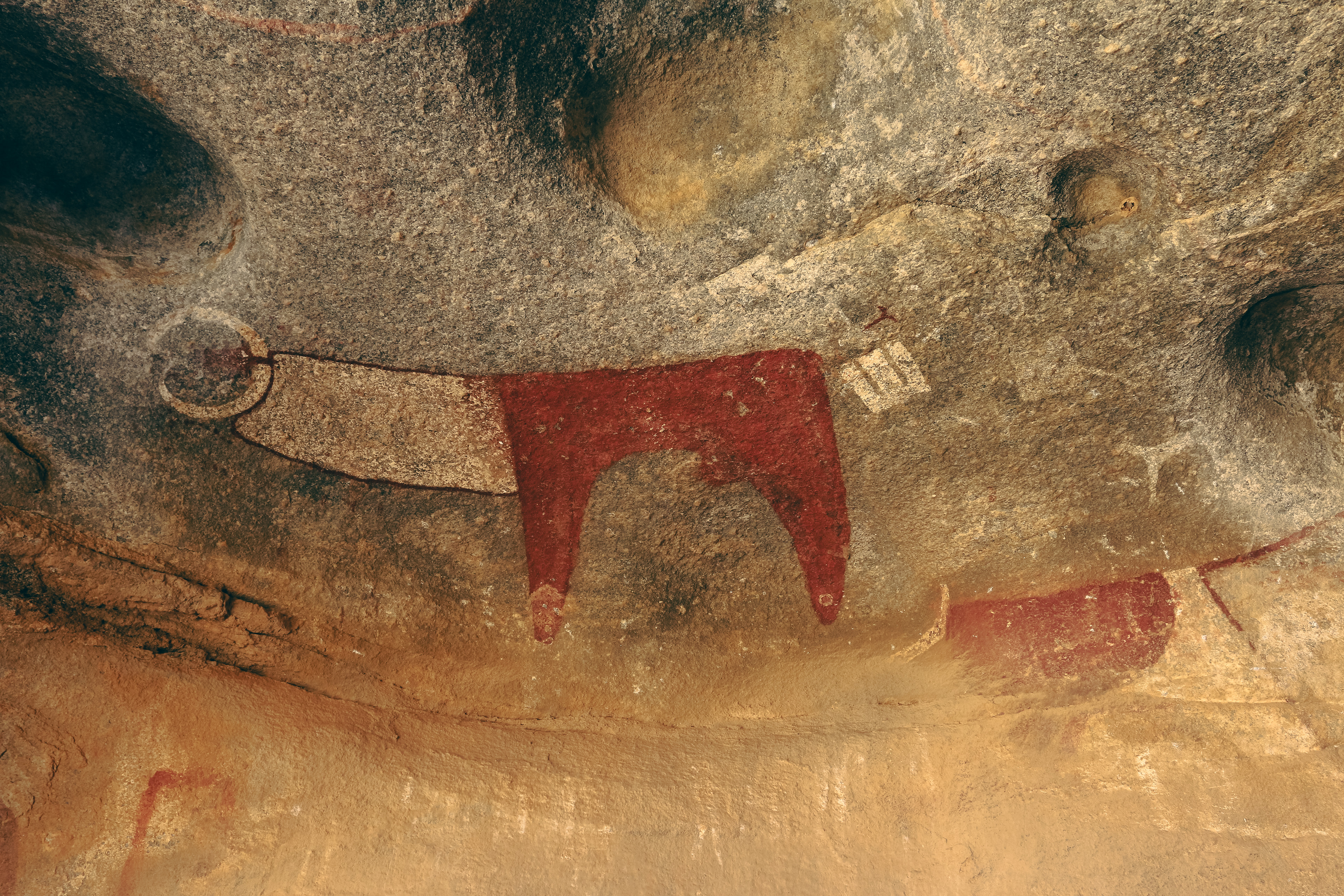
The caves were a series of granite overhangs fifty kilometers inland. Las Geel holds some of the best-preserved Neolithic rock art in Africa, with paintings dating back eleven thousand years. The figures are rendered in ochre and white pigment across the shelter walls. They depict long-horned cattle, giraffes, domesticated dogs, and humans in ceremonial dress. These animals are the ghosts of a much wetter landscape, proof that these arid badlands once supported savanna wildlife. Though a French archaeological team only identified the site in 2002, it remained barely visited and hardly documented in the travel literature I had scavenged in Addis.
I caught a bus heading back inland.
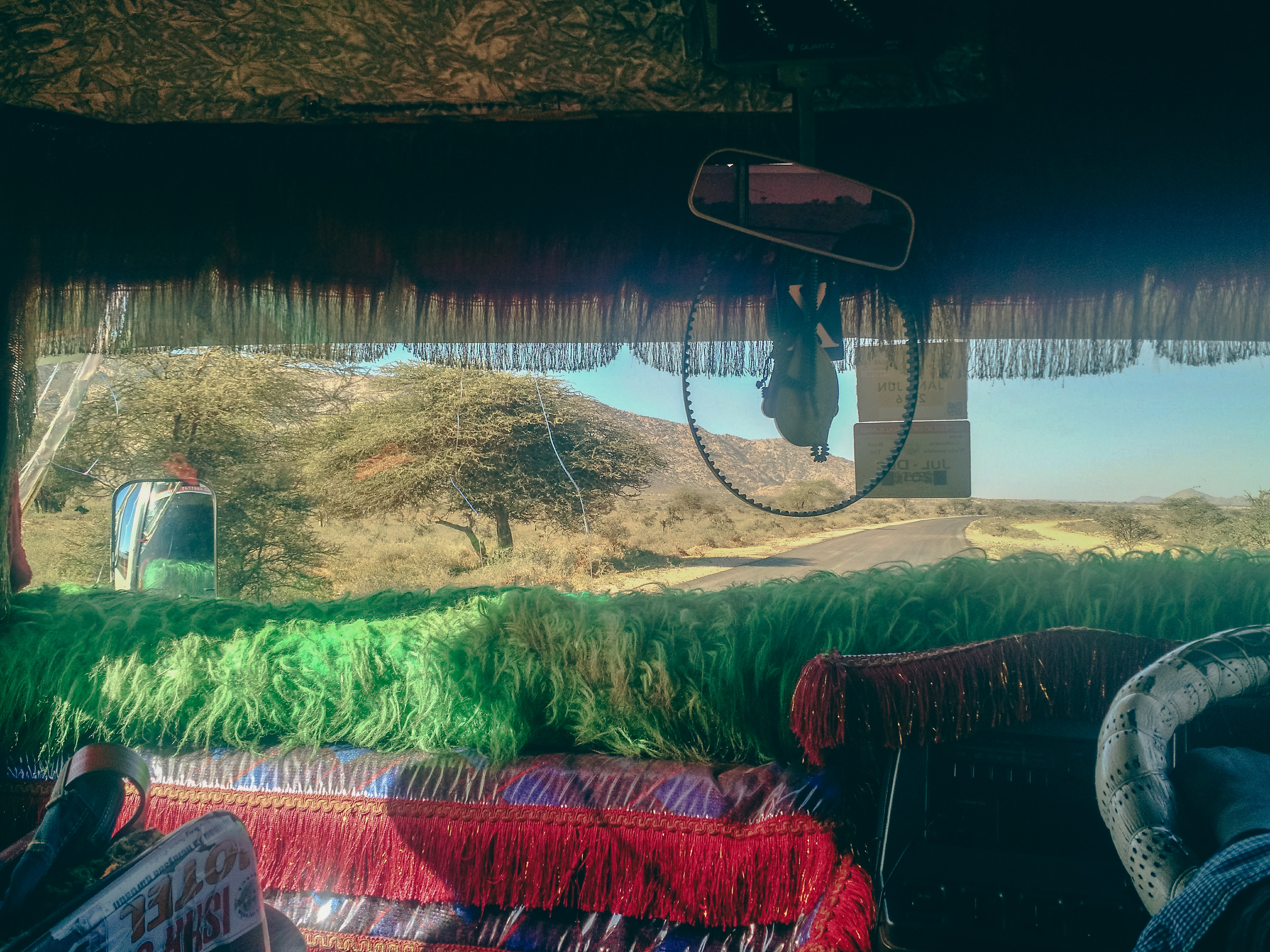
The bus, like most vehicles in Somaliland, had its steering wheel on the right but drove on the right side of the road. British colonial legacy meeting practical reality. I was given the seat on the padded engine cover next to the driver. For the entire journey I sat in what appeared to be the driver’s position, watching oncoming traffic approach from my side of the road, with no ability to do anything about it. The engine heat radiated through the thin padding. I tried not to think about head-on collisions.
A ratty, outdated, possibly unreliable guidebook I’d found in Addis had mentioned that you could tell the driver you wanted to get off at Las Geel. The caves were supposedly two or three kilometers off the main highway. I informed both the conductor and driver of my destination. They nodded. This seemed promising.
Eventually I saw road signs for Las Geel. The driver pulled into a lay-by where a small roadside eatery stood under a corrugated metal roof. He turned and gestured. This was my stop. Between my nonexistent Somali and his nonexistent English, we managed good-byes. I got off. The bus left.
A small group sat in the shade near the eatery. I approached and asked for directions to the caves. They looked at each other. A discussion began. It became a debate. No one seemed certain what I was talking about. This went on for several minutes.
Finally, a consensus emerged. They might know what I meant, but the turnoff in my guidebook was about seven kilometers away. I was standing in Las Geel town. The turnoff led to Las Geel caves. Two different places, same name.
I stood there trying to process this. It was December, but the sun was climbing toward noon and the temperature was climbing with it. Walking ten to fourteen kilometers in the desert was not a reasonable option. I asked if there was any way to get there.
While they discussed possibilities, I noticed someone heading into the scrub behind the eatery. Natural functions. I followed, going a bit farther for privacy. I was about to begin when the man started shouting and gesticulating wildly. Eventually I understood: squat, don’t stand. Local Islamic propriety applied even to urination in the bushes. Of course it did.
When I returned, the older man in the group had a solution. They could arrange a car and driver. $100. Half my budget. For fifteen kilometers. I started to complain. They chewed qat. They didn’t care. Price was price.
I changed tactics. Looking at the woman I assumed was the older man’s wife, I said I would simply walk. I might struggle in the heat, but I had no money for this.
She began bullying her husband in rapid Somali. He responded. She spoke louder.
None of this would have been possible without the translator. A local aid worker from Islamic Relief had stopped at the eatery and, seeing my situation, offered to help communicate. He went back and forth between me and the family, navigating the negotiation.
We settled on $40. Still a significant portion of my remaining budget, but less ruinous than $100. They called for a car. I waited. I bought water.
When the Toyota Vitz arrived, the aid worker asked if he could join the trip. He’d never seen the caves. In fact, none of them had. I asked about his work. He shrugged. “Slow day.” We got in. He asked the driver to stop by his office. He went inside, locked up, and returned. Off we went.
Once we’d found the turnoff and were bouncing along the rough track toward the caves, he turned to me. “Welcome to Somaliland. You are very welcome here.”
I thanked him.
“What is your profession?”
I told him I was a teacher in Ethiopia. This was not true, but it was simple.
“How much do you make?”
I gave a vague figure.
“You could make more here. You should move to Somaliland.”
Brief silence. Then: “Are you Muslim?”
“I’m not.”
“What type of family planning do you use?”
I had no idea how to answer this. I mumbled something noncommittal, unsure what was permissible to discuss in an Islamic context, unsure why we were discussing it at all.
After a moment he continued. “It’s good you came to Somaliland. Everyone confuses us with Somalia, but we are very different. In Somalia, a trip like this would not be possible. Too dangerous. And there are landmines everywhere.”
Just as he finished talking about landmines, the Vitz hit a rock. A deafening explosion. Dust everywhere. My mind immediately leapt to the worst-case scenario. Of course it wasn’t a landmine. Of course.
It was the spare tire. Over-inflated, expanding in the afternoon heat, stressed by the jolting over rocks. It had burst.
We all sat there, breathing hard, checking ourselves for injuries that weren’t there. Then came the laughter. Relief, adrenaline, embarrassment. The aid worker looked shaken. “I was sure we died,” he said.
We continued on.
When we finally reached the caves, a caretaker appeared and led us to the shelter walls.
The paintings were extraordinary. Cattle with impossibly long, curved horns. Human figures dancing and in procession, some holding bows, others with their arms raised. The pigments still vivid after ten thousand years, protected by the granite overhangs from rain and direct sun. These painting were older than Stonehenge, older even than the Great Pyramids of Egypt, and possibly dating back to the time of Göbekli Tepe.
The paintings show giraffes, domesticated dogs, gazelle-like antelopes, monkeys, and possibly hyenas or jackals. These animals reflect a much wetter, greener Neolithic Somaliland, when the now-arid badlands supported savanna wildlife rather than the three guys bouncing along in a Vitz today.
We stood there in silence. The aid worker took photos with his phone. The caretaker pointed out details, explaining what the archaeologists had theorized about the different periods of painting.
It felt improbable that this place existed and that we were standing in it after the series of mishaps that had brought us here.
The drive back was quieter. The aid worker returned to his office. I caught another bus back to Berbera.
The budget, poor thing, had taken a fair hammering, but I had made it and with only a few minor indignities to my dignity.
I had been very welcome here.