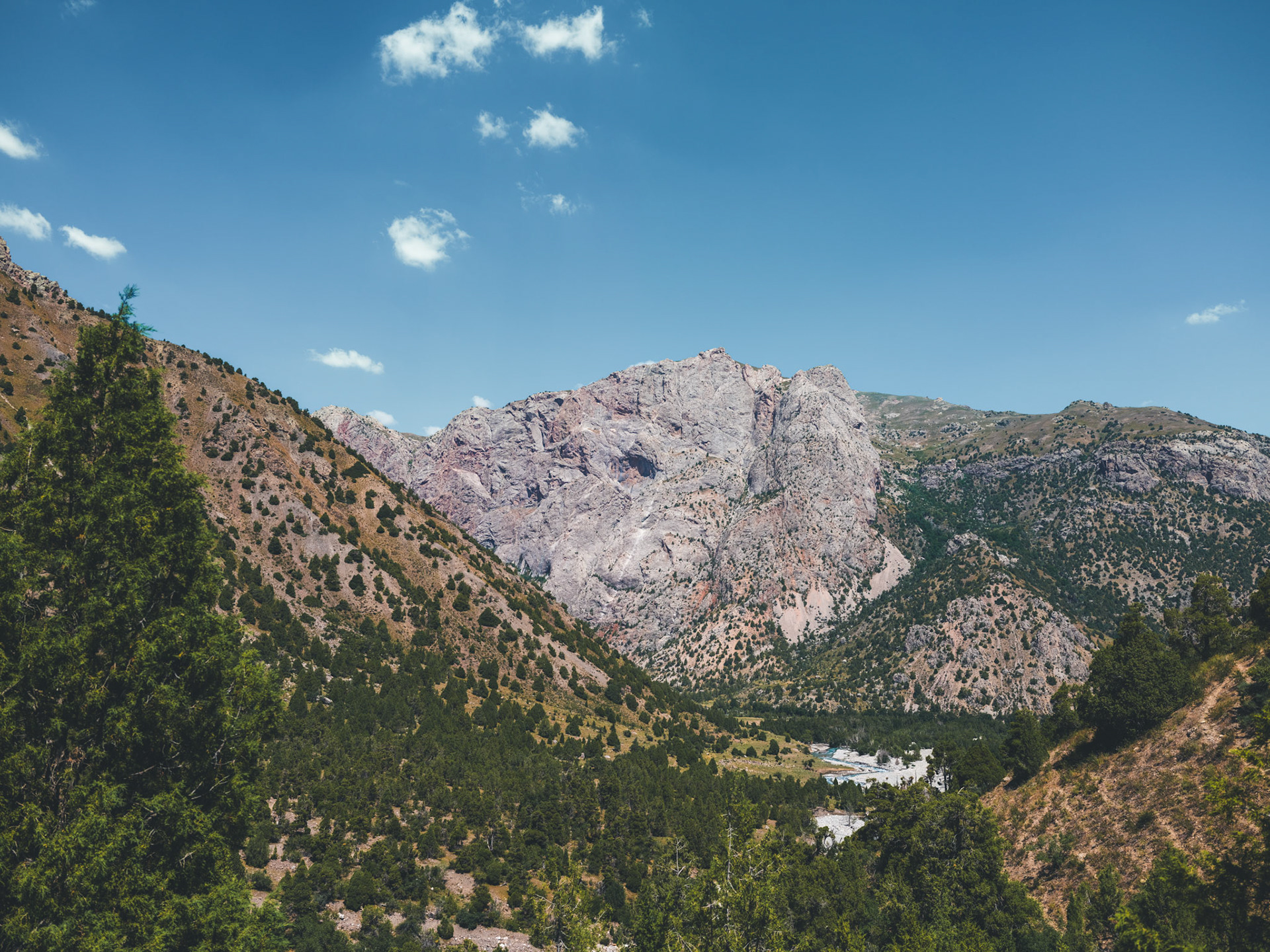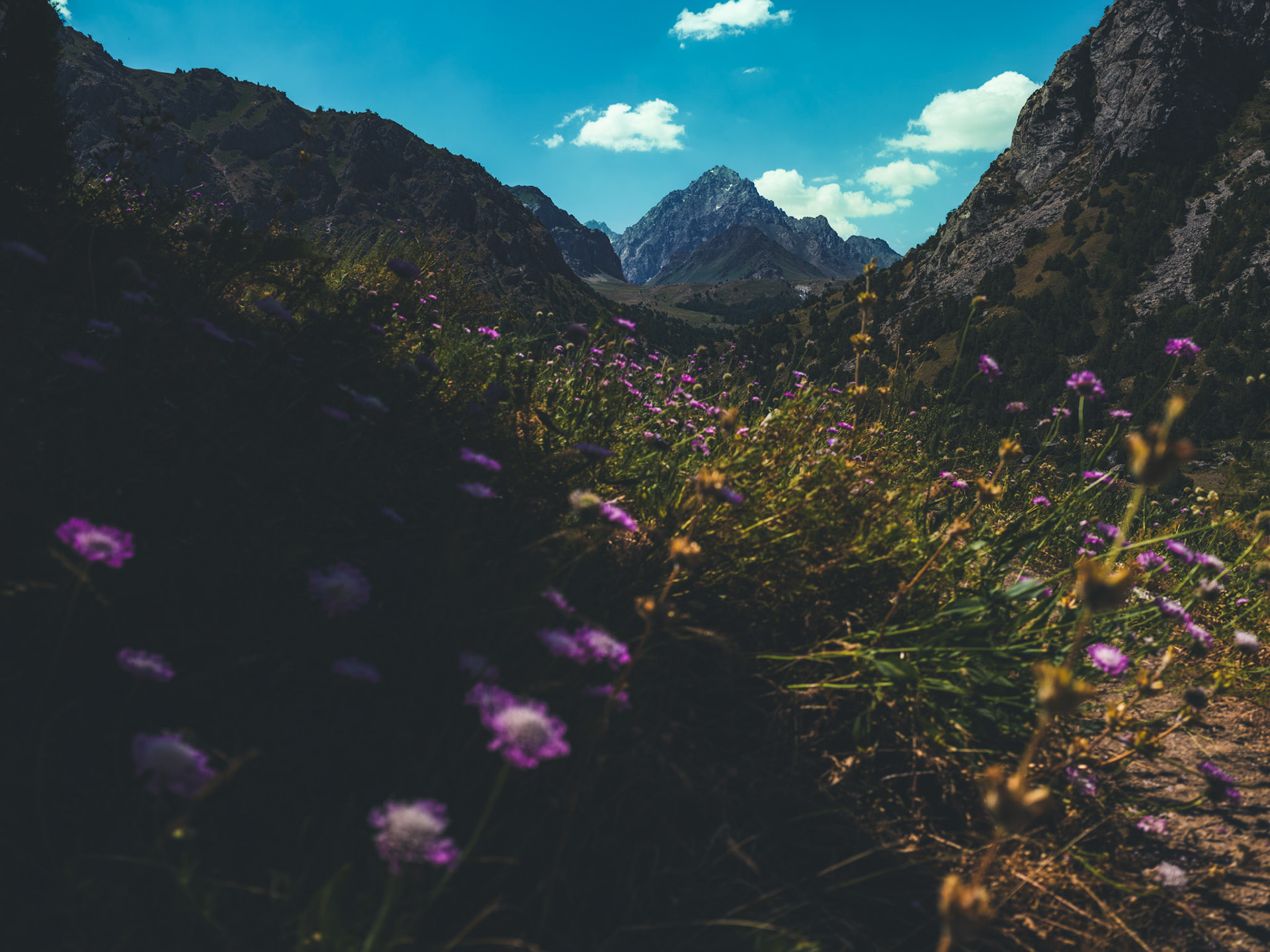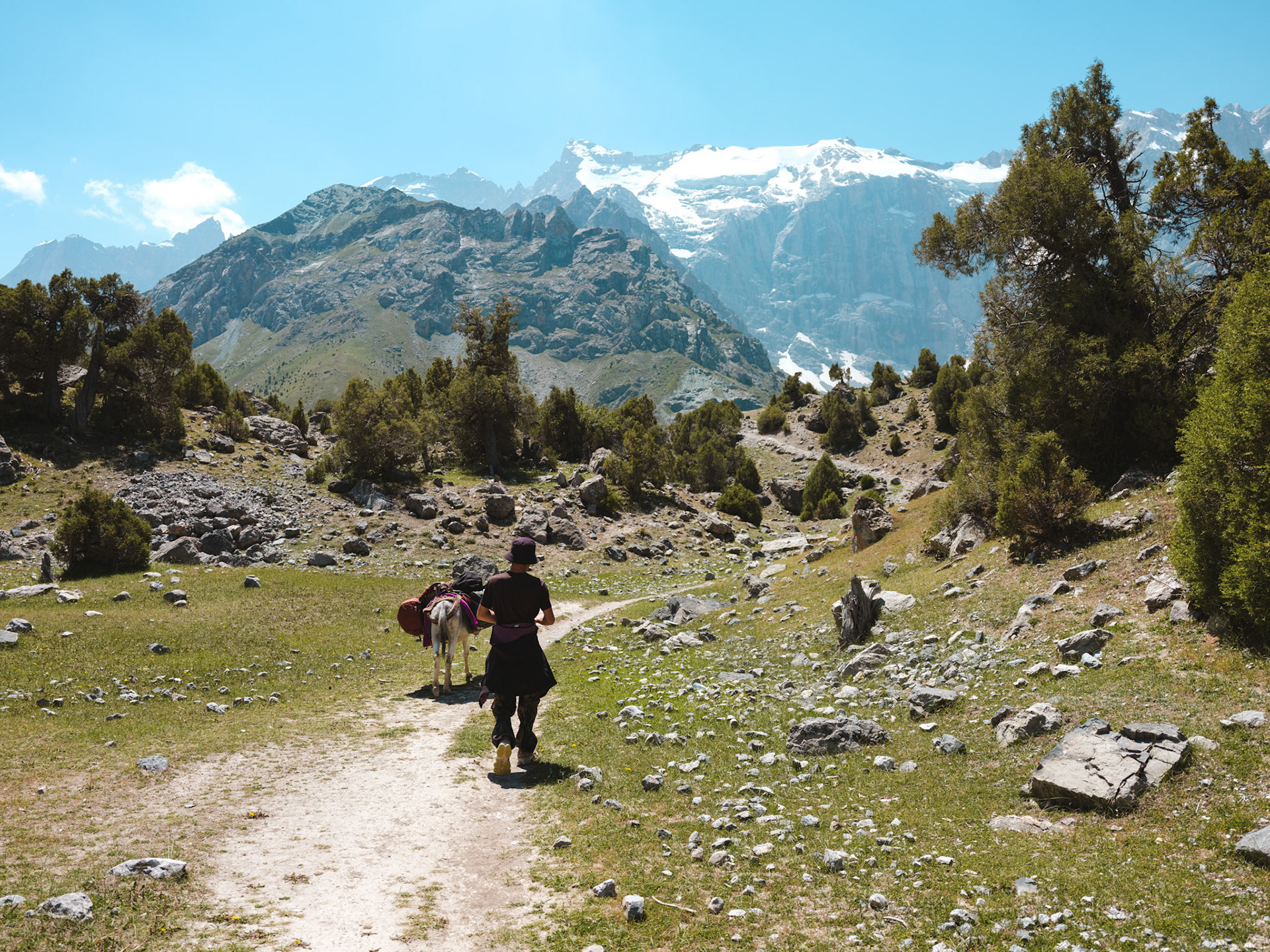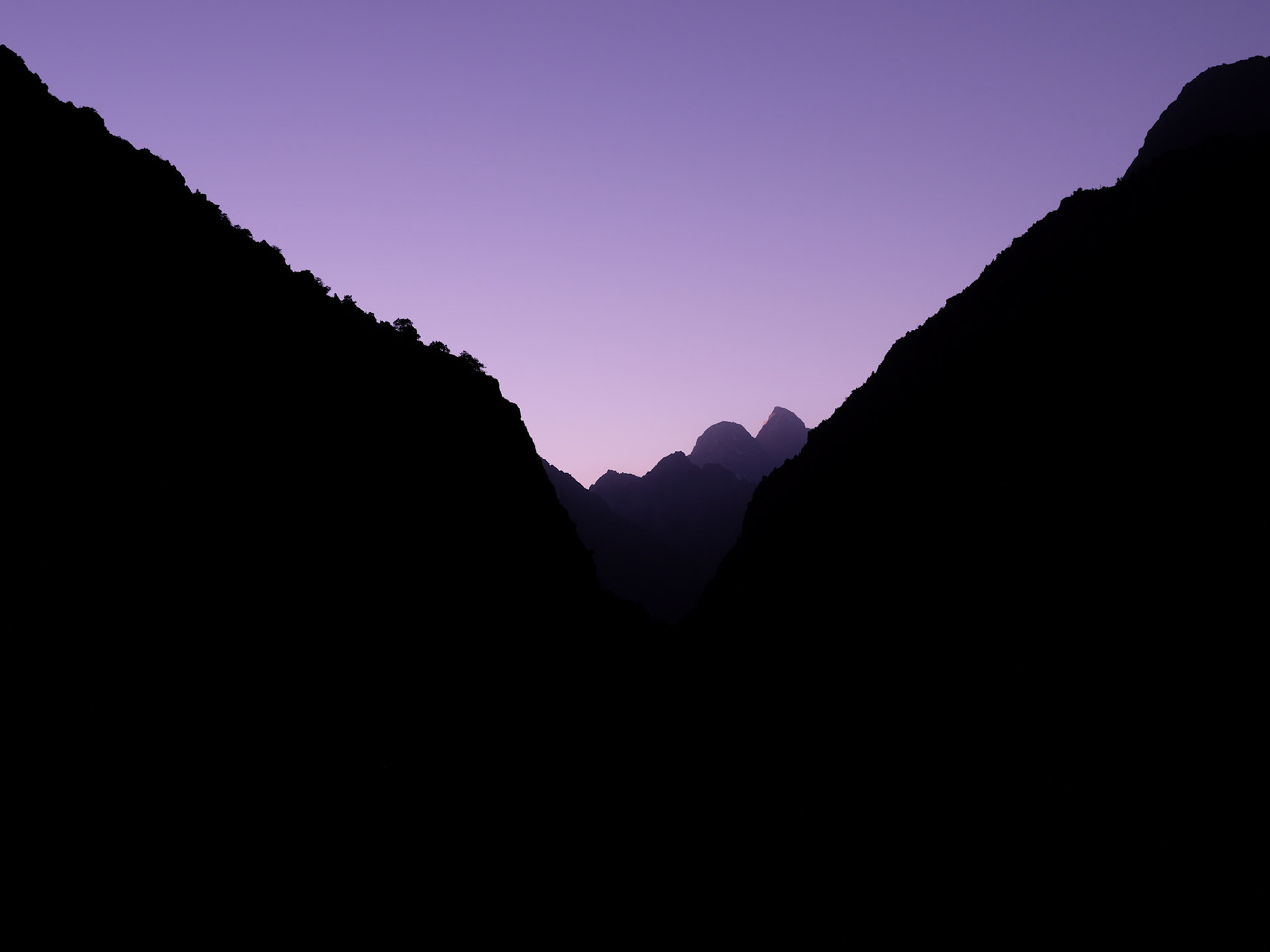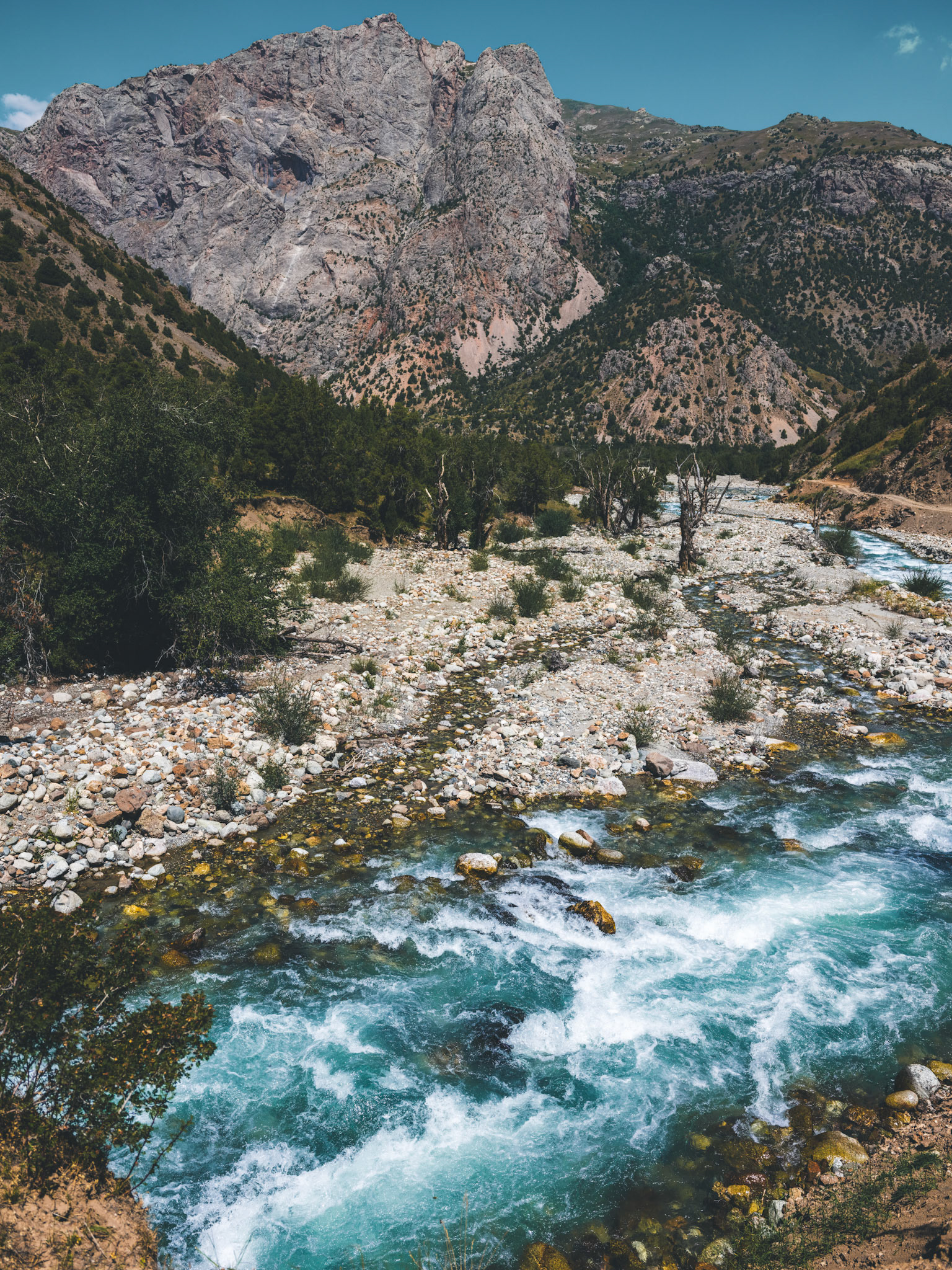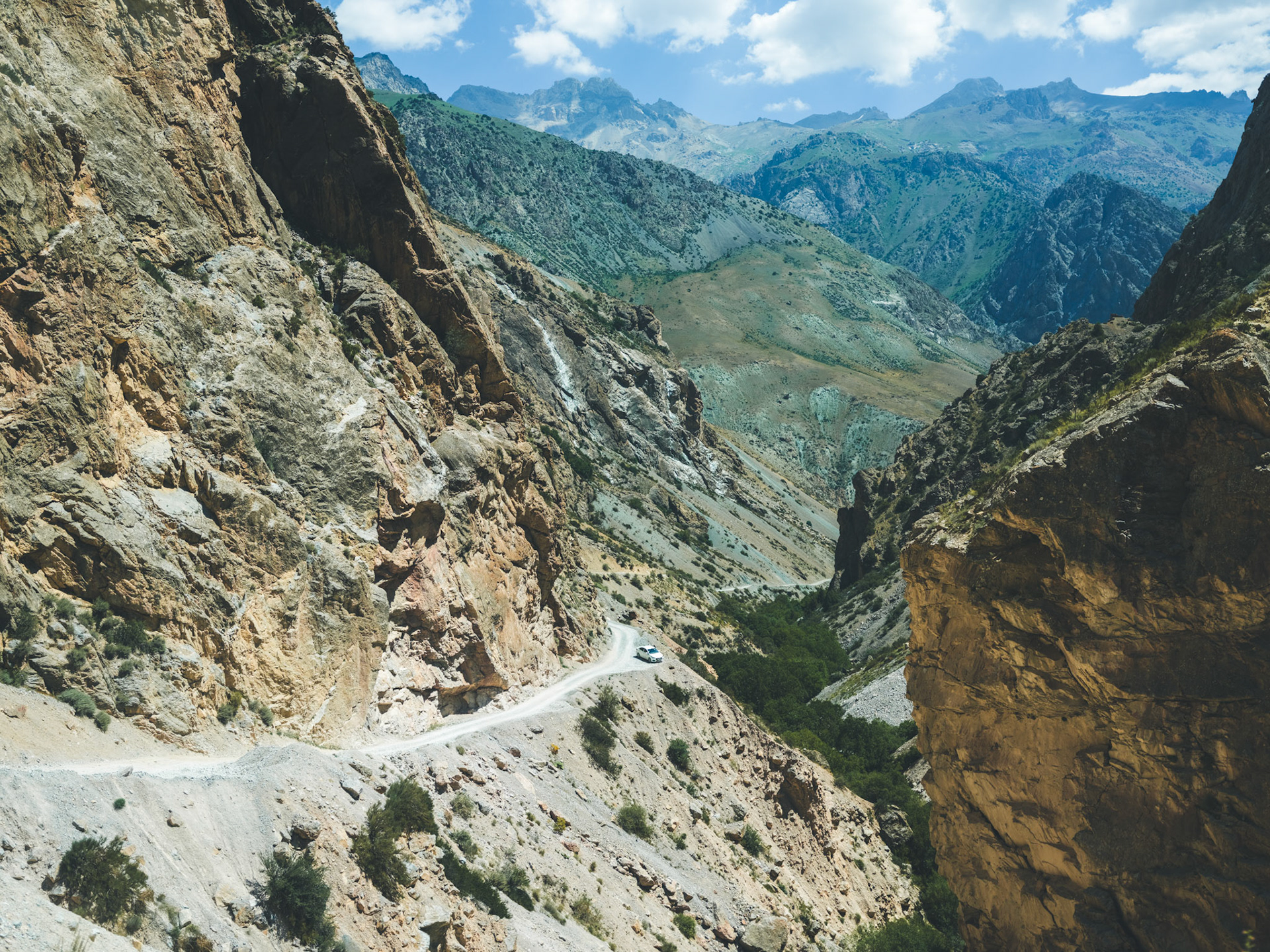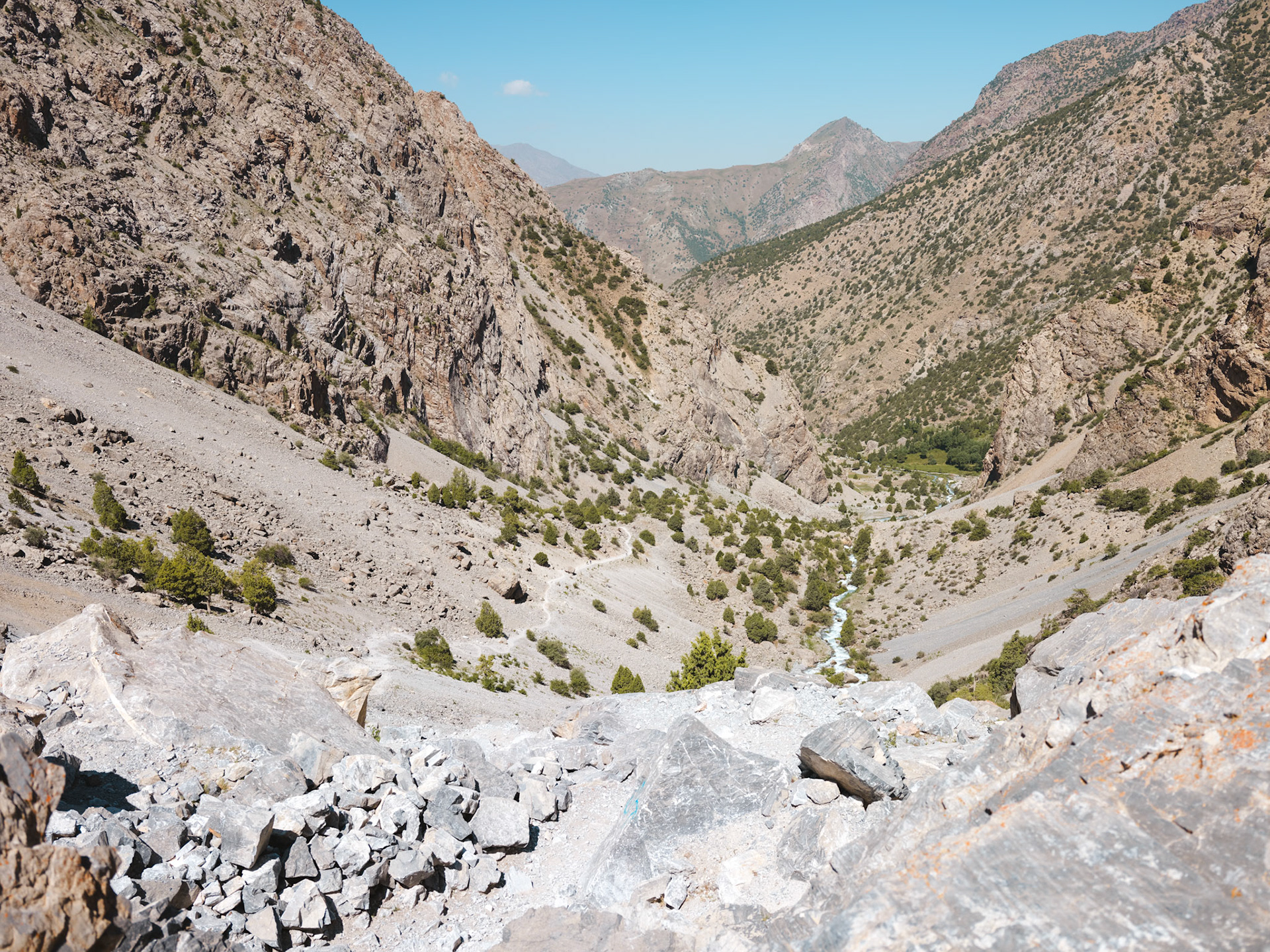
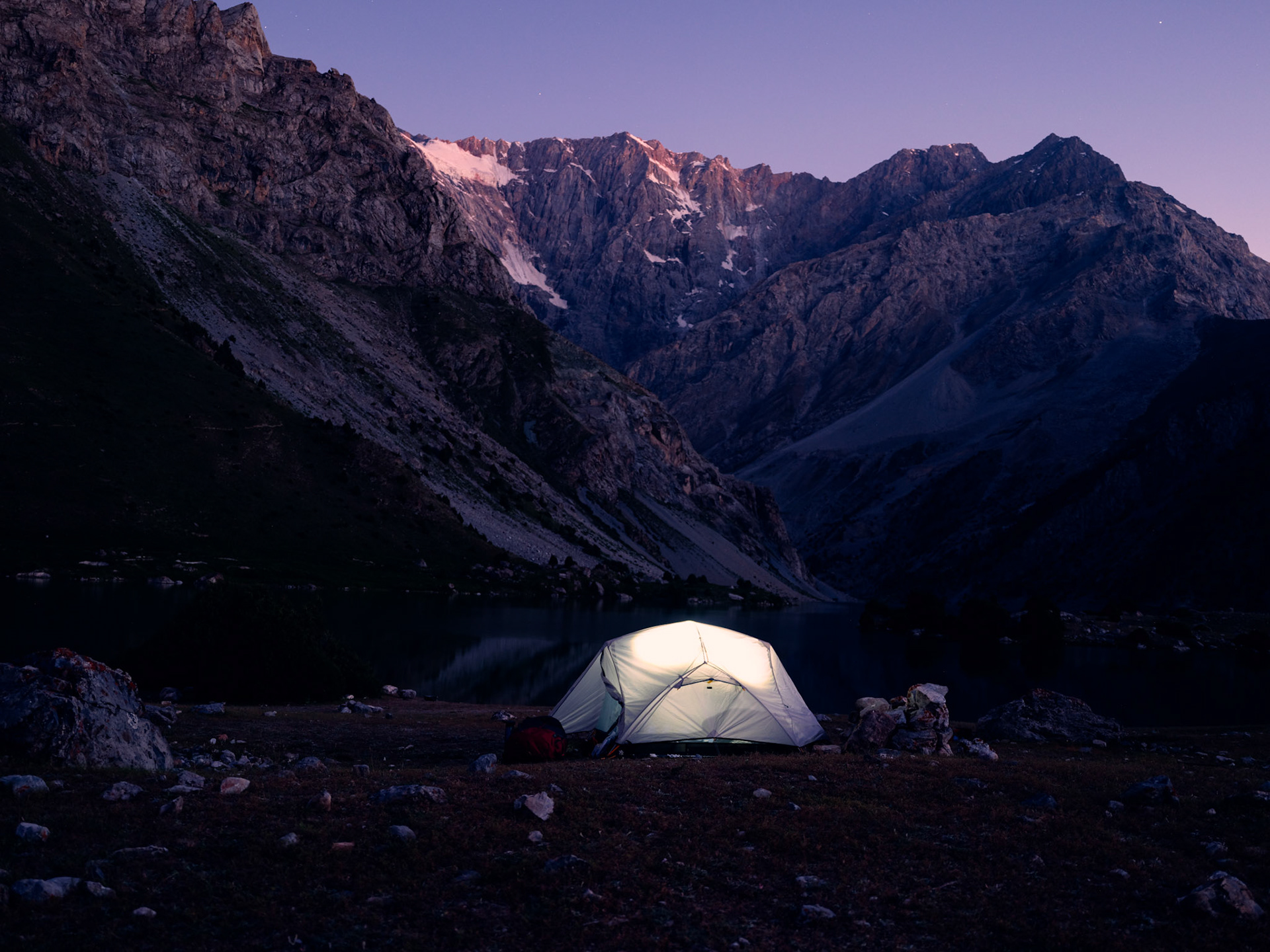
On Fann mountain trails, donkeys have the right of way. Huffing up a steep section, I clung to the mountainside and let a loaded train of seven go past. Some donkeys carried backpacks, some cartons of vague supplies, one carried a rotund camp leader riding atop the load waving a cheery "dobryy den" over his shoulder. And one donkey carried all of it: bags, boxes, rope. Except instead of a man, strapped on top sat a half-empty carton of eggs, swaying with every step toward a pass four thousand meters up. Odds of survival seemed low.
By then I'd stopped being surprised. A few days in, Tajikistan had already started revealing itself as precarious in a way that never quite tips over.
Travel plans confirmed themselves a day at a time, sometimes an hour at a time, sometimes not until the car in question was physically visible. Power poles cling to ridgelines at angles that suggest someone's best guess rather than an engineer's calculation. Footbridges that wouldn't be out of place on some Japanese game show careen across the rivers, listing to one side on ropes frayed to their last threads
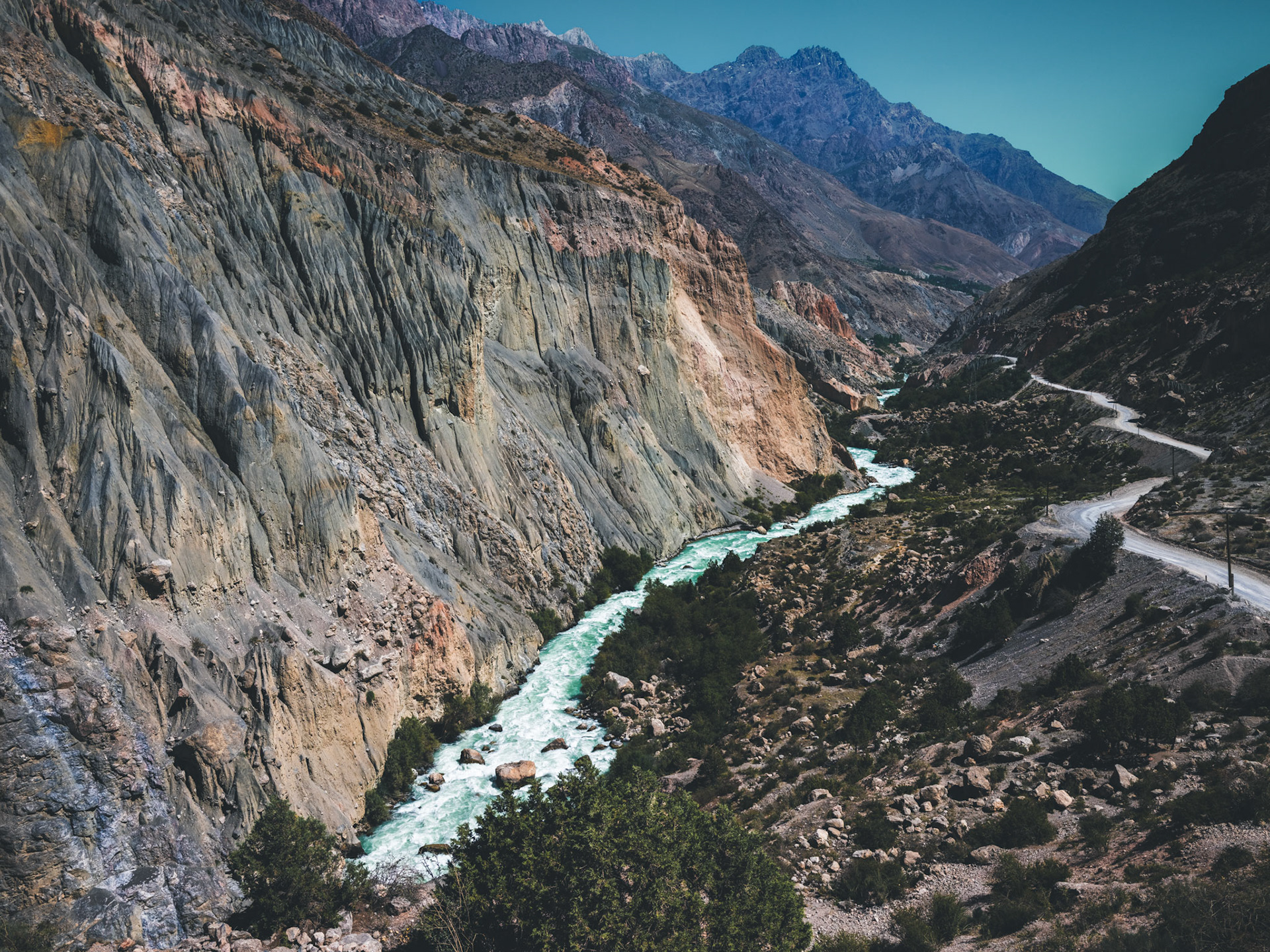
Men sit on tapchans in wayside eateries and drinkeries, suspended on flimsy open-air platforms directly over rushing glacial rivers, drinking tea or vodka, entirely unbothered.
Scree trails drop away underfoot, loose stone shifting the second you trust it.
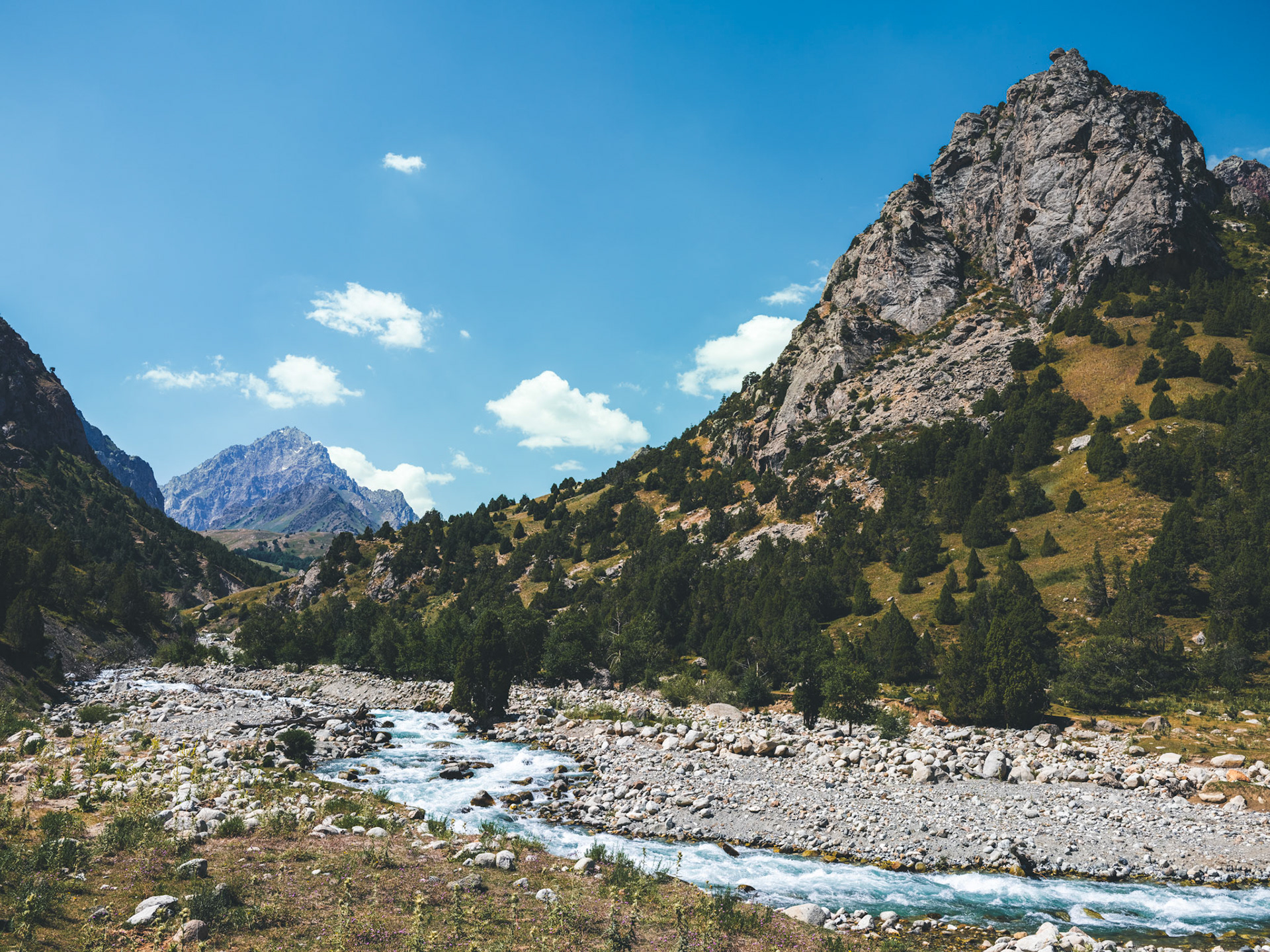
Juniper trees cling to riverbanks that have half washed away beneath them..
Watermelons are left to cool in the side channels of the same rivers, wedged loosely against rocks and trusted to stay put.
Somehow, most of it holds. Most of it works.
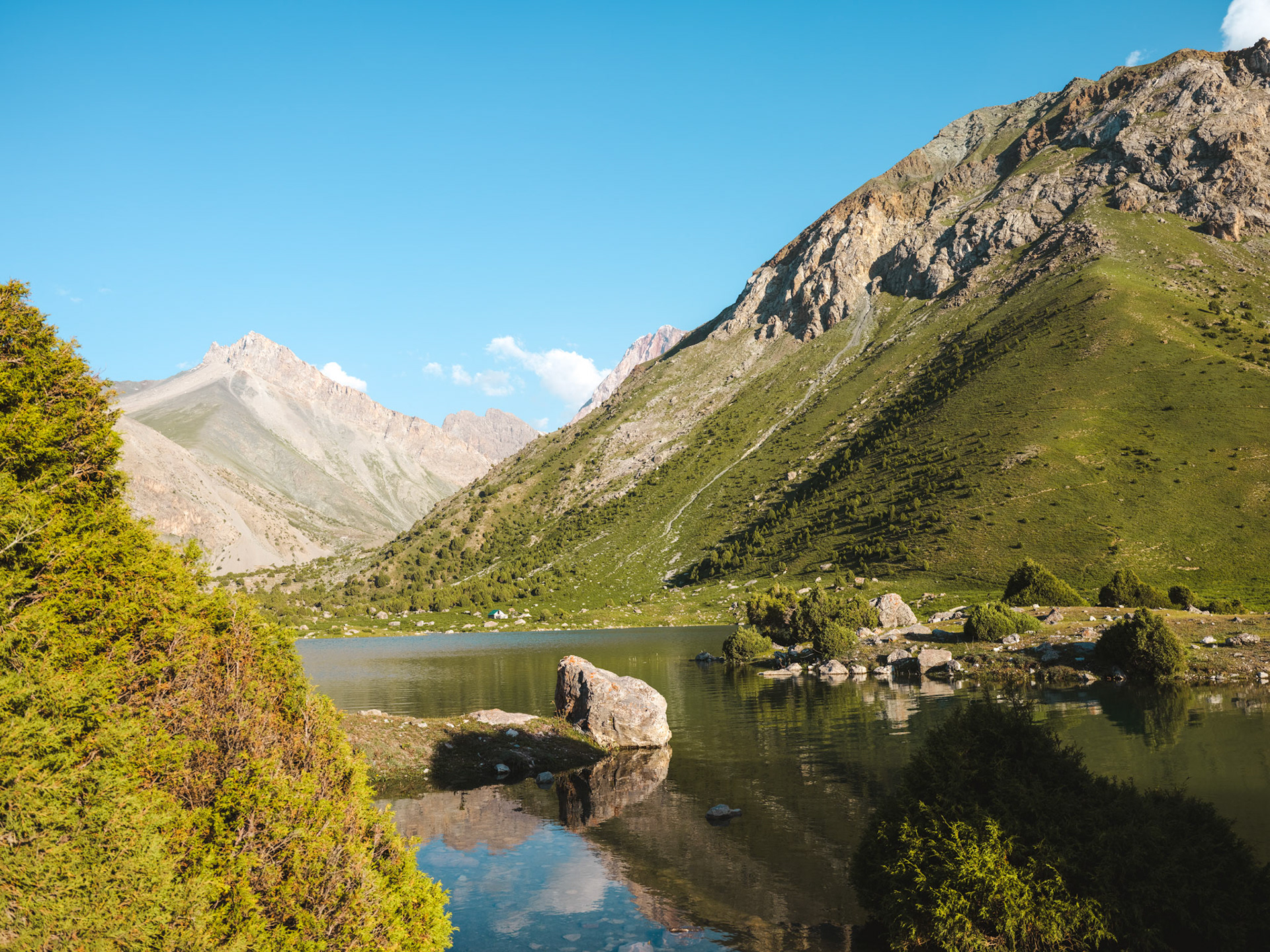
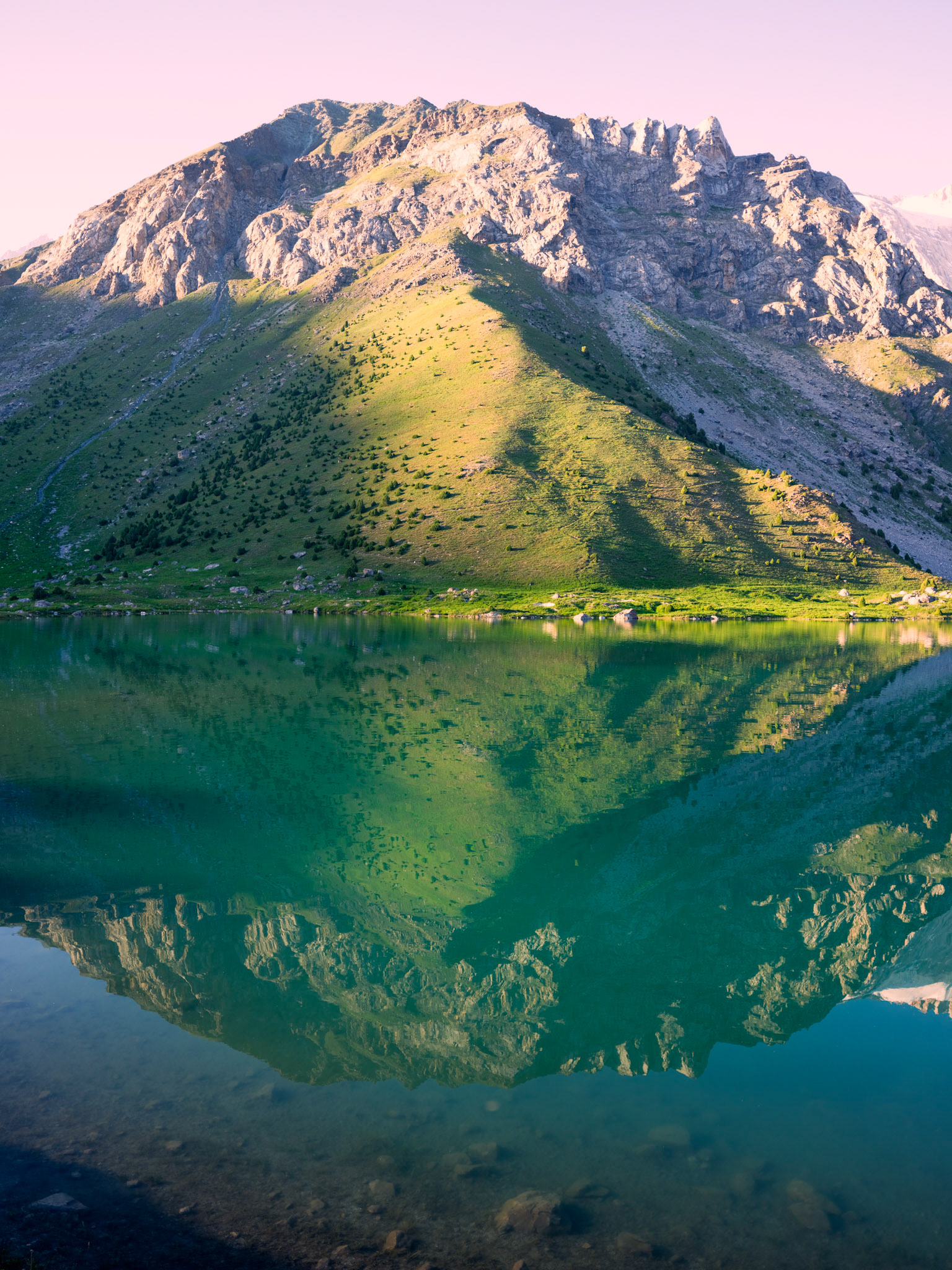
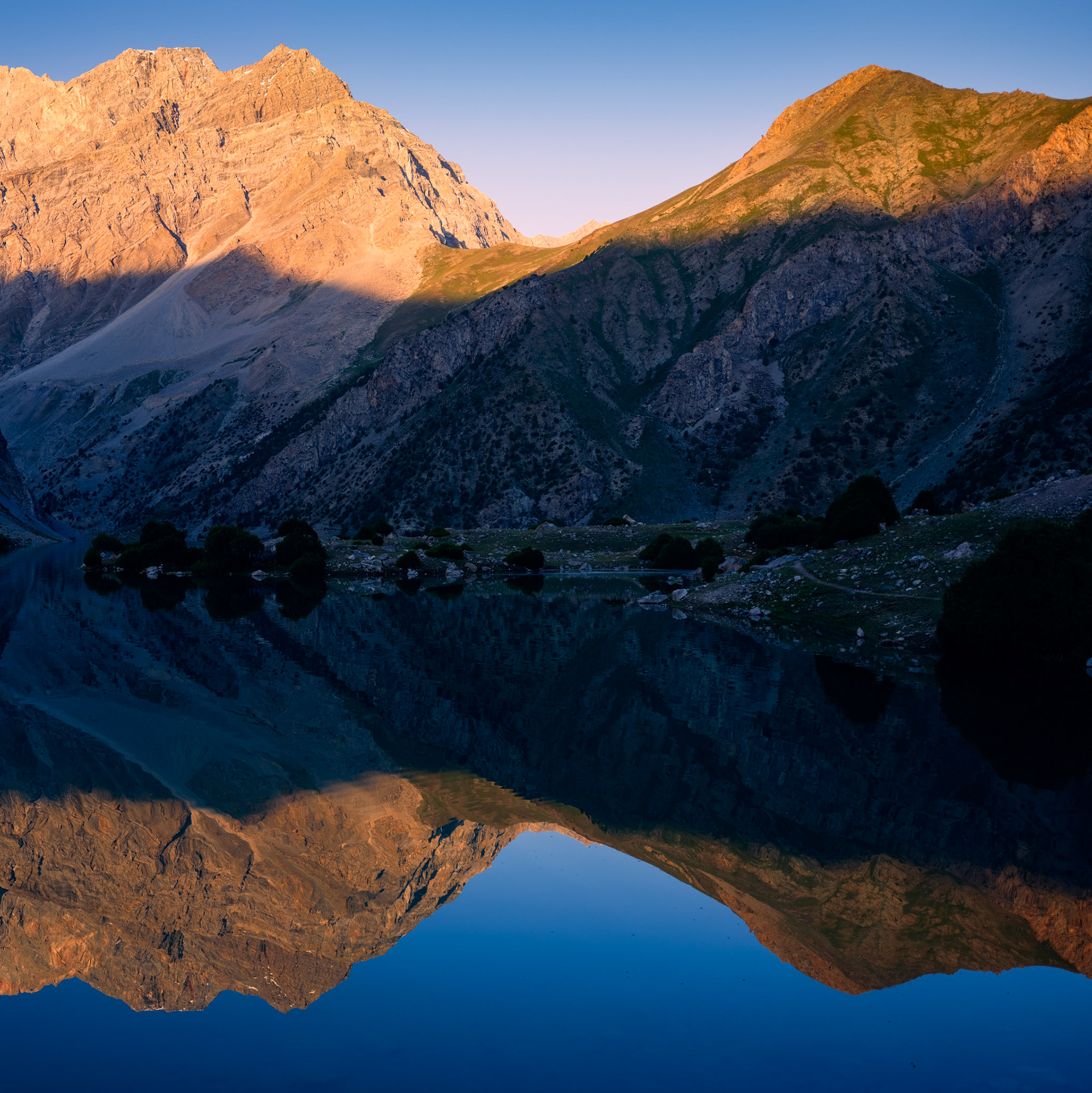
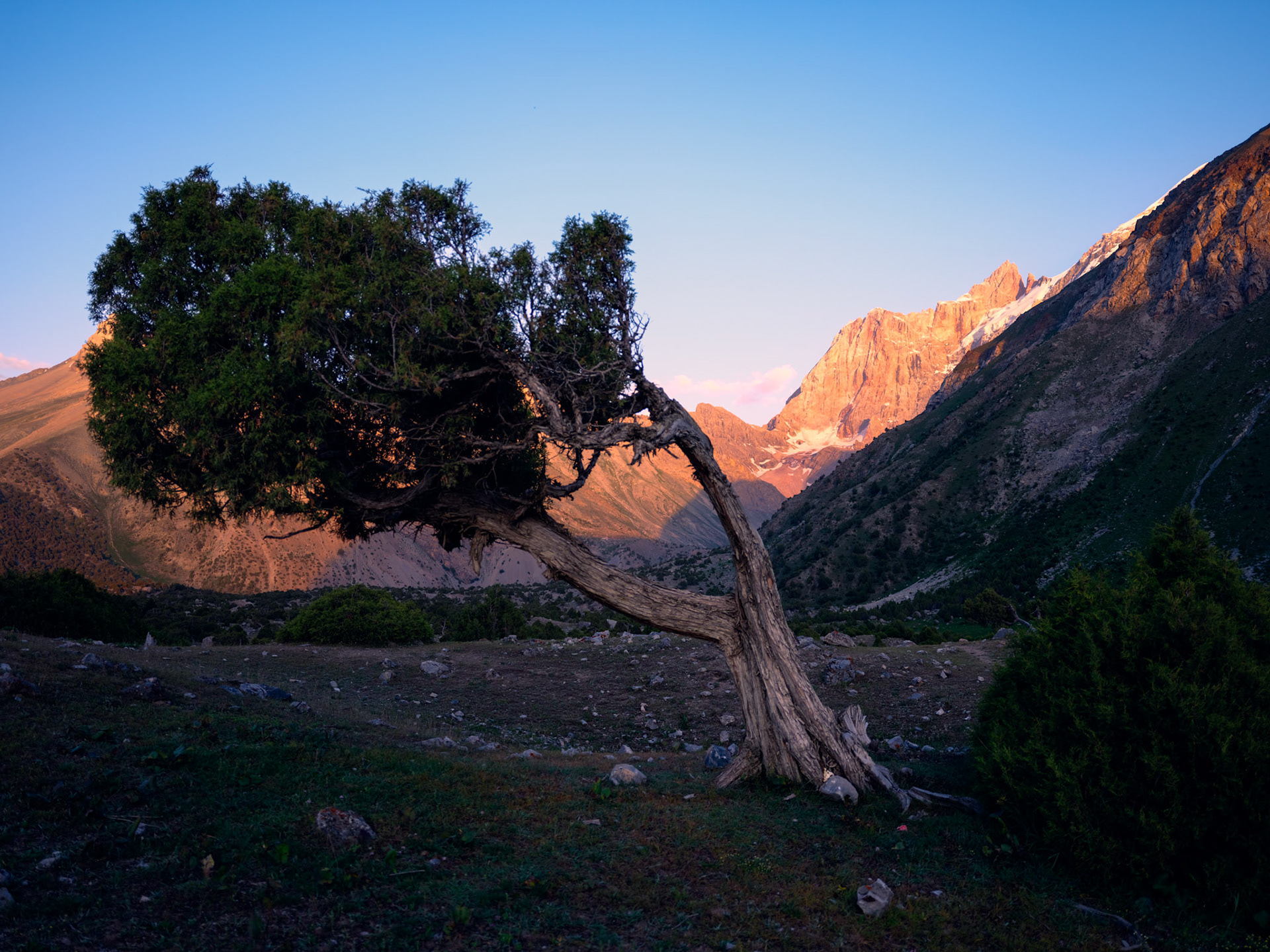
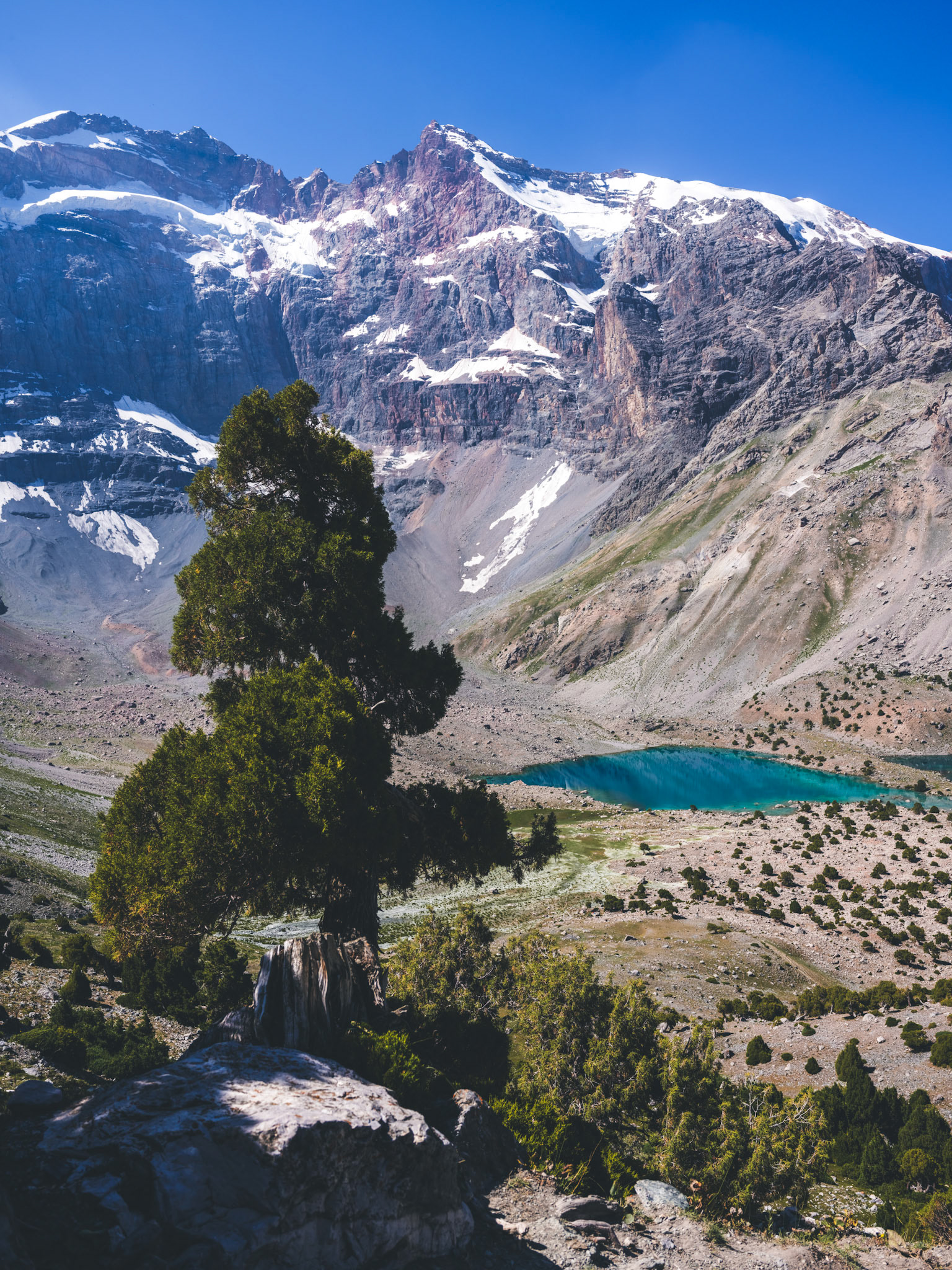
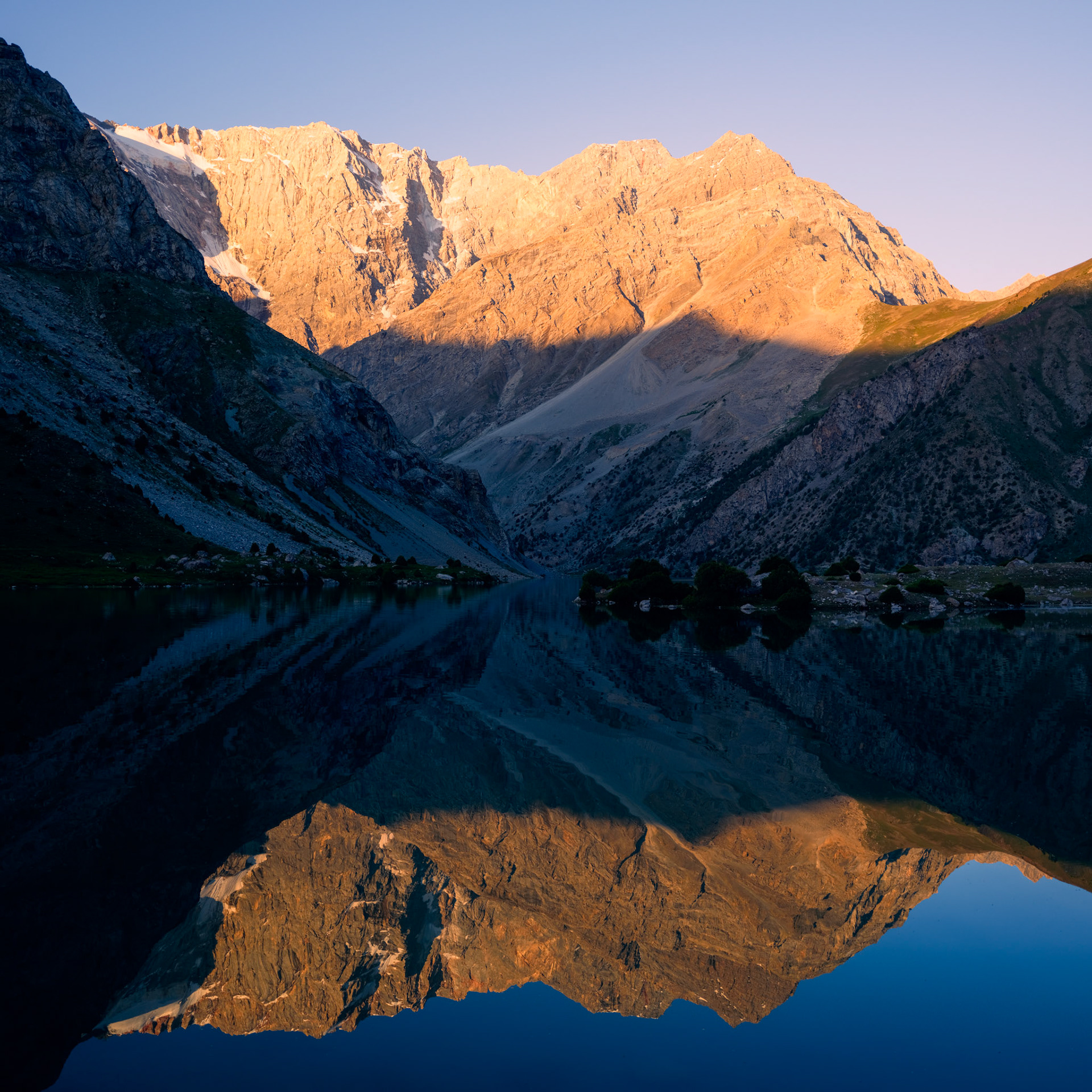
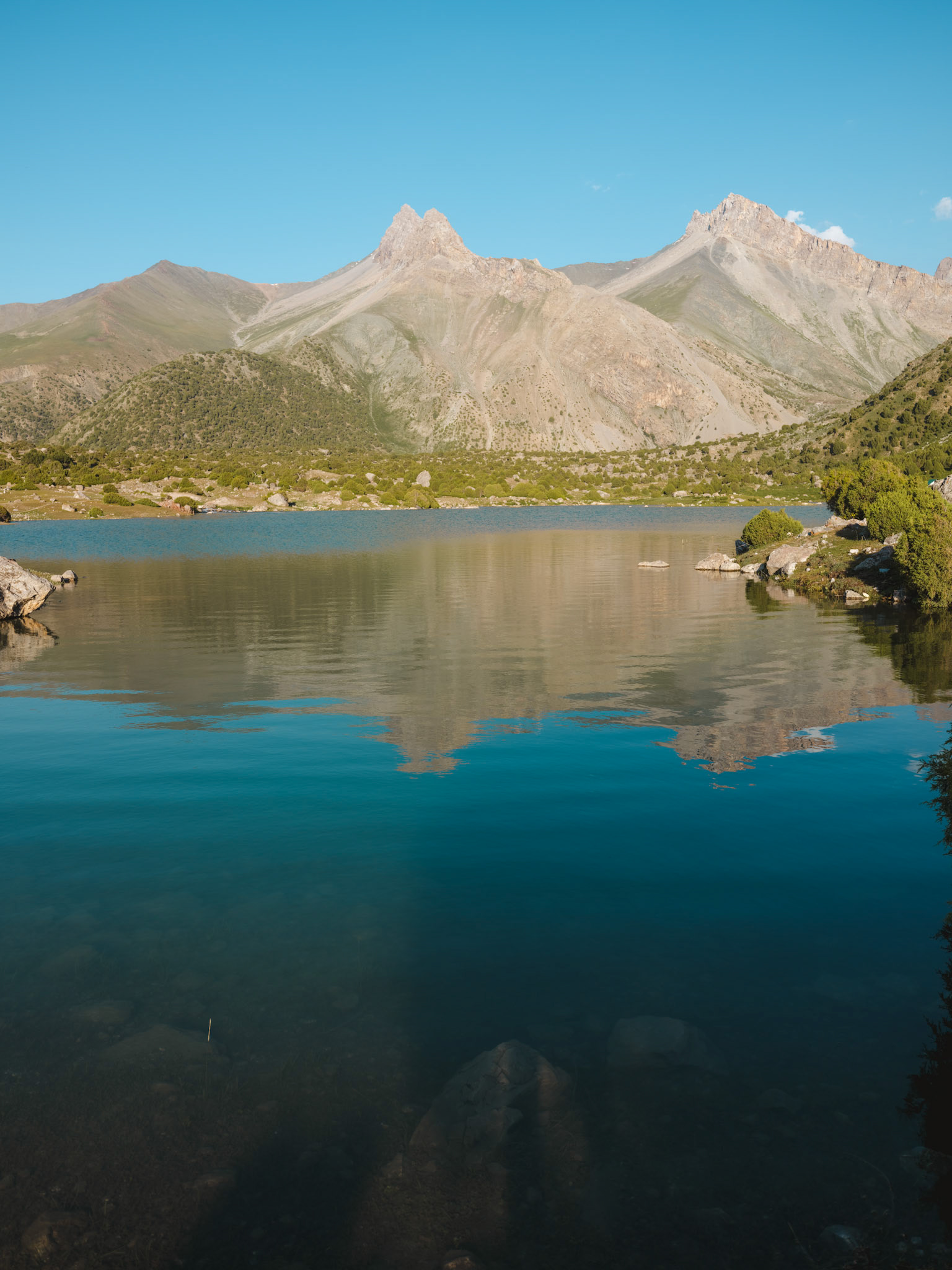
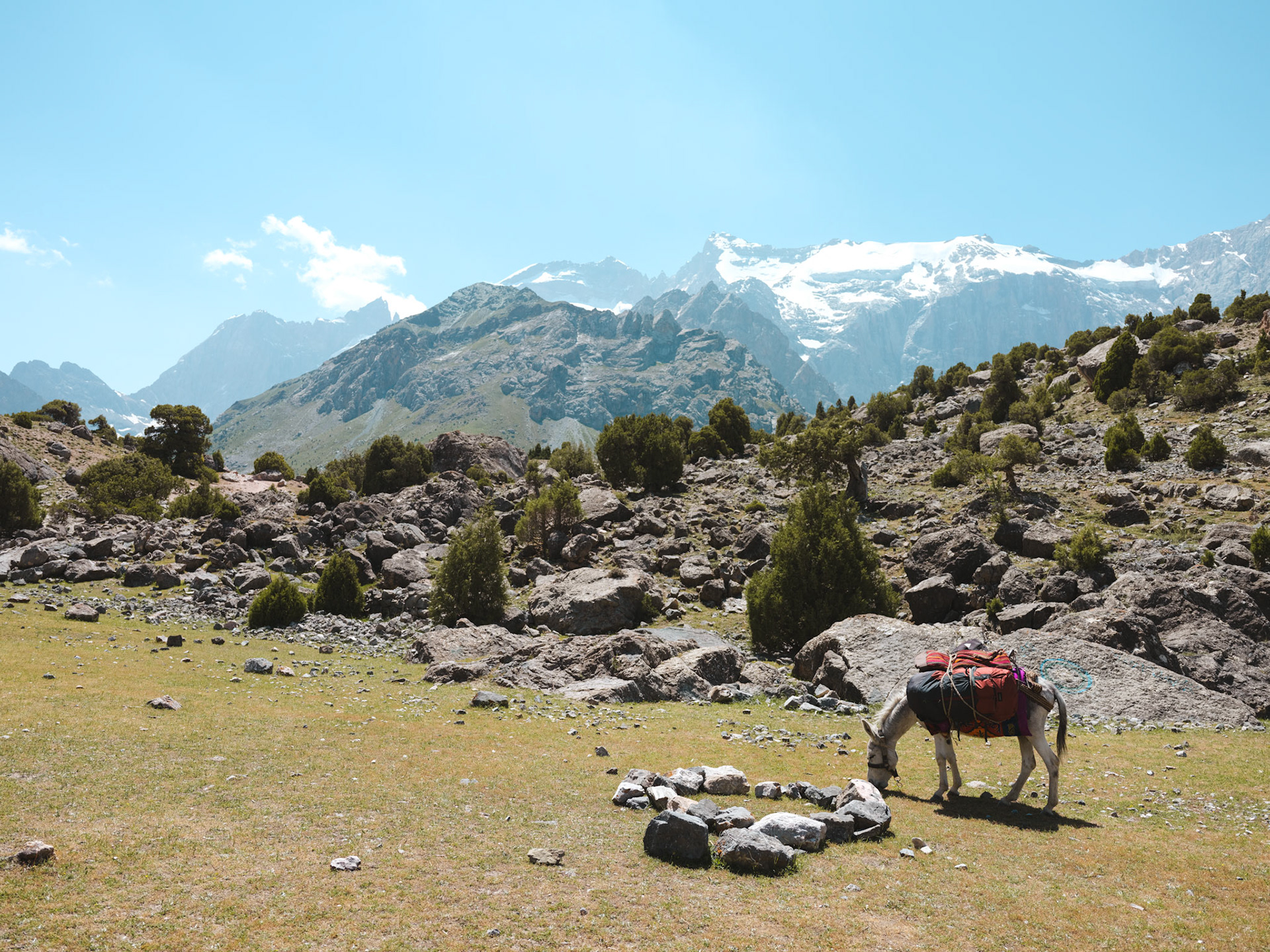
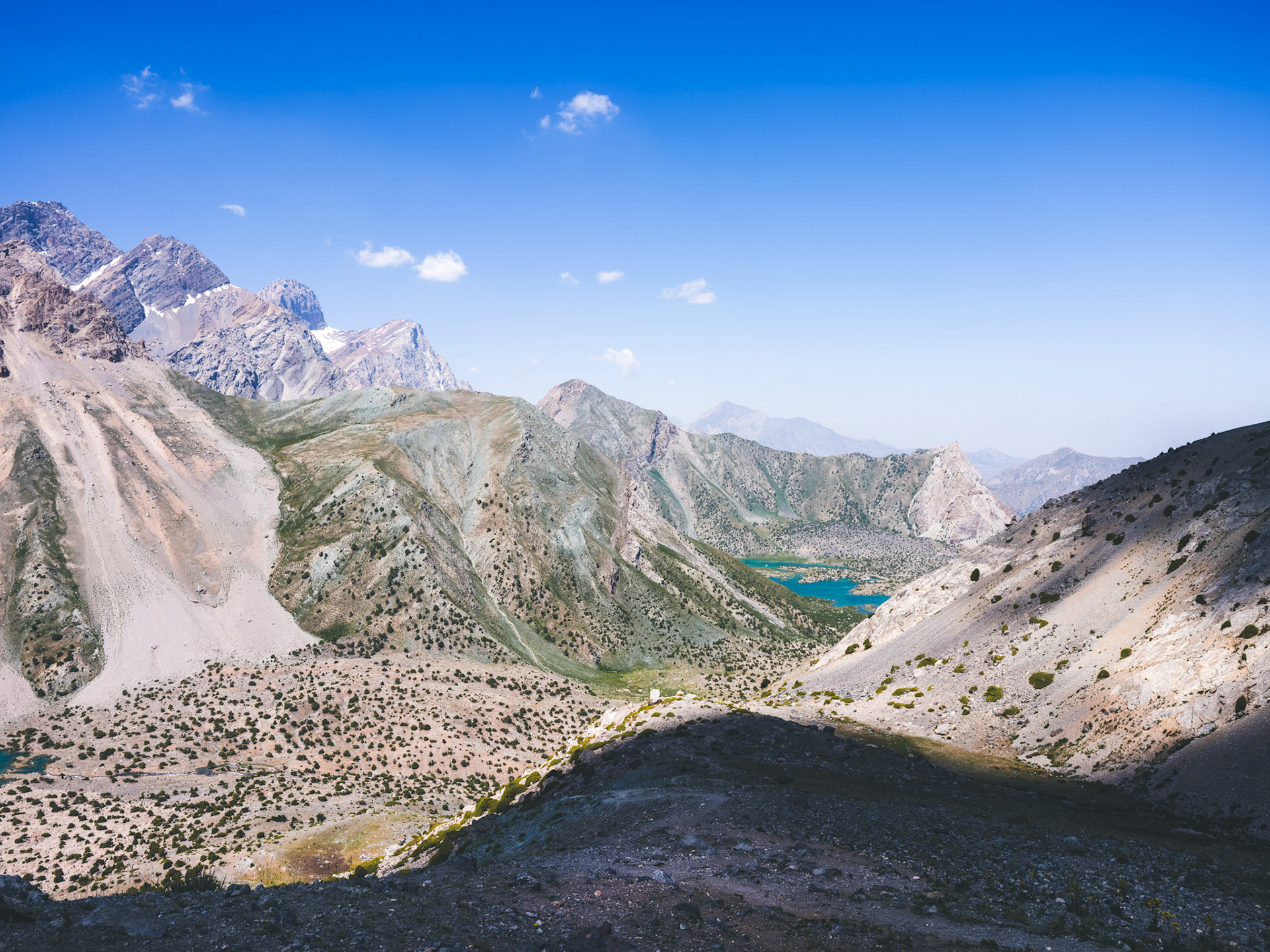
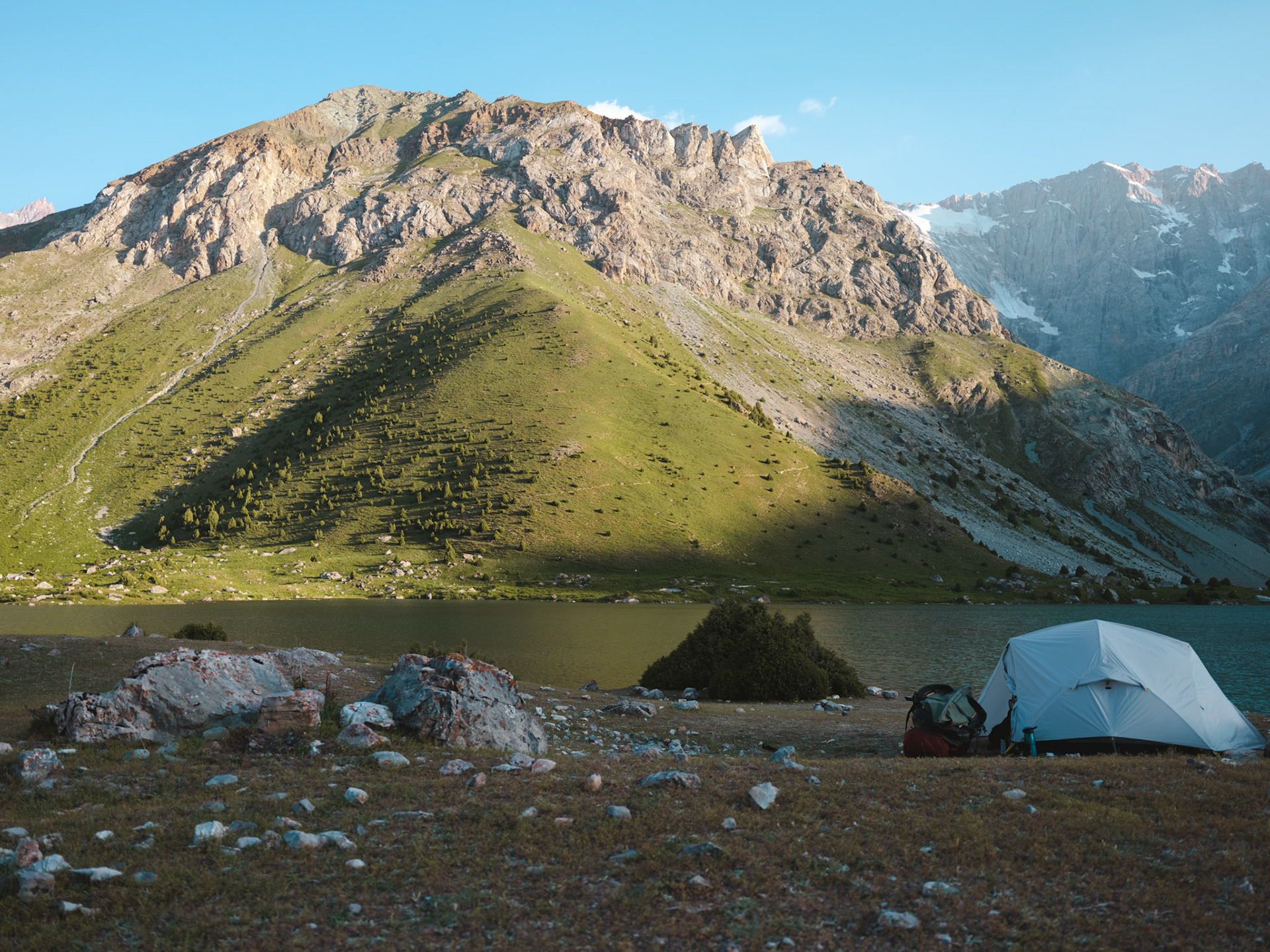
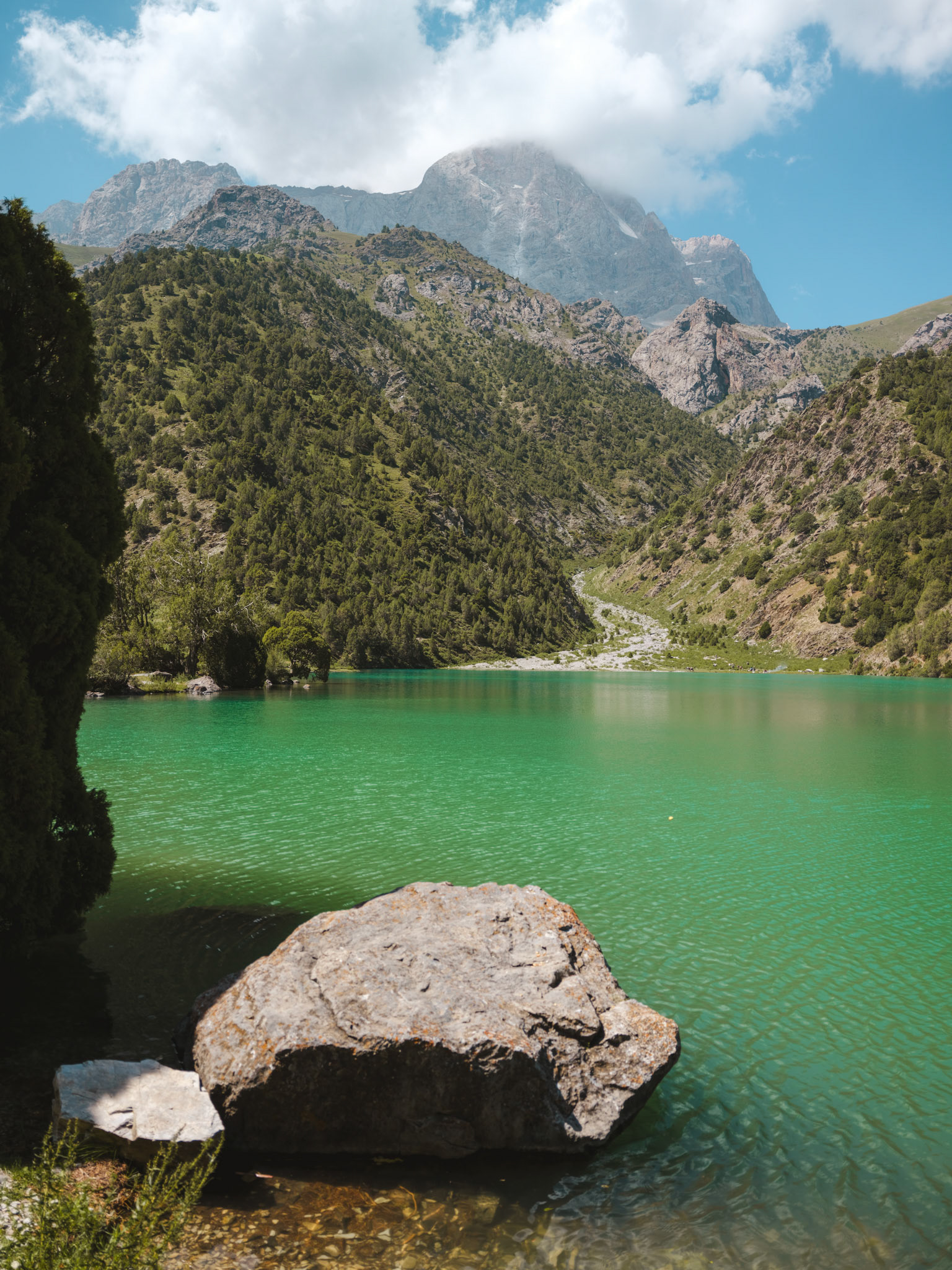
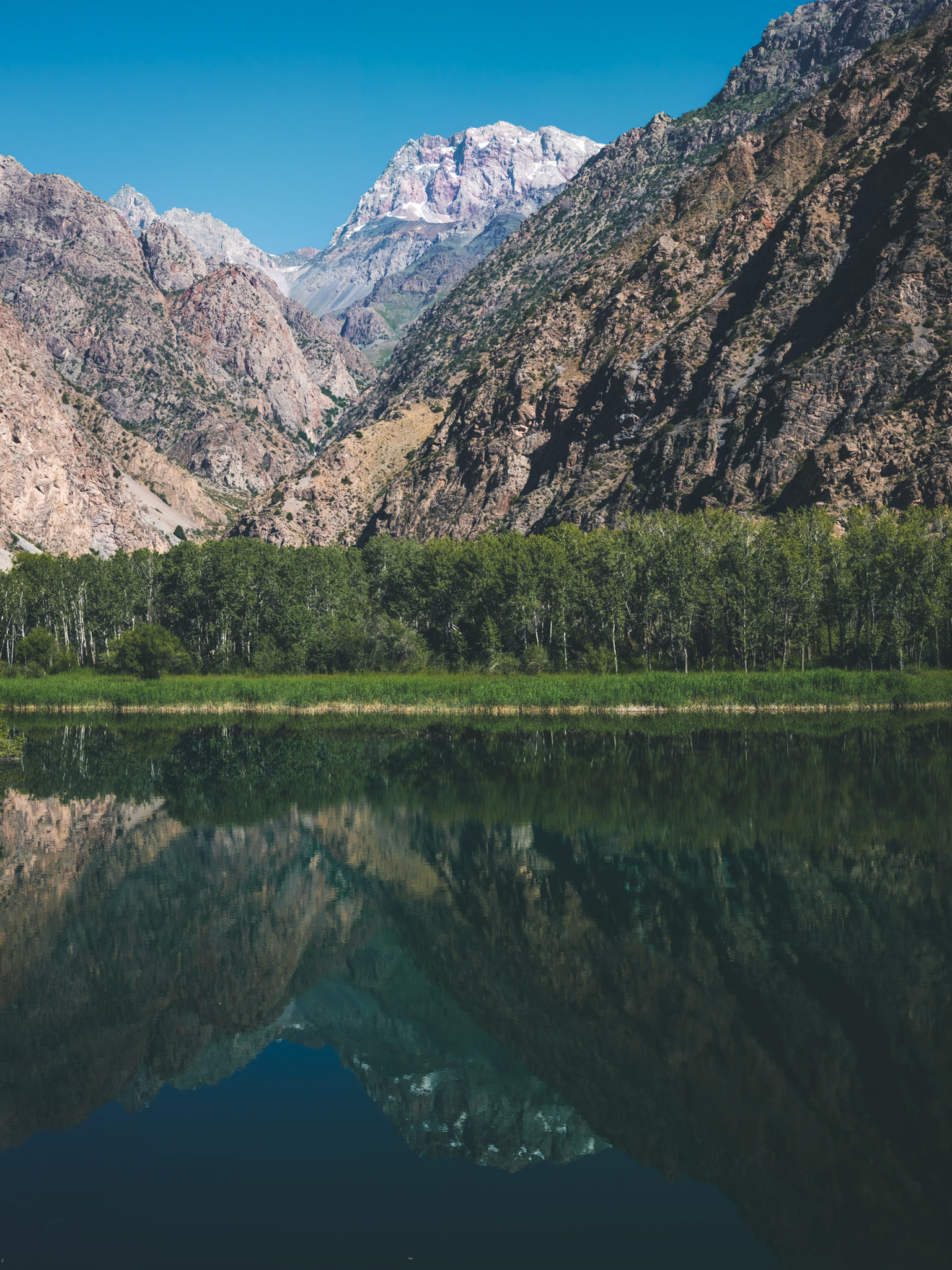
The four of us arrived at the homestay in Iskanderkul, and the first thing to greet us, was a toilet seat teetering loose on its hinges. Fitting. This place was a good hour from the lake itself, and not our first choice.
Next door to our rooms, an entire Tajik guest family was sitting on the carpeted floor. Three middle-aged women and a man, food scattered around them on the floor and the one available table. By the second day we'd see them cooking there in full, a chicken slaughtered and dressed a few feet from where we slept. The home and the stay colliding.
We looked at each other and silently agreed we'd be gone within the hour, if we could manage it. We couldn't. There was nowhere else to go.
The homestay was mid-construction and somehow also mid-use, since 2020 we were later told. Six years of half-finished rooms and partial paneling, a building simultaneously lived in and still being built.
So we stayed, grudgingly at first. And then, less grudgingly, because of the people.
There was the older brother, the patriarch in practice if not in age, running the place with his wife. The middle brother, the homestay's namesake, moved about like a man who'd stopped expecting the construction to be finished. Then the younger brother, recently back from Moscow, laid off from a job in cosmetics at Wildberries. Now he drove us, fixed things, filled whatever gap needed filling, like the Rav4 radiator he filled up at least three times, a one-man utility service for a family that seemed to run on exactly that kind of improvisation.
And there was the daughter of the house, a teenager who spoke English fluently, who cooked, cleaned, translated, and stood always with one foot in that unfinished house and the other somewhere else. Local legend holds that an unmarried woman who glimpses Alexander the Great's ghost-white horse on the lake shore during a full moon will soon marry, and marry well. It seems like a wish built for a different century than hers.
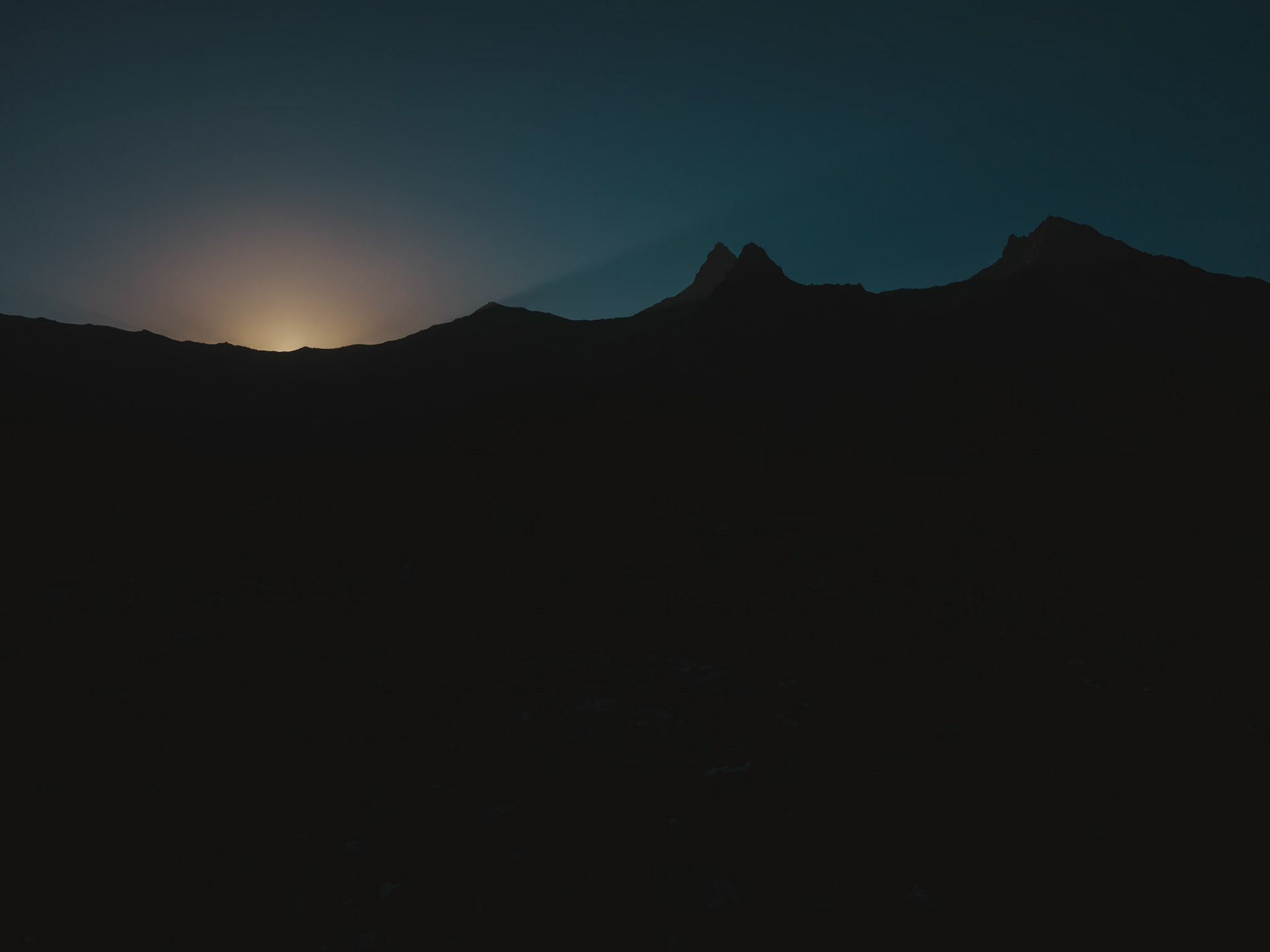
On our last evening, the older brother stood outside with us, telling us with real pride that twenty-eight guests were arriving the following week, the homestay, after six years half-built, finally beginning to work. Then, quieter, he pointed across the valley at a mountain glowing red in the last of the sunlight. That one won't be here next time you come, he said. The Chinese were mining it for gold.
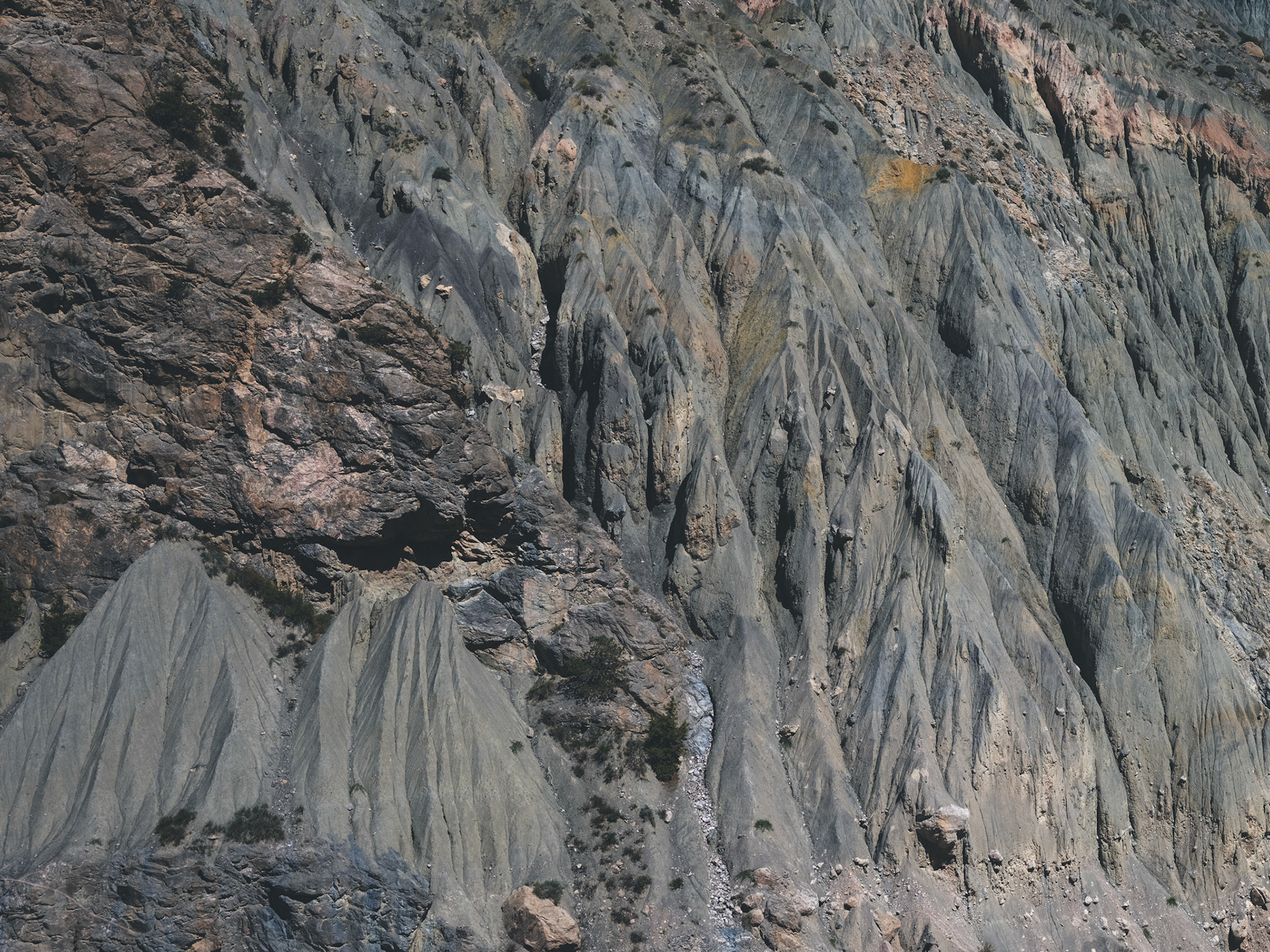
The mountains themselves, I read somewhere, were once seabeds, flung upward by forces too large to picture, frozen mid-collapse millions of years ago, tables tipped over and left standing at whatever angle gravity settled them into. I had found the proof myself, fossils of crinoids and horn corals, stone-cast and unmistakable, sitting loose in the scree thousands of meters above whatever ocean they'd grown in.
Pushed up over millions of years, and now one of these mountains was torn down, for the gold inside it.
He'd said both in the same breath, the guests and the gold, growth and disappearance, one right after the other, as if they were the same fact.
Ten days, and so much of it could have gone the other way. Arrangements that were a WhatsApp chat with an unknown number. Drivers at the wrong gate, or no gate at all. Directions that pointed us confidently toward nowhere.
Most of it held, and in the end I held too, four times driving through the Istiqlol Tunnel of Death and out the other side, like the crate of eggs that somehow made it teetering over the pass.