Forest spirits, fool’s gold and a Soviet rest trail in Lithuania’s lakelands
October 2026

The day was grey, with a chance of rain that never quite made up its mind. I had spent the previous days walking in the woods and my legs had opinions about it. I suspected I was coming down with something. I decided to do nothing at all.
Doing nothing lasted about an hour. Then I wandered out behind the campsite and came across a wooden sign at the edge of the trees. My phone translated the Lithuanian, and the Russian beneath it, as Health and Rest Trail. At one end of the board, two little bearded men in hats leaned on their staffs. It was put up during Soviet times, presumably, for workers sent to the lakes to rest. I was a worker, more or less. I needed rest. It seemed rude to refuse.
Somewhere at the back of my mind was the thought that the walk might also turn up a mushroom of the edible kind.
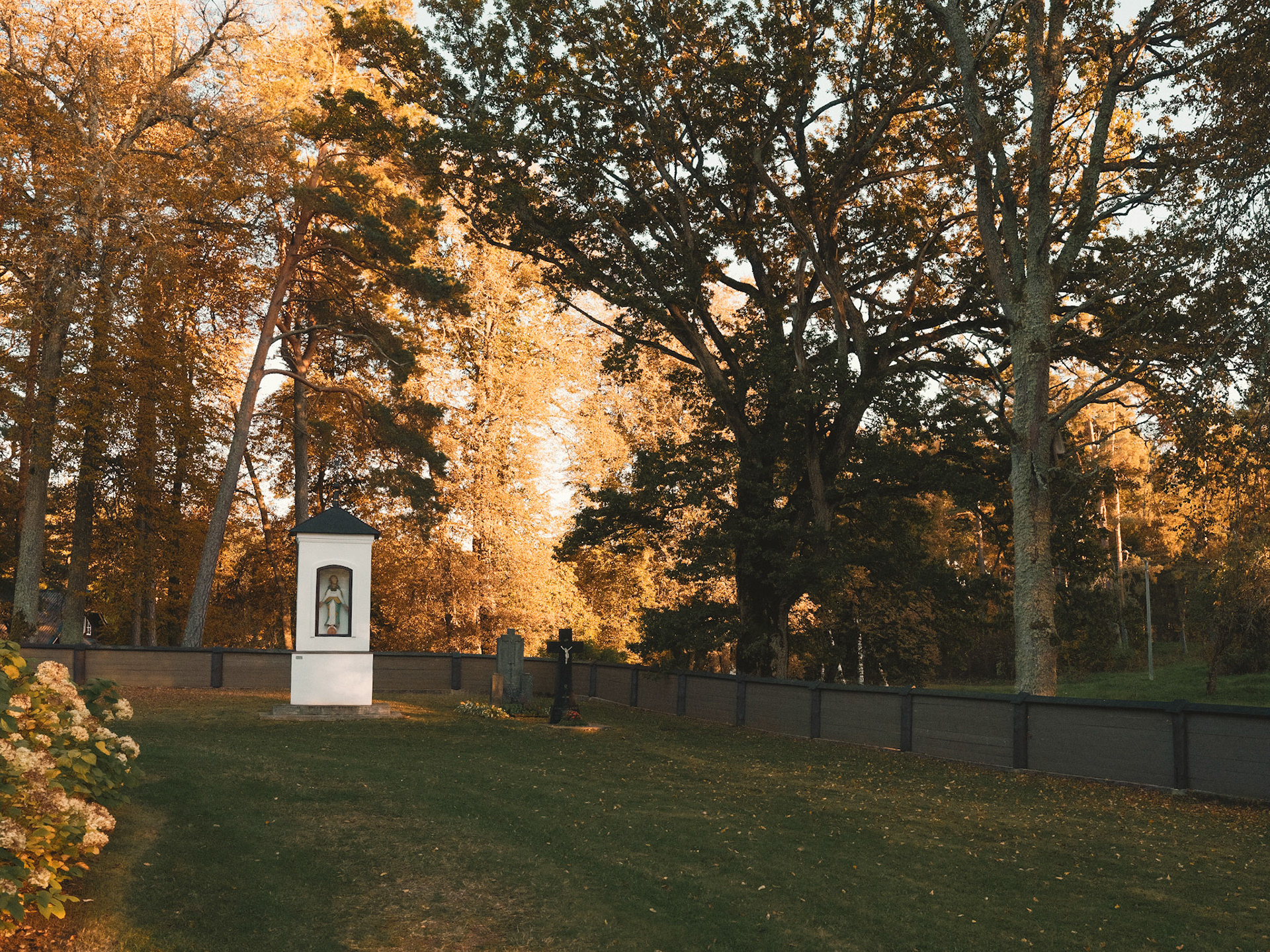
The two little men on the sign looked like kaukai, the small people who live under the forests and only come out in moonlight or fog. They were not the first spirits I had met that week. In Lithuania the forest spirits live outside the storybooks. Their names are on the map, in the devil's holes and bogs, and on hills named for goddesses. Their faces are carved into posts by the roads and along the lakes. And after a few days in the woods you start to feel them yourself: in the mist lying on the lakes at dawn, in oaks older than the churches, in water that goes down further than you would like, in the wind moving through the tops of the pines. I was caught up in it at once.
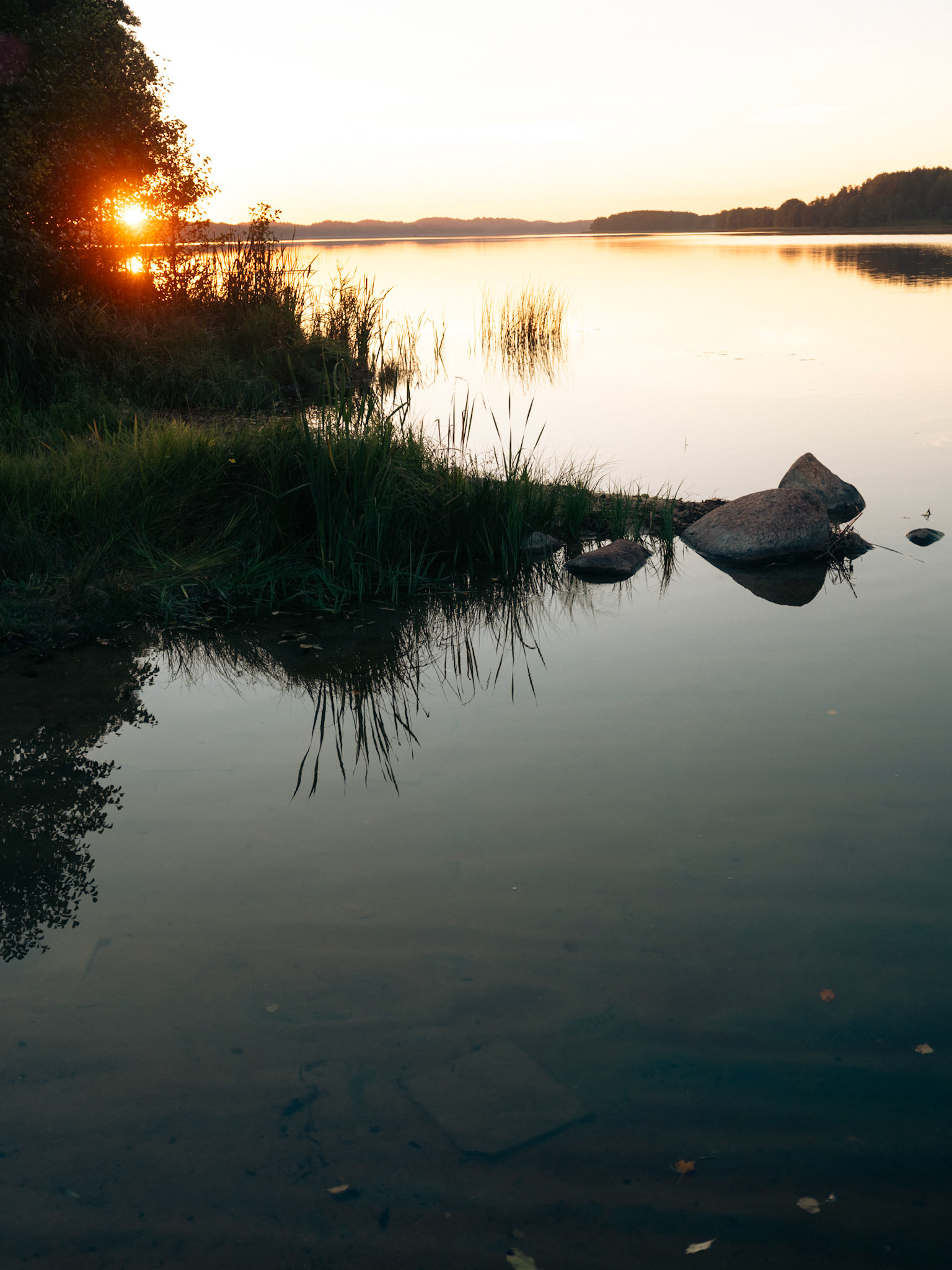
I had been in a great deal of fog that week. One morning I had climbed a hill before sunrise, a hill that belongs to Lada, the mother goddess. The valleys were full of white, and the lakes came and went beneath it. In a field below, the crown of a single oak broke the surface of the fog, dark against the white, like a leviathan emerging from the waves. I saw no little men. I was not, at that point, looking for them.
There was no fog today. The trail ran south along the lake on a ridge of sand. All of this ground was laid down by ice. About thirteen thousand years ago the last ice sheet withdrew from here, dropping whatever it had carried: sand in long ridges, granite boulders dragged from Finland and left in fields, and blocks of ice buried in gravel. When the buried ice melted, the ground fell in. Some of the holes filled with water. Others filled with moss and peat, and walking across one is like walking on a wet mattress. Lithuania has some six thousand lakes. Something very heavy once walked across this country, and every footprint filled with rain.




Mushrooms, everything I had read said, were a southern thing. In the sandy pine forests of the far south, whole towns go into the woods in autumn, and one of them holds a mushroom festival that its residents rank above New Year. Up here, in the lakelands, I had expected very little.
Then, on the first long walk, a twenty-kilometre loop through pine woods on a sunny day, they were everywhere. Pale bells in a neat line across the moss. Small white caps with a pointed top that I will describe only as anatomical. A black, oozing puddle where something had dissolved into its own ink. One the size of a frisbee. Folk songs here describe the mushrooms going to war, with the boletus as colonel. I had read about the boletus. I found every other rank of the army.
You crouch. You brush away the pine needles. You turn over a velvety brown cap and realise you have no idea whether it would make a fine soup or destroy your liver by Thursday. You leave it. You walk on. You crouch again.
Near the road on the way back I passed a woman with a basket full of mushrooms that were evidently the right ones. Something competitive woke up in me. It had not occurred to me until then that there was anything to win.
The searches that followed went nowhere. The boletus, I learned, is master of the forest, a southern spirit who decides who finds what. I was in the wrong province.
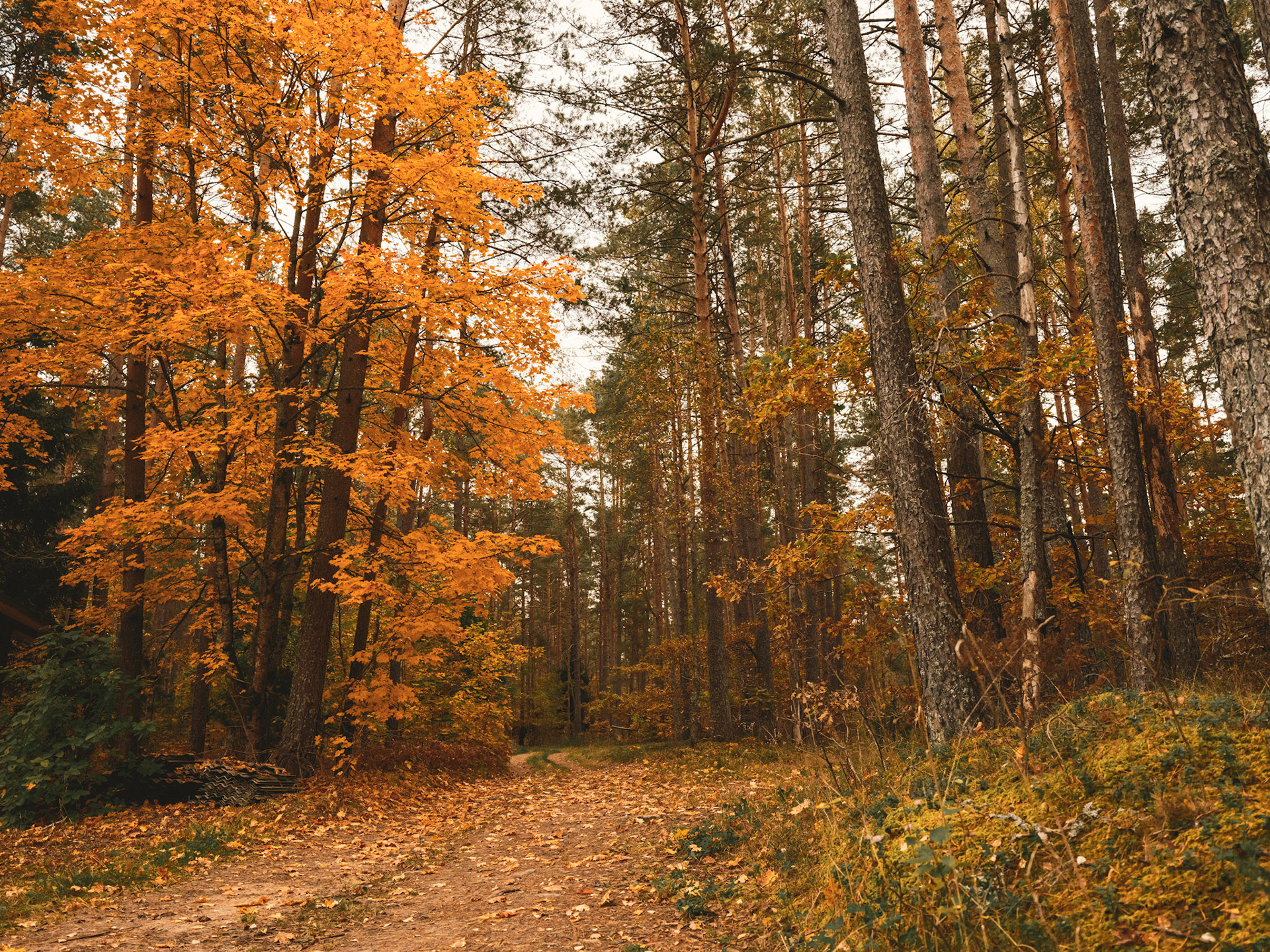
A little way along the Health and Rest Trail, the forest changed colour. In one patch, every pine was wrapped to the canopy in a vine gone scarlet and hot pink against the green and orange. Something had passed through, set the trunks alight from the bottom up, and moved on. I knew who. The laumės are the weavers of these forests, and when one of them loses a ribbon it becomes a rainbow. Here one had lost a whole basket of red yarn, or lost her temper with it, and wound it round every trunk within reach before going back to the water.
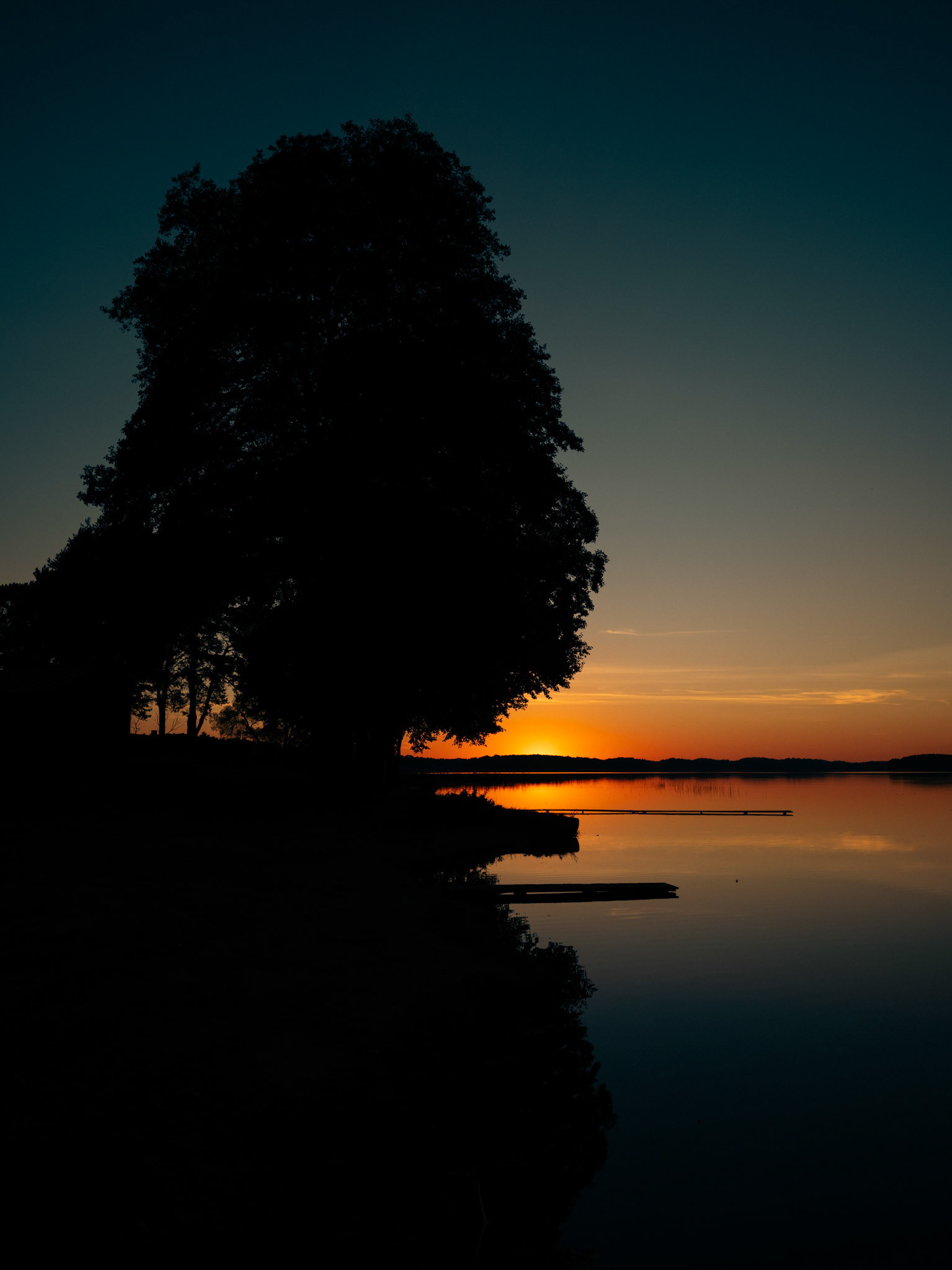
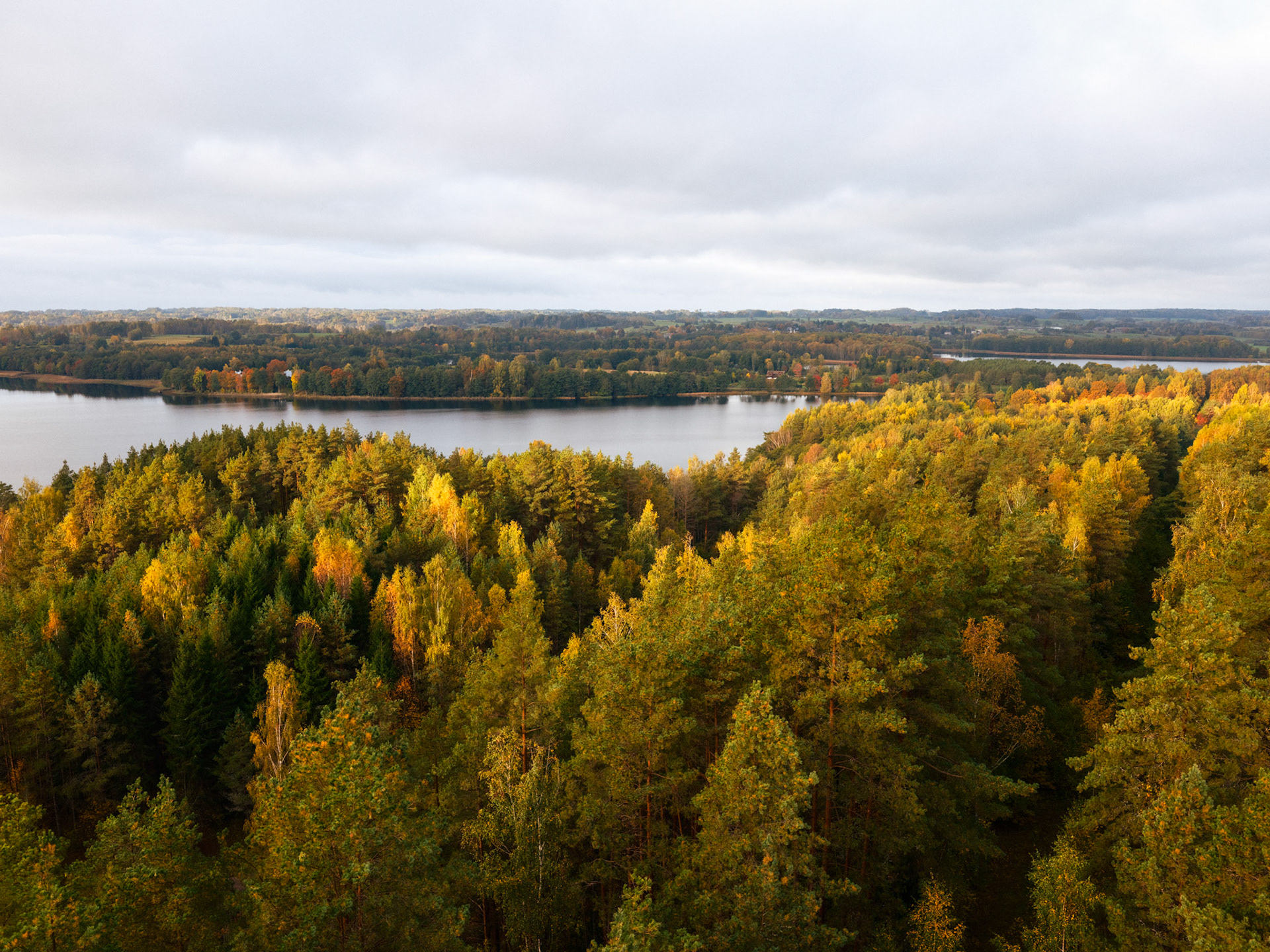
The red took me back to an evening earlier in the week, at the top of a timber tower above the forest, where I had waited for the sunset. When it came it was almost violent: orange, then red, then a bruised purple over the lake. Saulė, the sun, carries the souls of the day's dead through the gates at the edge of the world as she goes down, and the gates lock behind her. In a month it would be Vėlinės, when Lithuanians remember the dead at every grave. The season was already leaning that way.




Half an hour further on, out in the open at the edge of the path, a flash of orange. A chanterelle, surely, set out for me. My pulse did something it had not done all week. I crouched, took a photograph and asked my phone to identify it. The phone was unmoved. False chanterelle, it said, and added a warning. Fool's gold. Somewhere, I was fairly sure, a devil was laughing. Lithuanian devils are small, wicked and not very bright, and a mushroom dressed up as another mushroom, left for a tired man, is exactly their sense of humour. I left it where it was, embarrassed by how fast it had gone.
But the hope was out now, at least to me, and there was no putting it back. The walk for health and rest had become a search for the real thing.
Further on, under a thick cushion of moss, among lingonberry leaves and fallen birch, there was an edge of something the colour of mature cheddar. I pushed the moss back. It was a chanterelle, frilled and solid, and beside it was another, and behind that another. They were in the moss, under the leaves, along the edge of the path. They had been there all week, waiting for me to come out for a rest. The two little men on the sign, I decided, had taken pity on me. Kaukai never bring money. They reward the deserving in other ways, with grain or hay or cloth, and apparently, for a man who had just been made a fool of by a devil, with chanterelles.
I thought of a picker I had seen earlier in the week, moving between the pines with a bucket in one hand, mushrooms heaped and silhouetted against the light. He walked without looking down, and by the time I thought to follow him he had gone. The pickers here have their reasons. Mushrooms can hear you coming, and hide, and a mushroom that has been looked at stops growing. The trick is to arrive without seeming to want anything. I had spent days wanting very badly.
Nobody takes a basket on a health and rest trail. I had nothing to carry them in, so they went into the hood of my rain jacket.