Before you read
The Afar Depression sits at the junction of three tectonic plates, the Arabian, Nubian and Somalian, slowly pulling apart. It is one of the lowest and hottest places on earth, and one of the few locations where continental rifting is visible above sea level. In a few million years, geologists believe, the Indian Ocean will flood the depression and the Horn of Africa will become an island. The process is already underway. You can feel it at night, when the ground stays warm long after the sun has gone.
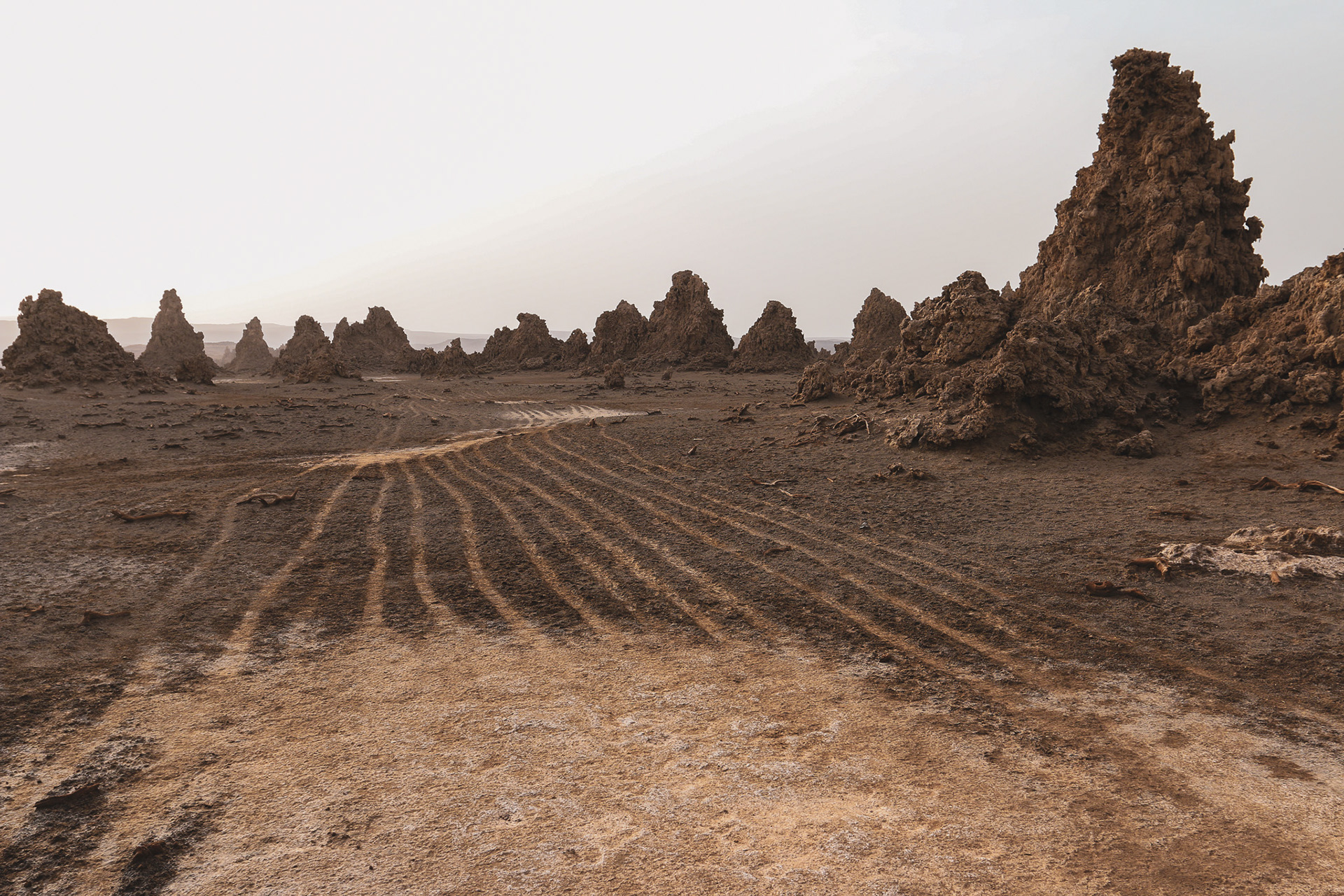
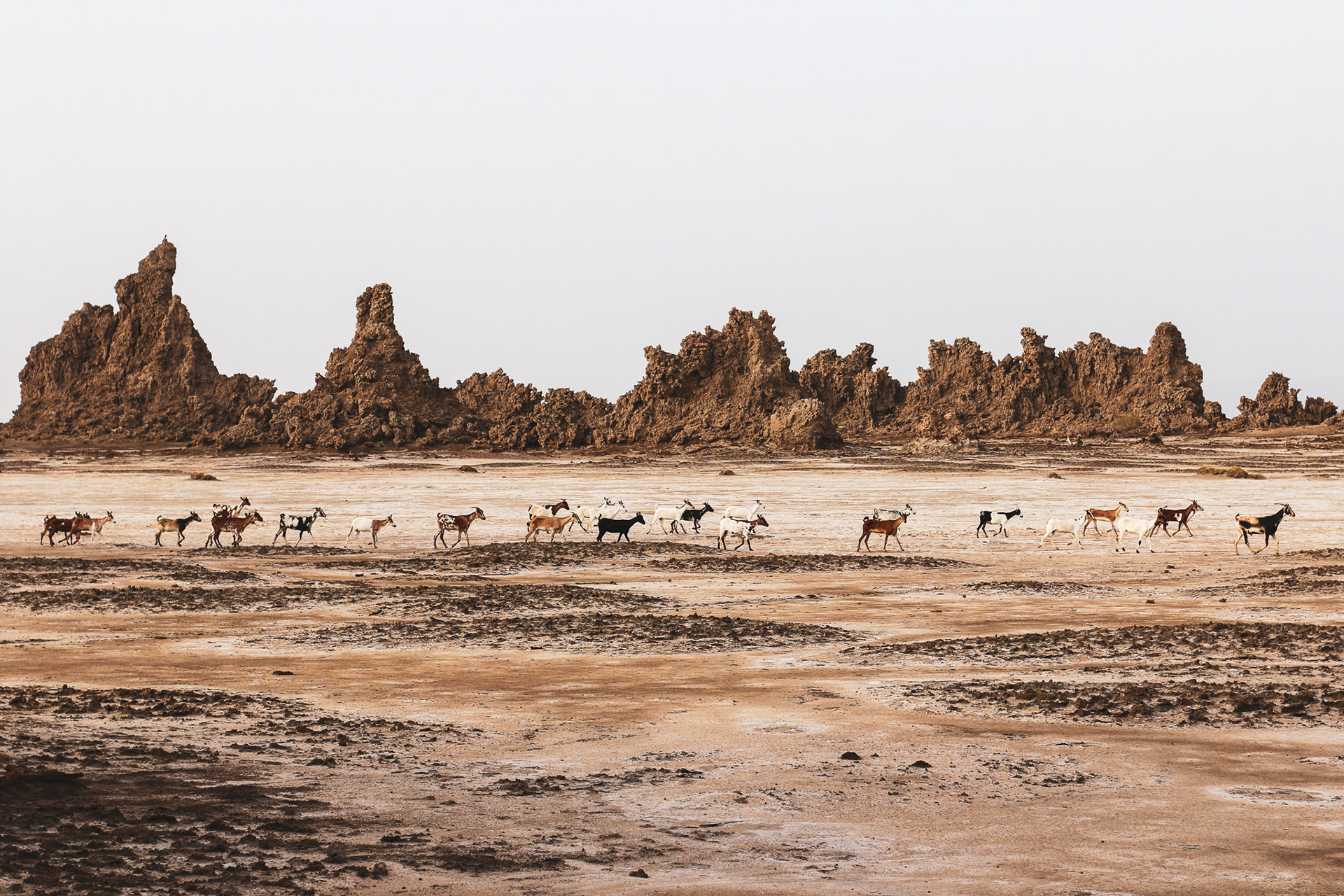
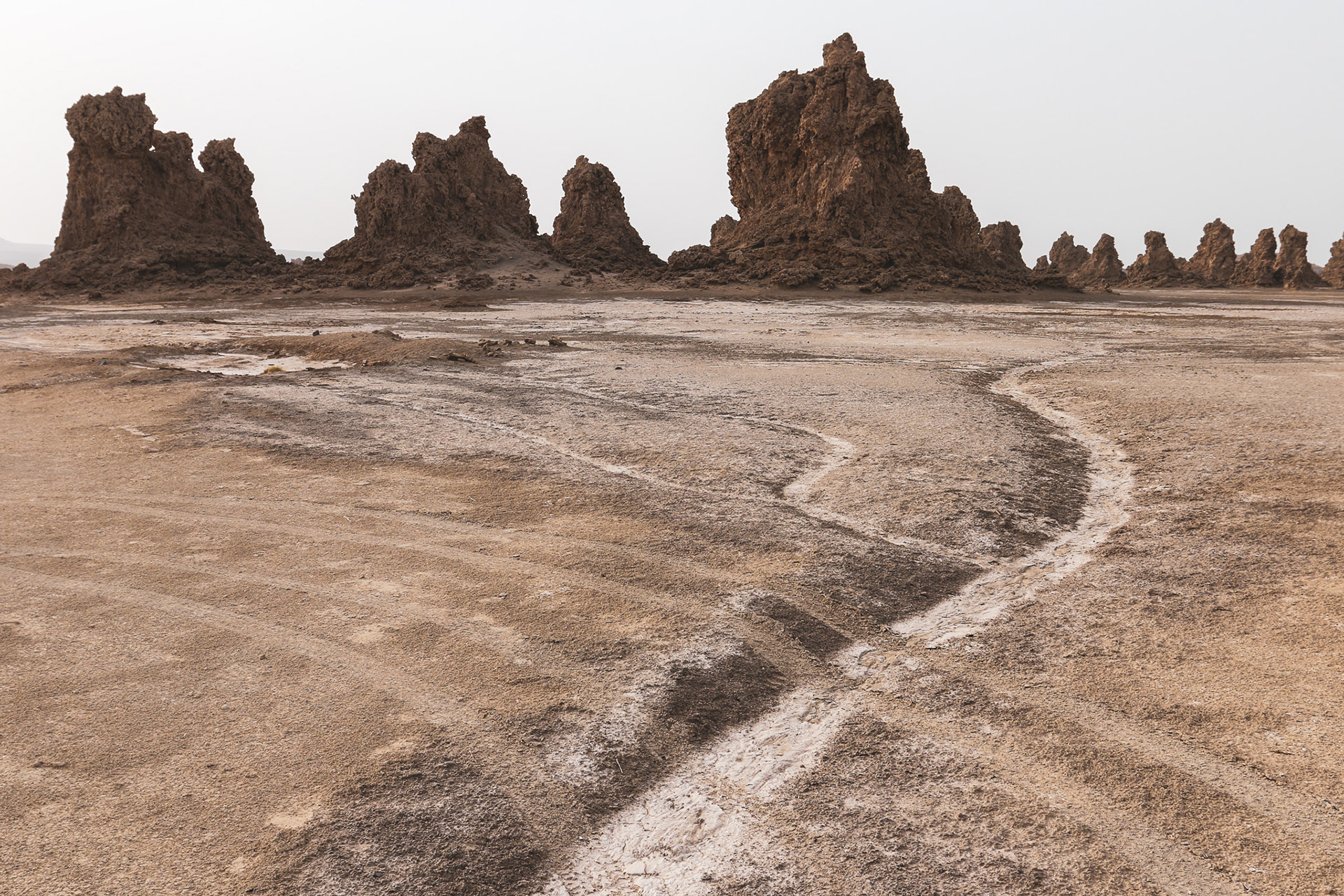
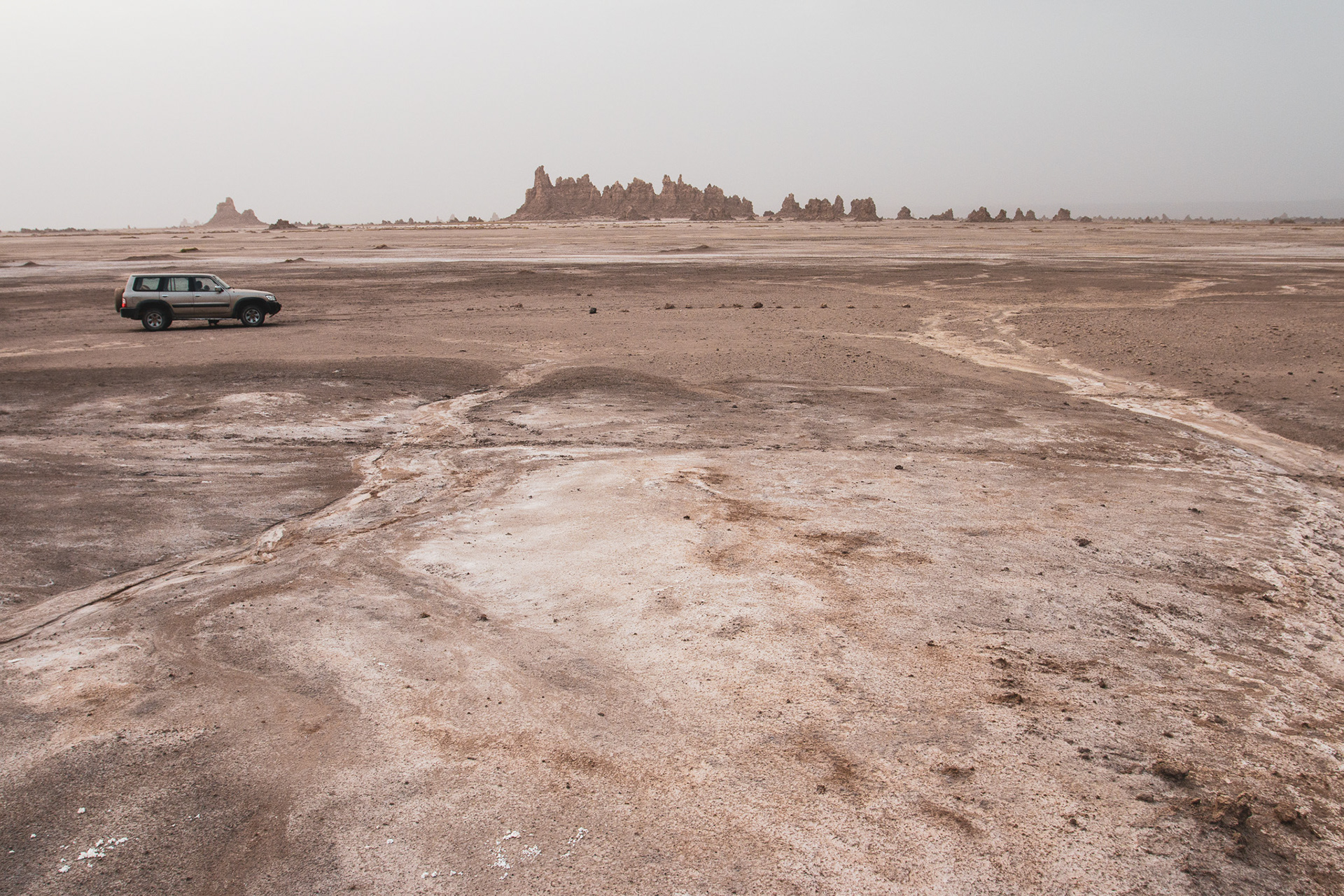
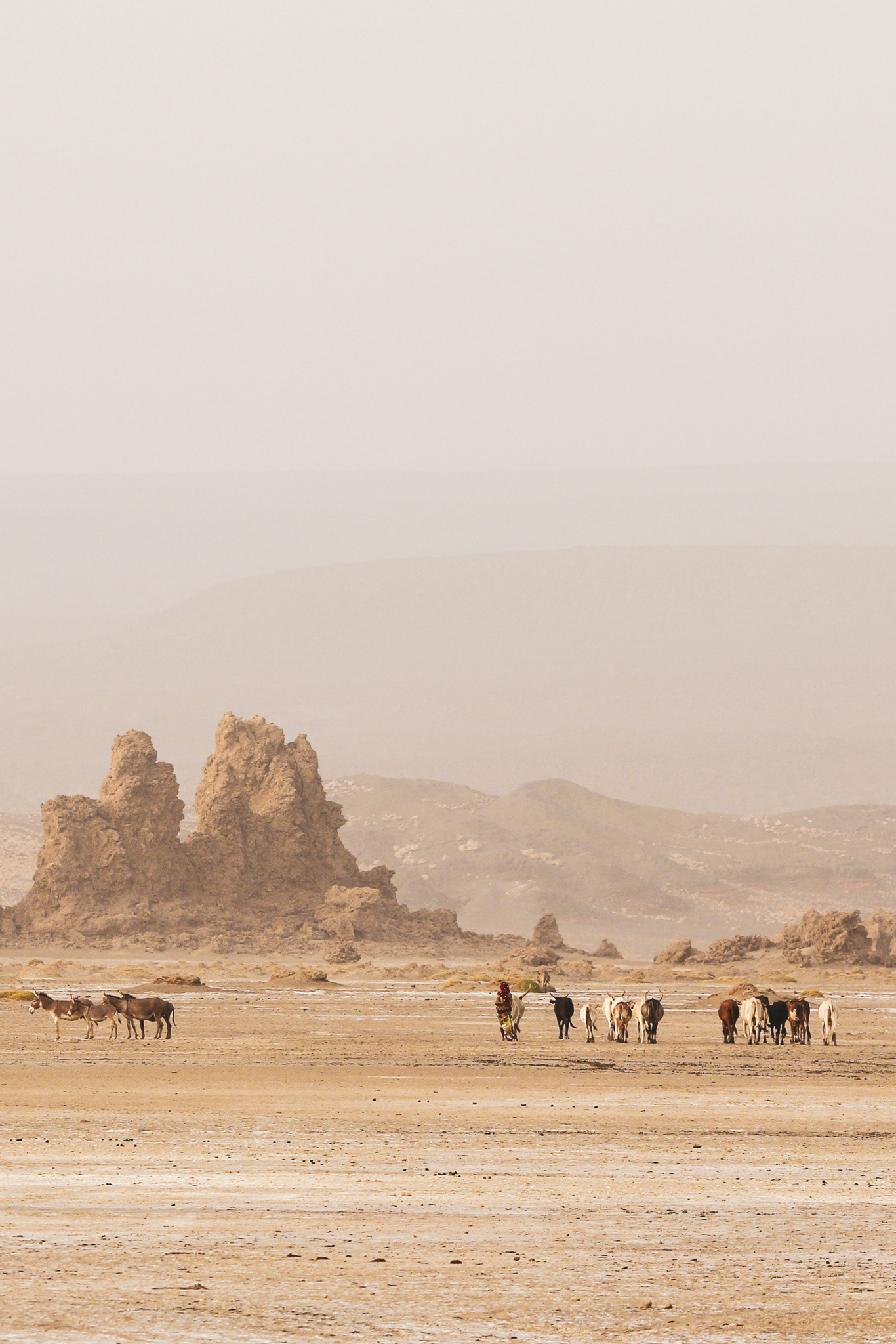
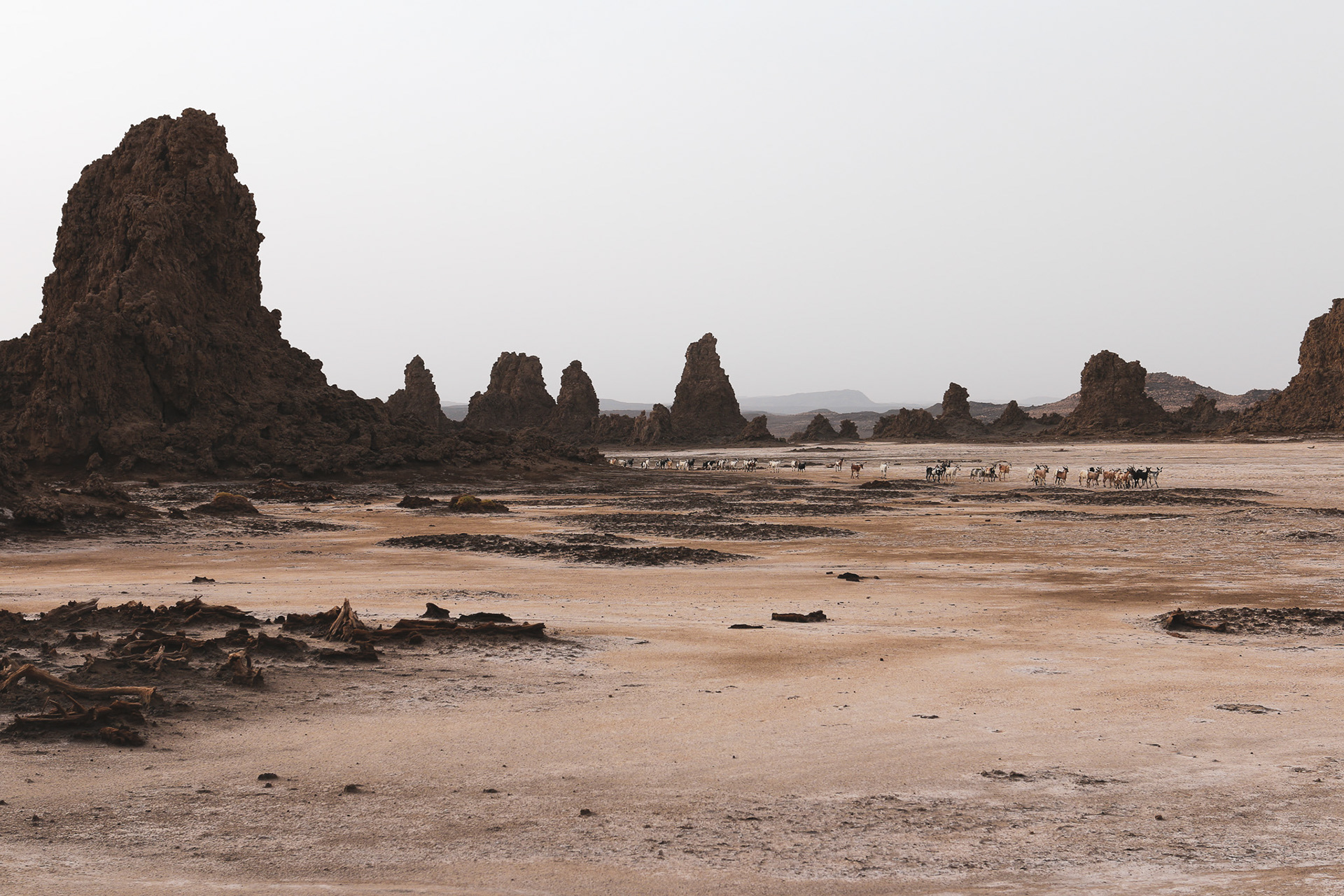
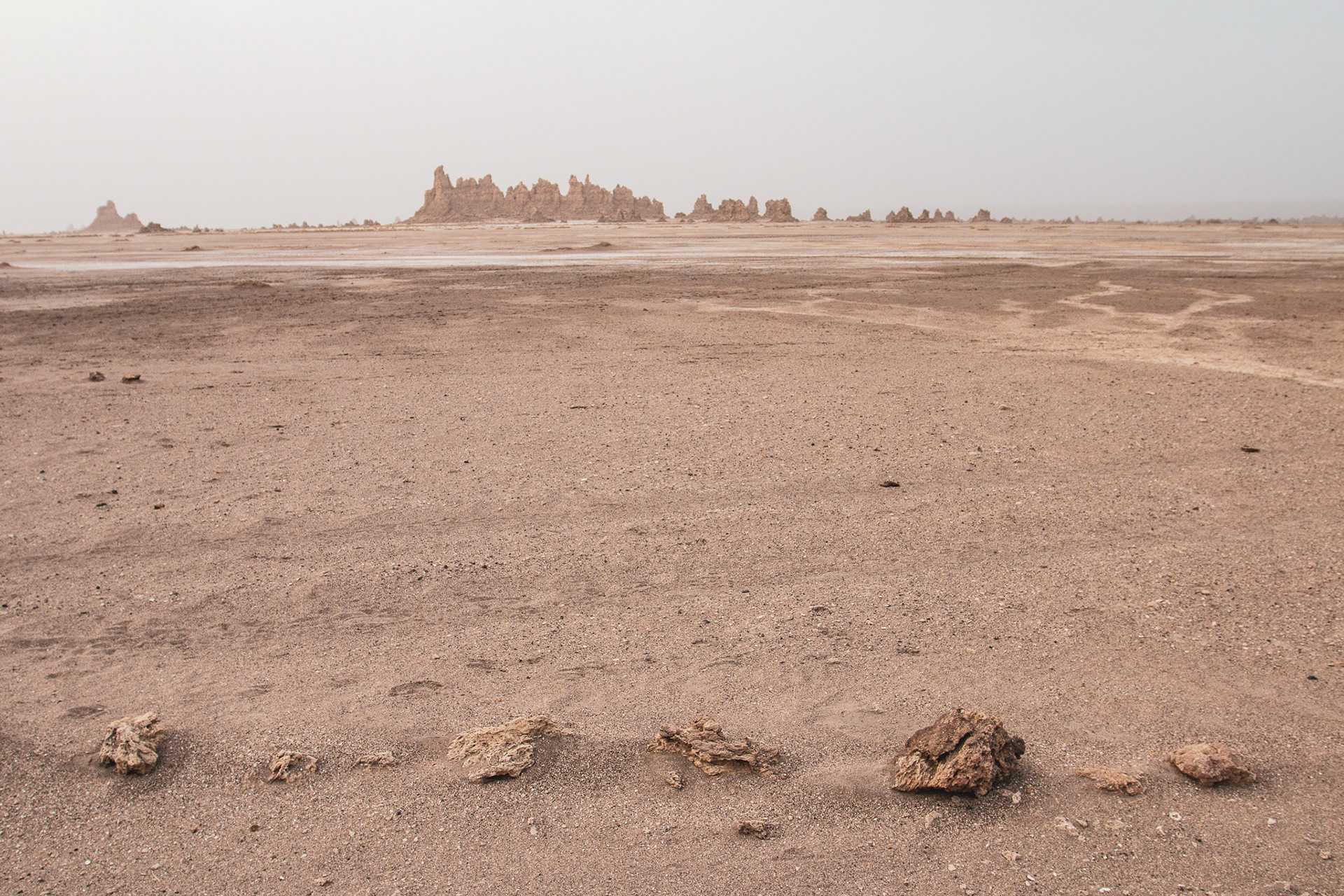
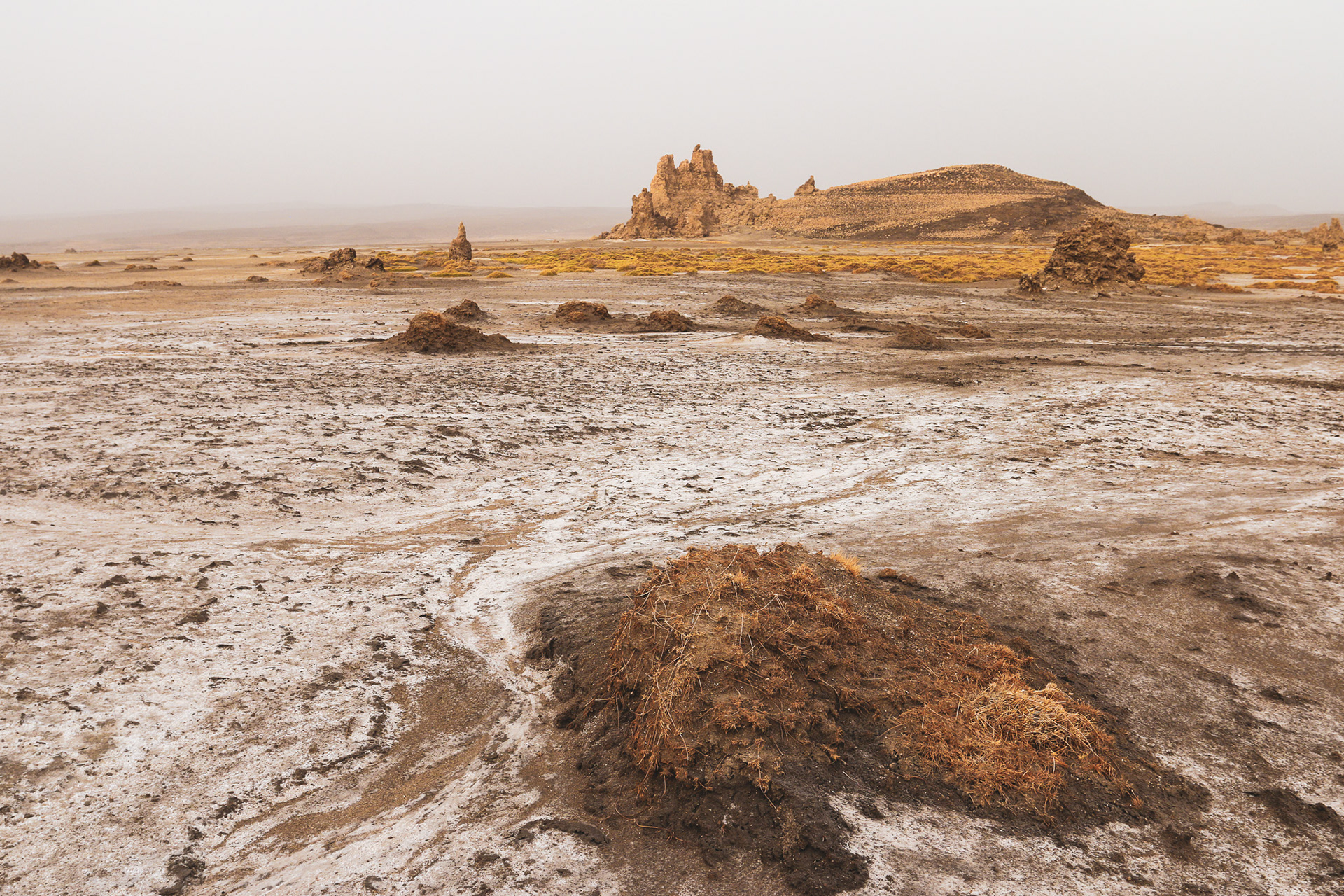
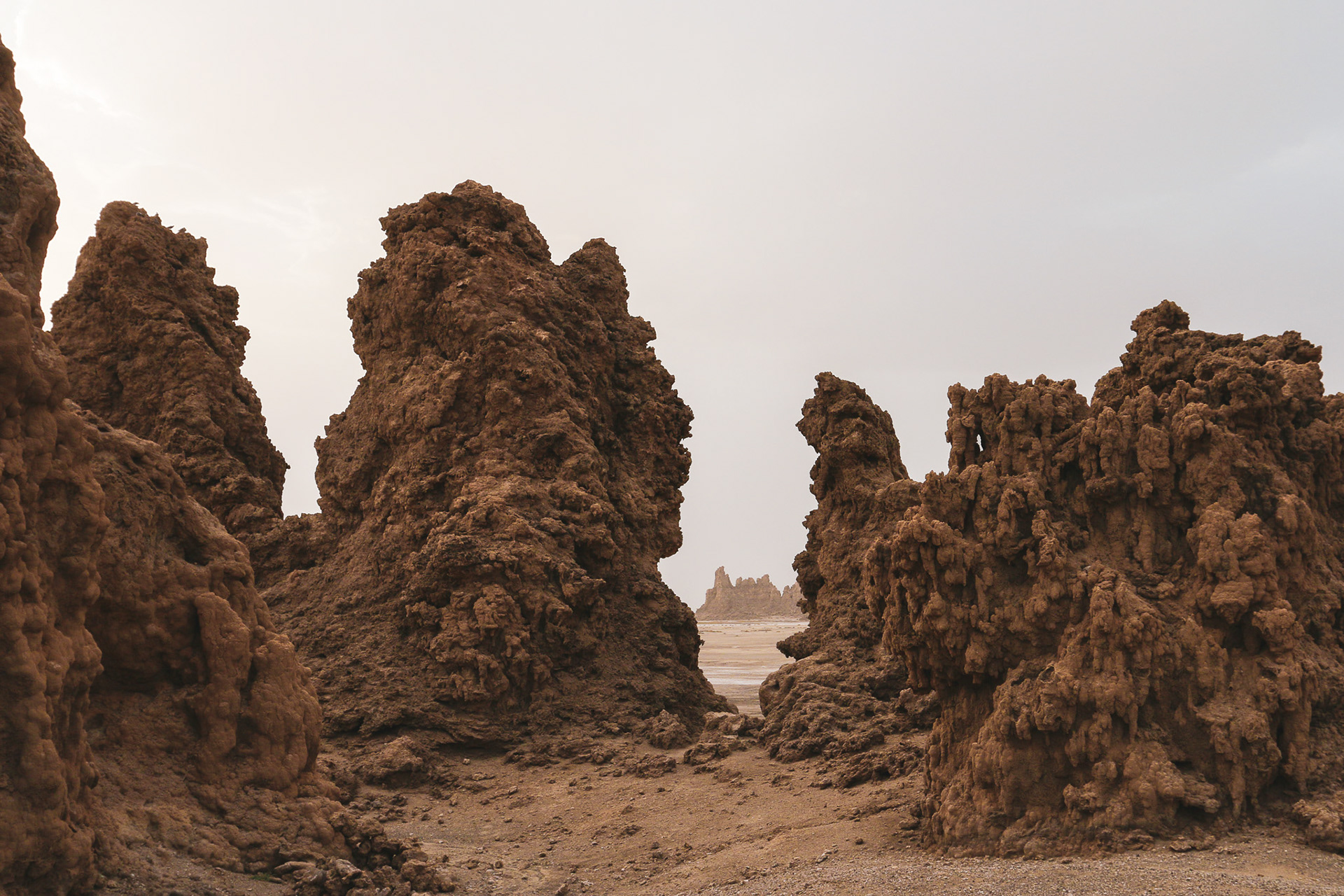
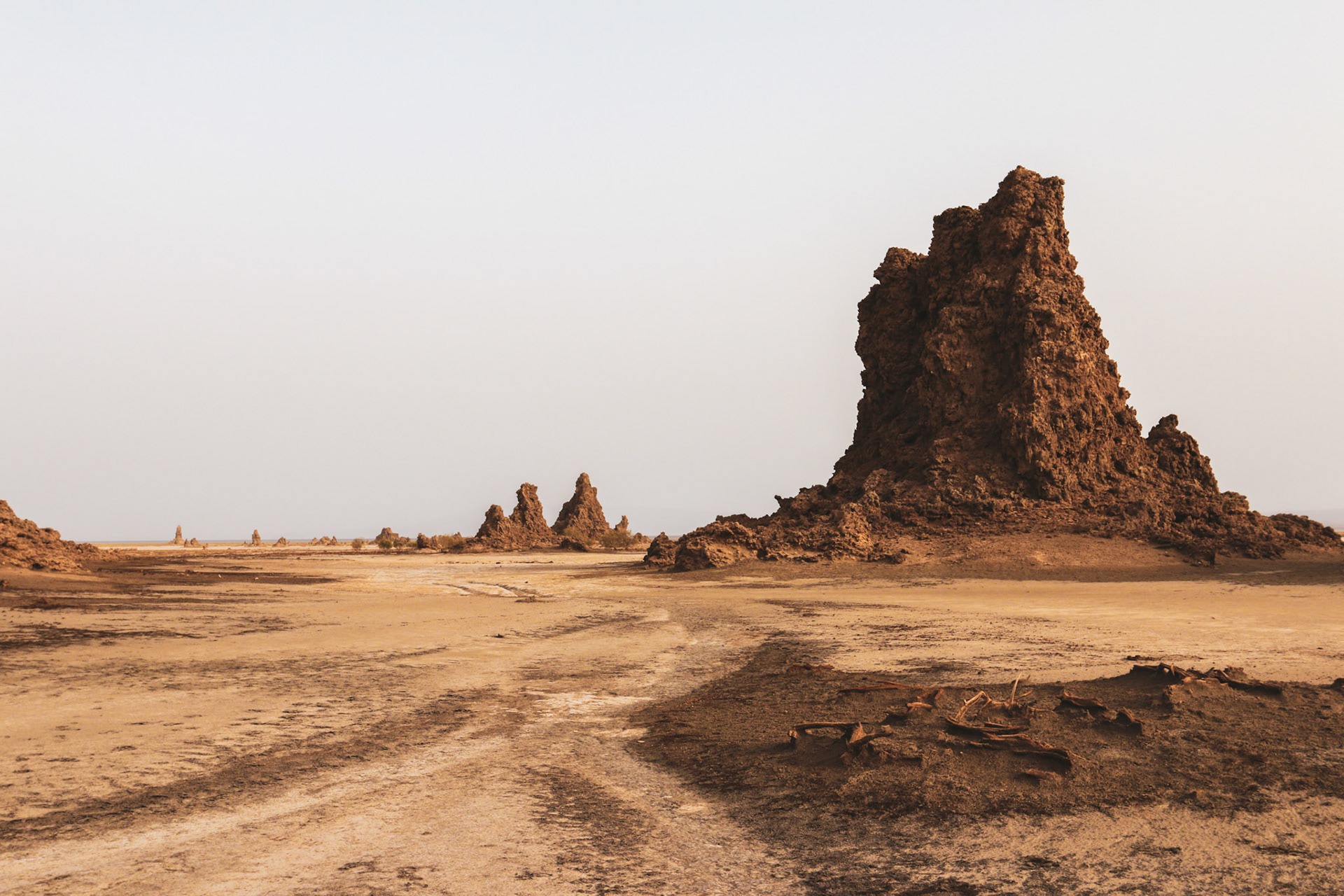
Lac Abbé sits on the Ethiopia-Djibouti border, fed by the Awash River which rises near Addis Ababa and travels 1,200 kilometres northeast before arriving here. The lake has no outflow. Water comes in, evaporates, leaves behind salt. Its most striking features are its tufa chimneys, limestone and carbonate towers up to fifty metres tall, built over millennia by geothermal fluid pushing through the lake bed and depositing minerals as it meets the surface water. Some still vent steam.
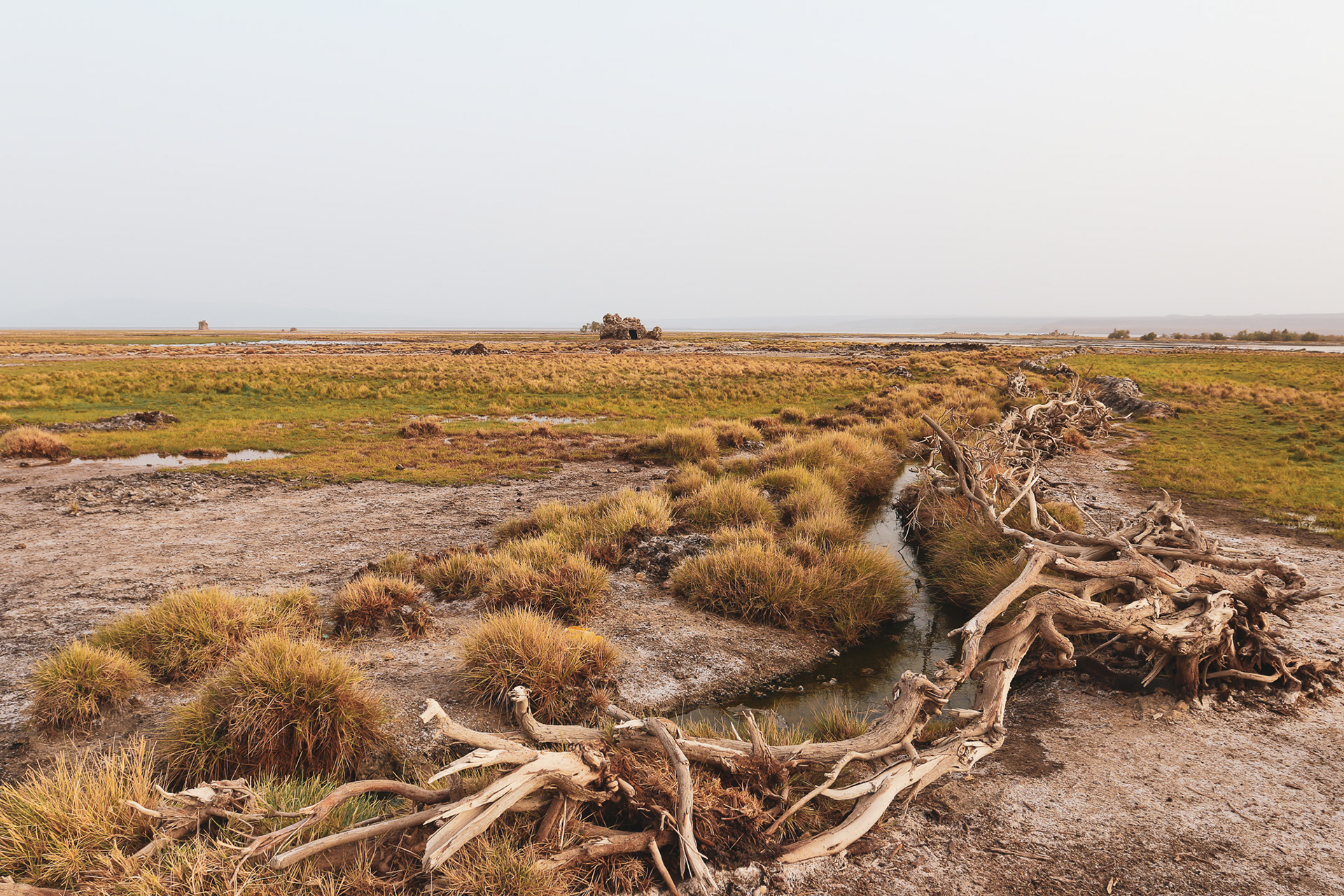
By 1984 the lake had shrunk to two thirds of its 1940 surface area. Irrigation projects and dams upstream, on the Ethiopian side, have reduced the flow of the Awash significantly. The Tendaho Dam, built just before the river enters the Lac Abbé basin, intercepts much of what remains. The chimneys stand on a shoreline that keeps retreating. Nobody downstream was asked.
"Things are not easy in Africa, but we're going to do it for you."
The email arrived somewhere between Addis and the decision to go. A split-second thing. Djibouti was there, we had a few days, why not. The tour operator, a man of considerable seriousness operating on thin margins, laid out the terms. The camp was closed for summer. Two guests didn't make economic sense. He was going to open it anyway. Food would be prepared. The generator situation was uncertain. Payment in advance, refund policy attached as proof of good faith, because in this business your word is the only collateral that doesn't depreciate.
"There is no difference between me and Akram," he wrote. "He's going to give you a voucher of payment and I'm going to call you too."
Akram turned out to be our driver and guide for the two days. Half Ethiopian, half Yemeni, grown up in Djibouti, which meant he carried three countries without fully belonging to any of them. Across the Bab-el-Mandeb strait, forty kilometres of water, Yemen. Behind him the Ethiopian highlands. Ahead, Djibouti: small, hot, and useful to foreign militaries in the way that a petrol station is useful, necessary, unremarkable, never the destination.
It was 2014.
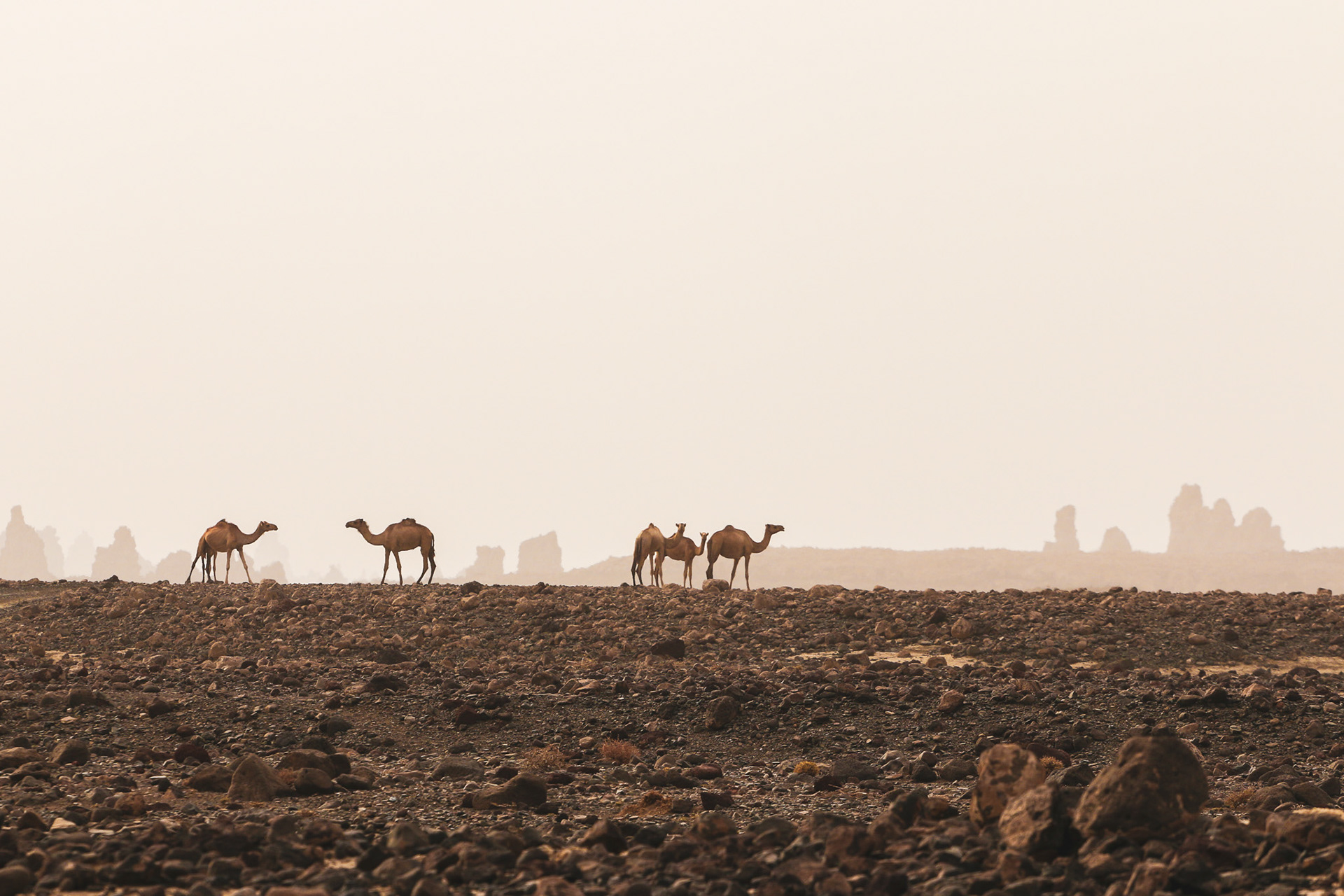
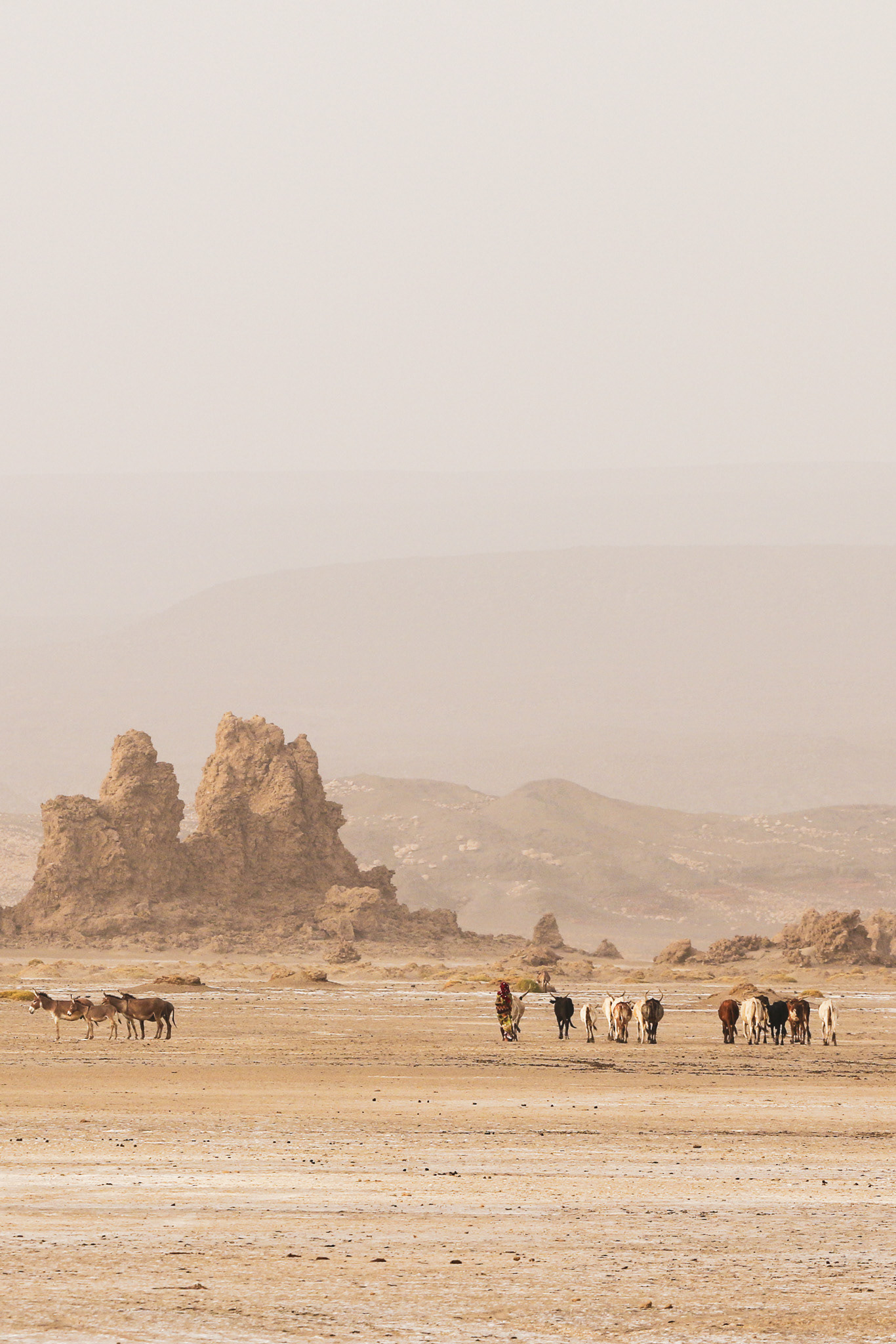
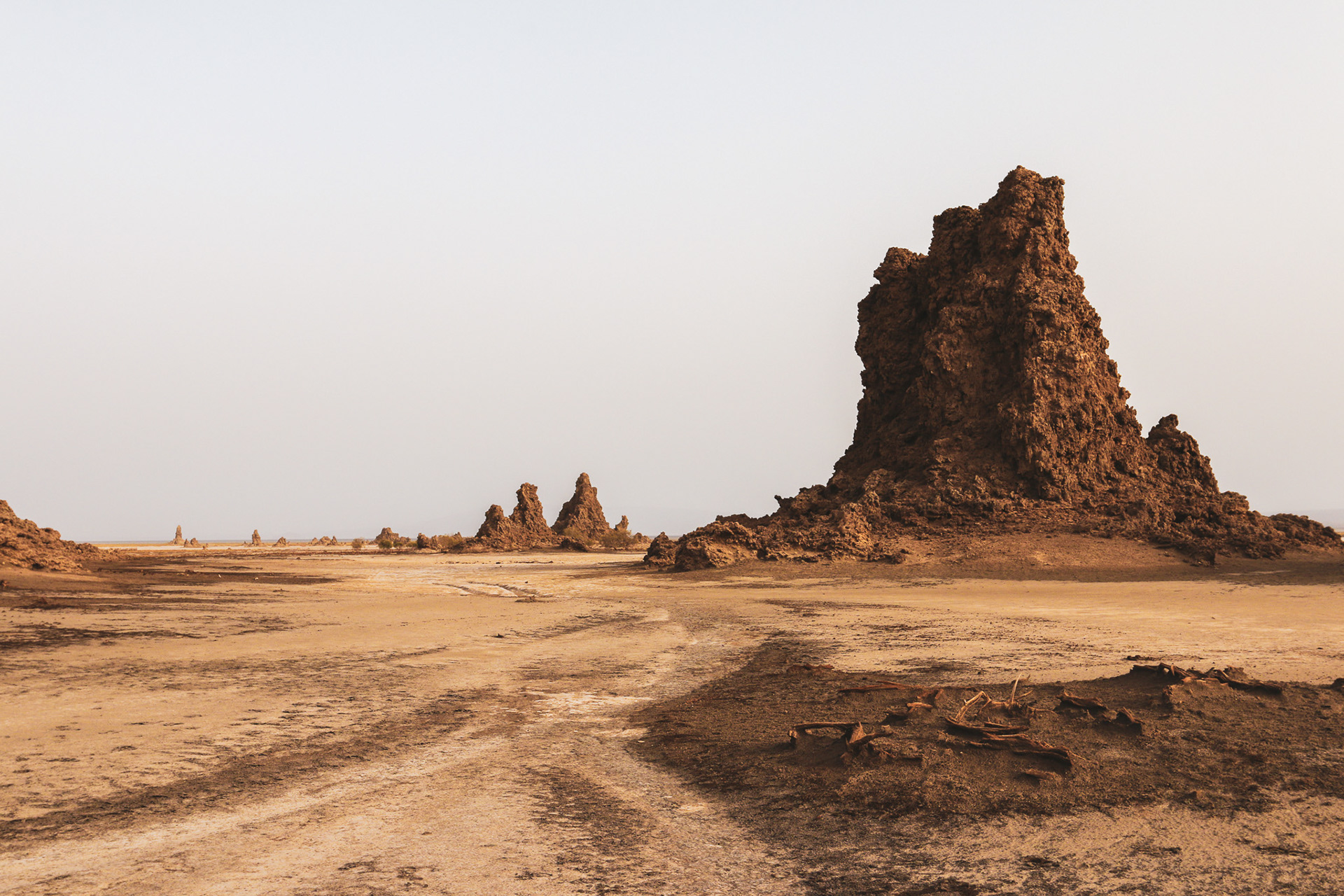
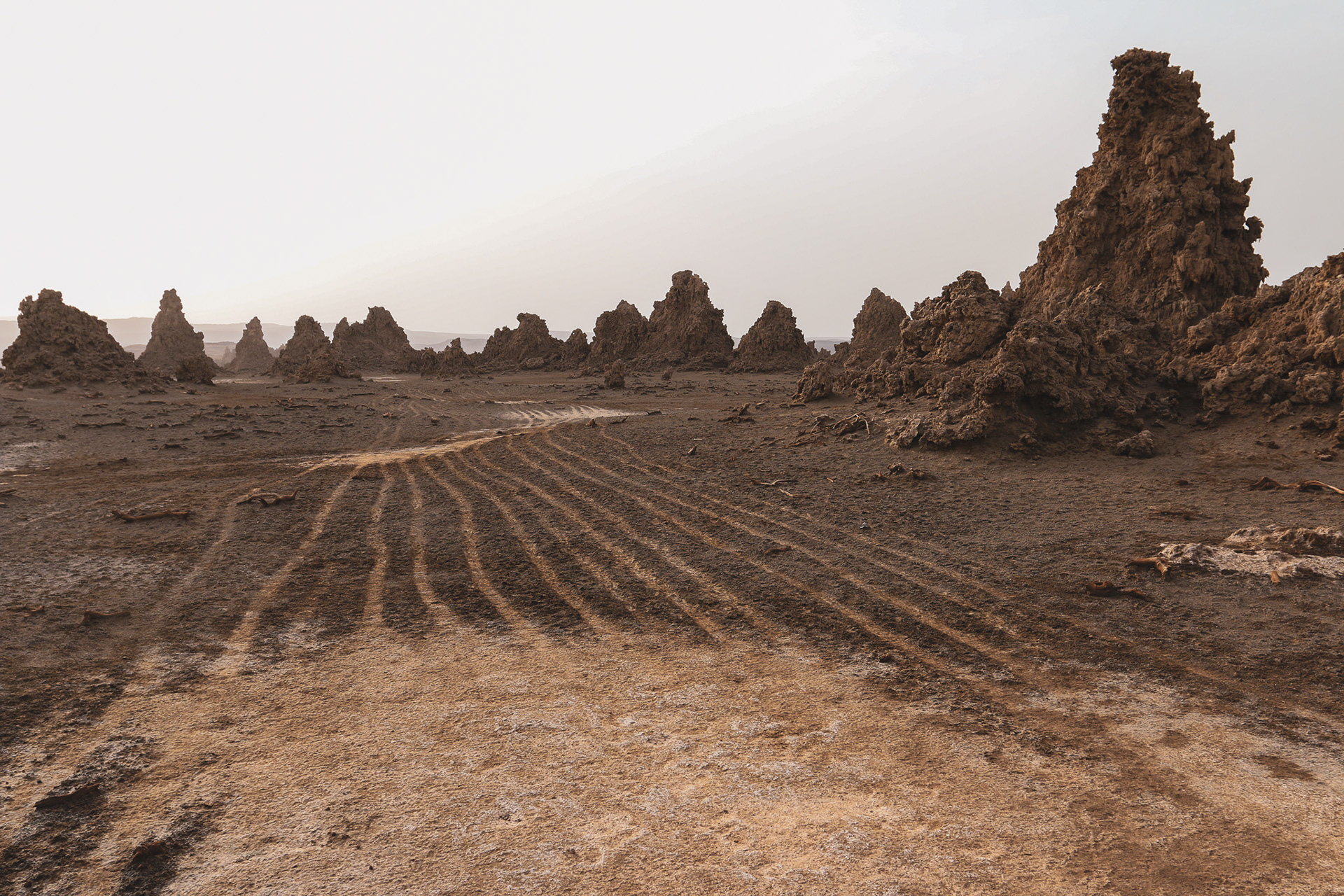
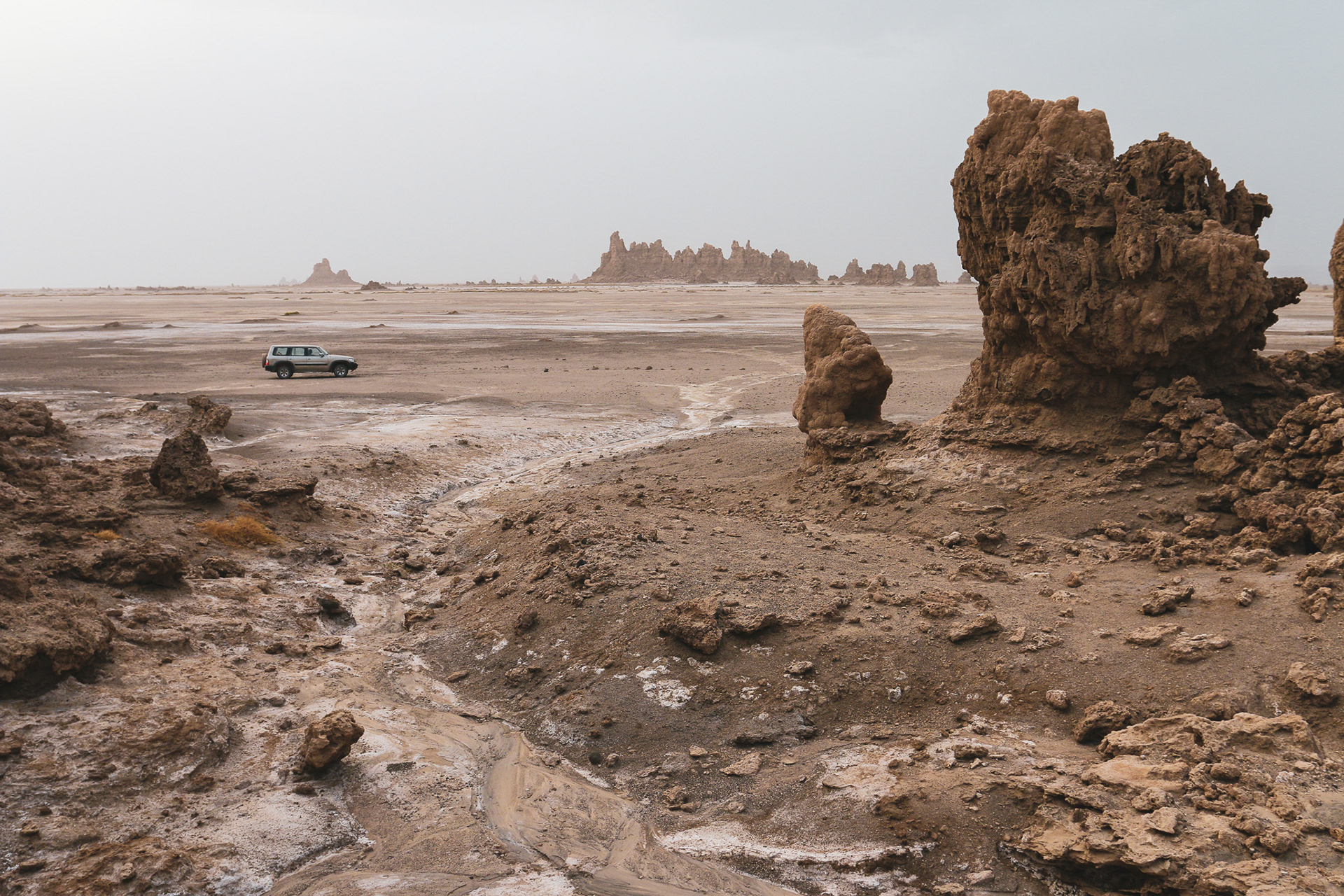
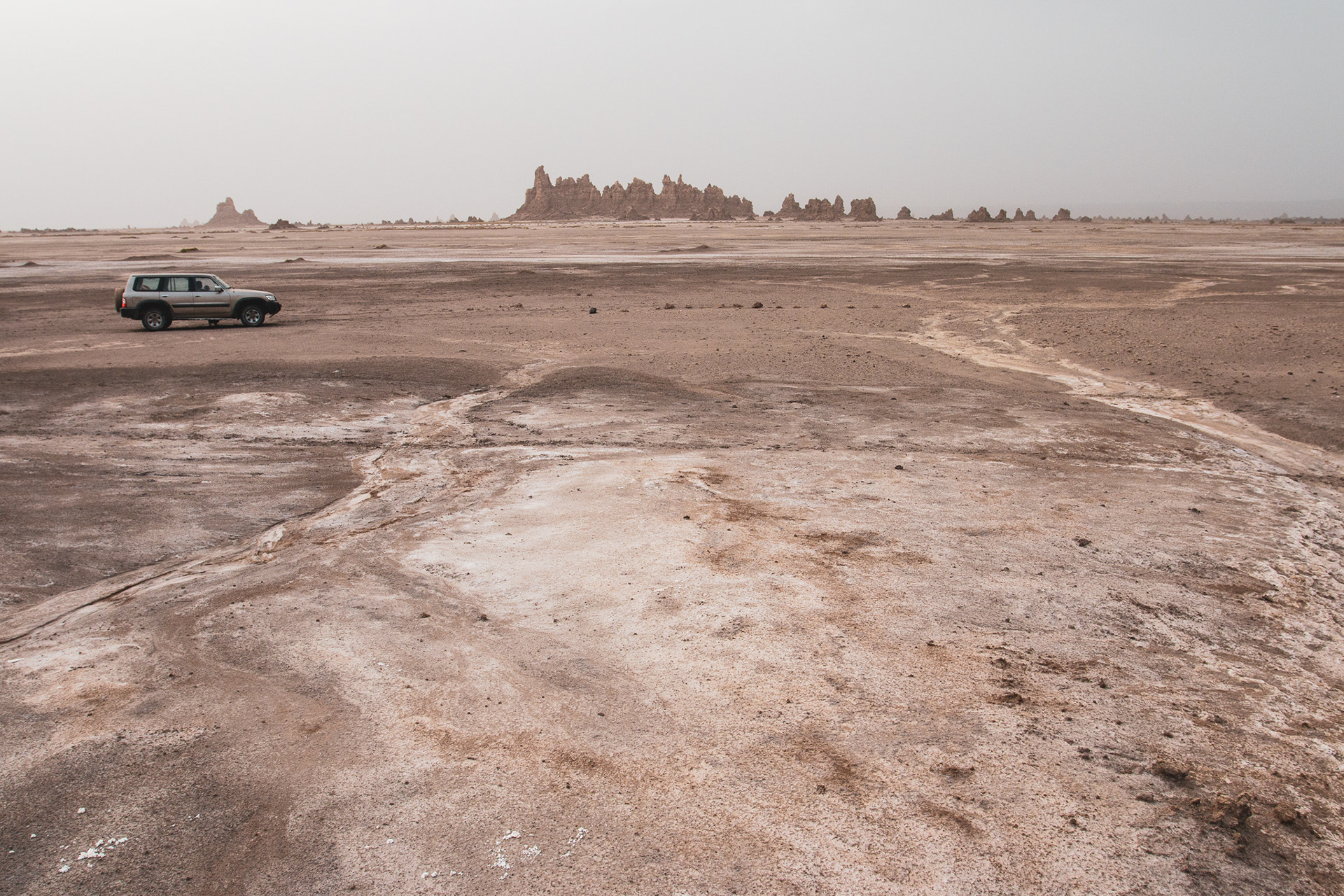
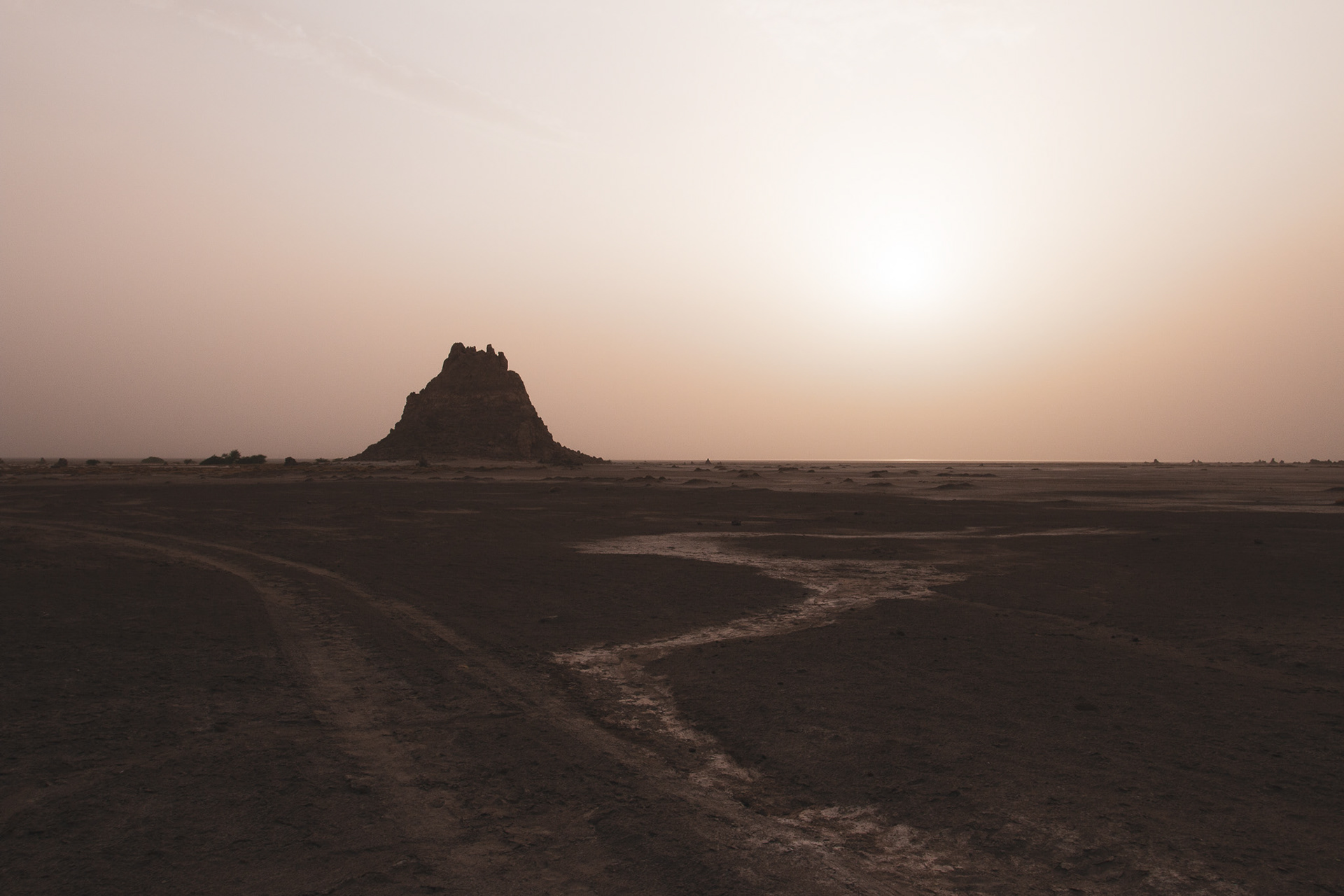
The drive south from Djibouti town takes you through Grand Bara, a vast flat plain of military use, camels and heat haze, and up briefly to Ali Sabieh, cooler, greener, the last ordinary town before the descent. Then the road drops into the depression and the temperature climbs back and keeps climbing. By the time Lac Abbé appears it is late afternoon and the chimneys are catching the last flat light, hundreds of them, pale and strange against the dark basalt.
The camp wasn't supposed to be open. Someone had driven out anyway, put up the tents, prepared food.
After dinner Akram talked about Addis. A childhood visit. Markets with fruit so large it seemed improbable. Big lights. Streets that meant something was happening somewhere. He wanted to get there one day. He said it the way young men say things they fully intend, not the way they say things they've given up on.
He hadn't seen rain in years.
Big city lights, big dreams, a Jay-Z line, delivered without irony in the dark, in Ramadan, in the Afar Depression.
Outside the tent the ground was warm. Not from the sun, which had been gone for hours. From below. The crust here is thin, pulled apart over millions of years. Eventually this depression will flood. Become ocean.
The chimneys were out there somewhere. Fifty metres tall, built by a lake that has been shrinking since before either of us were born. The river that feeds it starts near Addis. Most of the water doesn't arrive anymore.
We left the next day. Lac Assal, the drive back. Another landscape.
Akram dropped us at the hotel. That was 2014.
The following year, the war in Yemen began. It has not ended.